
A Unique Celebration in a Seaside Cave Church
Every year on February 10, the people of Sfakia gather at a tiny cave church overlooking the Libyan Sea to celebrate the Festival of Saint Charalambos. Combining religious devotion, traditional Sfakian food, Cretan music and dancing, this remarkable feast is one of the most distinctive winter celebrations in southern Crete.
Hidden inside a natural cave on the rugged coastline of southern Crete, the tiny church of Agios Charalambos (Saint Charalambos) is one of the most unusual religious landmarks in the Sfakia region. Located at Sfakiano Ammoudi, east of Chora Sfakion, the little chapel faces the Libyan Sea, sheltered by the surrounding rocks and the natural protection of the cave in which it was built.

Every year on February 10, the otherwise quiet location comes alive as locals gather to honour their patron saint. The celebration combines an Orthodox religious service with a traditional Sfakian feast, bringing together faith, food, music and the strong sense of community that characterises this part of Crete.
A Tiny Church Hidden Inside a Natural Cave
The church of Agios Charalambos is built inside a spacious coastal cave, creating a setting quite different from that of a conventional church. Its natural surroundings shelter it from the elements, while the entrance opens toward the sea, offering beautiful views of the Libyan coastline.
For many years, the chapel remained remarkably simple. Its interior contained little more than an icon of the saint, without the usual altar, iconostasis or pulpit. In 2017, however, a small wall with an opening was constructed to separate the altar area from the main space, and the icon was placed there alongside a candelabrum.
They also added a protective wall to keep sheep, which once used the cave as shelter, from entering the church.
Outside, a spacious courtyard provides the gathering place for the annual celebration. Just in front of the cave, a small pebble beach with exceptionally clear waters completes this beautiful and secluded coastal setting.
Why Is Agios Charalambos So Important to the People of Sfakia?
Devotion to Agios Charalambos has deep roots in Sfakia’s history. The saint is traditionally regarded as a protector against plague and infectious diseases, which once devastated communities across Crete.
In earlier centuries, the people of Sfakia believed that diseases could reach their villages through the sea, particularly because maritime trade and travel connected the region with distant Mediterranean destinations. According to local tradition, churches dedicated to Agios Charalambos were therefore built along the coastline, where they could symbolically protect the settlements from illness arriving from the sea.
Interestingly, three churches dedicated to the saint stand along the coast of the wider Sfakia region. Their seaside locations reflect the importance of this protective tradition in the area’s religious history.
The feast takes place on February 10, the Orthodox Church’s annual commemoration of Saint Charalambos, a Christian martyr of the early centuries.
A Traditional Sfakian Feast After the Church Service
What makes the celebration particularly memorable is the gathering that follows the religious service.
Once the Divine Liturgy concludes, the priests distribute artos, the blessed bread offered during Orthodox celebrations. The congregation then moves outside, where the local community gathers around tables laden with traditional Cretan delicacies.
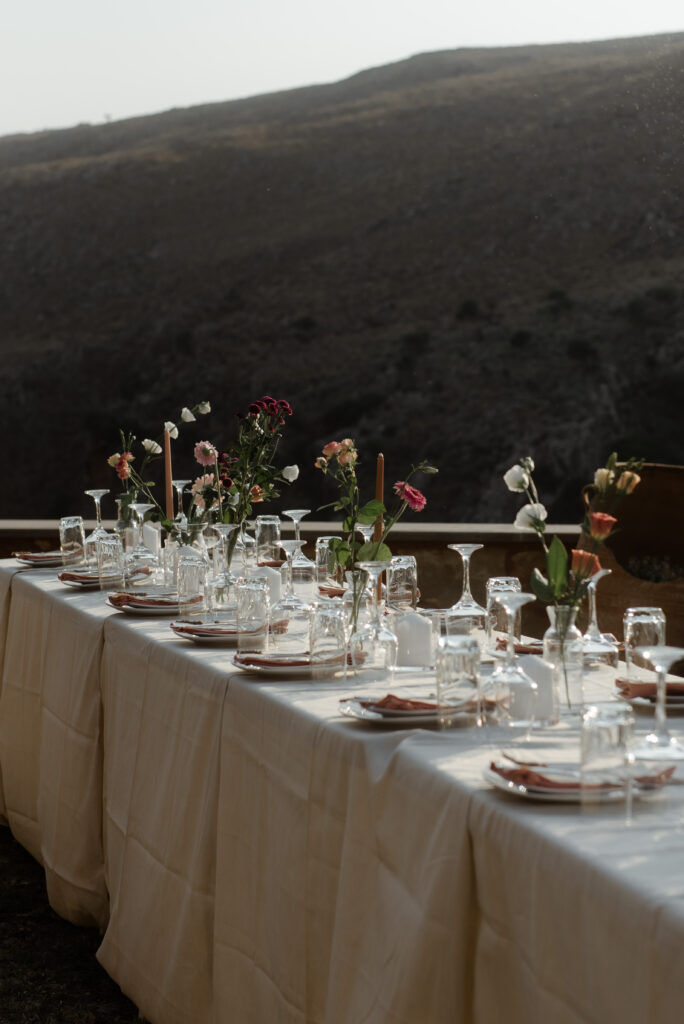
The food is central to the occasion. Tables are filled with a variety of meze, freshly fried fish and local specialities, including fresh anthotyro, a soft, mild Cretan cheese. The undisputed star of the feast, however, is gamopilafo, the famous Sfakian wedding rice.
Traditionally prepared with rice cooked in rich meat broth and finished with butter or stakovoutyro (traditional Cretan cream butter), gamopilafo is one of Sfakian cuisine’s most celebrated dishes. Although closely associated with weddings and major family celebrations, it is also served at important local gatherings such as this annual feast.
Sharing food is an essential expression of hospitality in Sfakia, and the communal meal turns the religious celebration into an occasion to reconnect with family, friends and neighbours.
Mandinades, Traditional Black Costumes and Cretan Dancing
The festivities continue with music, dancing, and Crete’s distinctive poetic tradition.
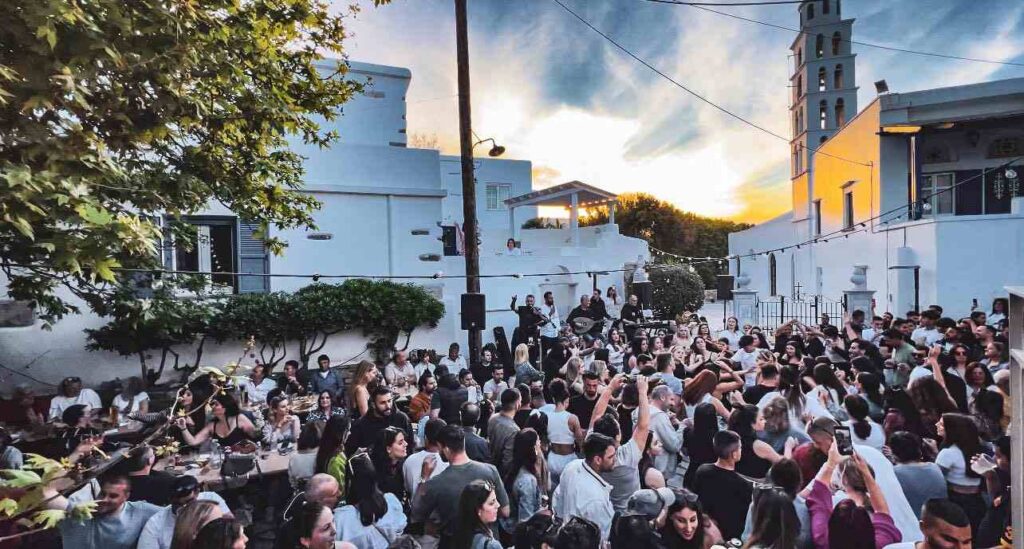
Local men, many dressed in traditional black Sfakian clothing, join the celebration, while improvised mandinades add a special character to the gathering. These traditional Cretan rhyming couplets, usually composed of two fifteen-syllable verses, are an important form of folk poetry. They are often improvised on the spot, expressing humour, love, pride, emotion and local identity.
As the music plays, dancing brings everyone together, creating an atmosphere of joy and fellowship. The celebration is not simply a religious event but also a living expression of Sfakian culture, where food, music, poetry and shared traditions remain closely connected.
Visiting the Church of Agios Charalambos in Sfakia
The church is located at Sfakiano Ammoudi, east of Chora Sfakion, in the Chania region of southern Crete. You can reach it via a short path from the nearby beach, and a road also provides access to the area above the chapel.
The surrounding landscape is particularly beautiful, with rocky coastal scenery, clear waters and a secluded little beach in front of the cave.
February 10 is the most special time to visit, when the annual religious feast brings the local community together. Visitors interested in authentic Cretan traditions can witness a celebration that remains closely connected to Sfakia’s everyday cultural identity.
The feast of Agios Charalambos reminds visitors that some of Crete’s most memorable experiences are found far from its busy summer resorts. In a humble cave overlooking the Libyan Sea, an ancient religious tradition continues through shared food, improvised poetry, music and the unmistakable hospitality of the Sfakian people.
Photo: Christopher Cheiladakis