The Island’s Winter Tradition
In the heart of winter, when the Aegean quiets after the summer bustle, Astypalaia comes alive with one of the Dodecanese’s most authentic religious and cultural celebrations. The annual Panagia Flevariotissa Festival in Astypalaia takes place on February 1 and 2, coinciding with the Feast of the Presentation of Jesus at the Temple (Hypapante). Known locally as the panigyri, it is one of Astypalaia’s most important winter events, bringing together permanent residents, visitors and Astypalian expatriates who return to the island especially for the occasion.
Panagia Flevariotissa Monastery: History and Local Legend
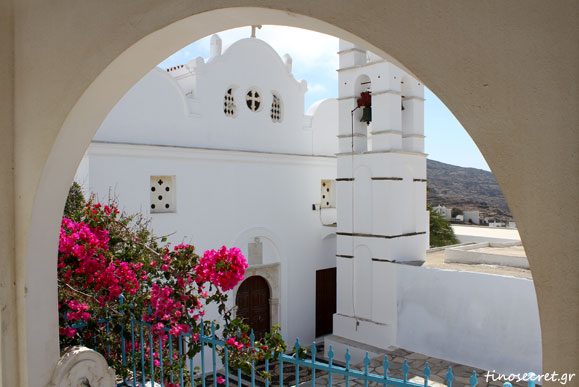
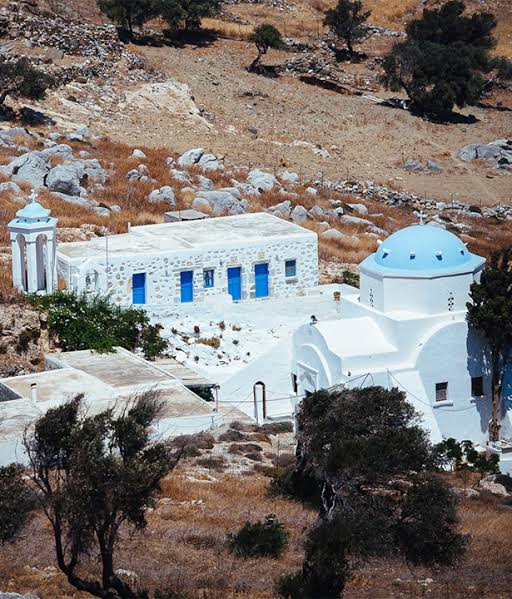
Located approximately seven kilometres north of Chora, the main town of Astypalaia, the Monastery of Panagia Flevariotissa (also known as Agia Livyi or Madonna Flavariotissa) stands in a lush valley in the island’s interior. The whitewashed monastic complex consists of the main church and a series of low auxiliary buildings arranged around a spacious internal courtyard. Built in the distinctive Cycladic architectural style, the church features numerous arches and traditional whitewashed walls.
According to local tradition, a shepherd discovered the miraculous icon of the Virgin Mary inside a small cave near the present-day church. He tried to protect it by carrying it to Chora, but the next morning the icon mysteriously returned to its original location. After this happened several times, locals believed the Virgin Mary wanted to remain there. They later built the monastery on the same spot, incorporating the sacred cave into the church’s northern wall as a chapel.
How to Reach Panagia Flevariotissa Monastery
You can reach the Monastery of Panagia Flevariotissa on foot or by car. The journey begins in Chora, from where a dirt road follows the mountain ridge through the island’s interior before reaching the monastery after approximately seven kilometres. The route offers an opportunity to discover a different side of Astypalaia, away from its coastal settlements and summer tourist areas.
Traditional Food and Preparations for the Festival
Preparations for the Panagia Flevariotissa festival begin on the eve of February 1, when local women and volunteers gather at the monastery to prepare Astypalaia’s traditional festive dishes. These include giaprakia (stuffed vine leaves), lampriano (or lambriano), lamb stuffed with rice and liver and slow-roasted in wood-fired ovens, poungia, a traditional sweet, and lambropites, festive pies.
Accompanied by local songs, the preparations bring generations together and reflect the strong community spirit that lies at the heart of this long-standing Astypalian tradition.
The Panigyri of Panagia Flevariotissa: Music, Dancing and Celebration
On the afternoon of February 1, worshippers make their way to the monastery, with many following the old custom of walking all the way from Chora. Following the festive Vespers service, the monastery courtyard becomes the setting for a lively traditional gathering.
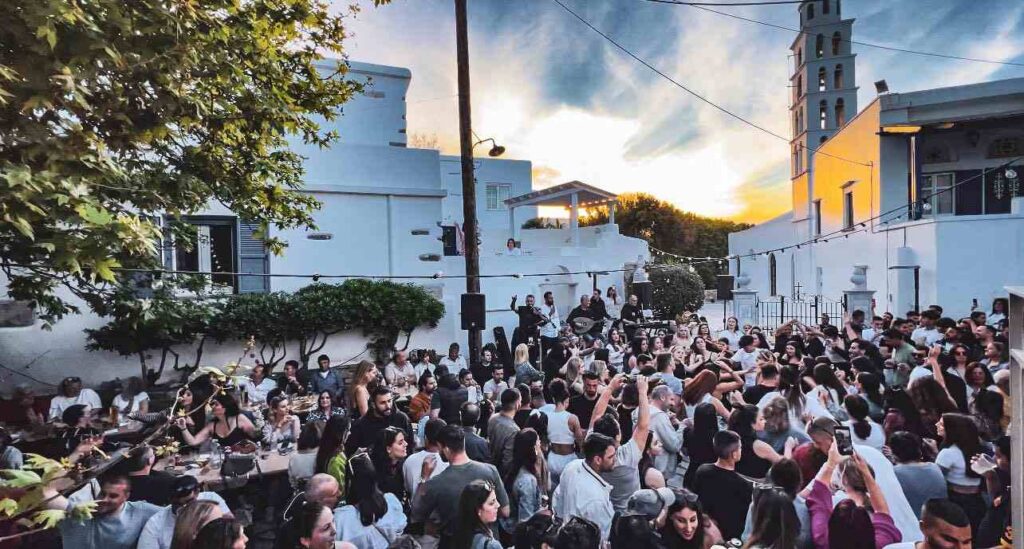
After sunset, long tables are set, and the monastery committee and local volunteers offer traditional food and wine to everyone attending. Residents, participants and visitors are warmly welcomed to join the celebrations.
As the evening progresses, violins and lutes fill the courtyard with traditional island melodies. Locals join hands to dance the Astypalian sousta and sing improvised rhyming couplets known as mantinades, continuing the festivities until the early hours of the morning despite the February chill.
On February 2, the celebration continues with the festive Divine Liturgy, bringing the religious observances to a devout close.
Experiencing the Authentic Winter Traditions of Astypalaia
The feast of Panagia Flevariotissa is much more than a religious celebration. It is a genuine expression of faith, hospitality, and cultural heritage, offering a glimpse into Astypalaia’s authentic traditions. Through its traditional cuisine, music, dancing and strong sense of community, this annual winter festival preserves the island’s distinctive identity and keeps its cultural heritage alive.
For visitors interested in discovering Astypalaia beyond its famous beaches and summer attractions, attending the Panagia Flevariotissa festival is a unique opportunity to experience the island’s local customs and warm hospitality during the quieter winter months.
Panagia Flevariotissa Festival in Astypalaia – Usual Programme
FEBRUARY 1 · EVE OF THE FEAST
| Time | Event |
|---|---|
| Morning – afternoon | Final preparations and cooking of traditional Astypalian dishes at the monastery |
| Late afternoon | Arrival of worshippers and visitors, including those walking from Chora |
| Early evening | Festive Vespers service |
| After sunset | Start of the traditional feast (panigyri) |
| Evening onwards | Traditional food and wine served to guests |
| Late evening – early morning | Live traditional music, Astypalian sousta, dancing and mantinades |
FEBRUARY 2 · FEAST DAY
| Time | Event |
|---|---|
| Morning | Festive Divine Liturgy at the monastery |
| After the service | Religious celebrations and gathering of the faithful |
| Late morning – afternoon | Traditional hospitality and local festivities, depending on the annual programme |
A note for visitors: The evening of February 1 is especially special for experiencing traditional festivities, food, music, and dancing. Visitors are welcome to join the celebrations.
Photo: Astypalaia-island.gr