The Mountain Wine Village of Epirus and a Hidden Gastronomic Gem
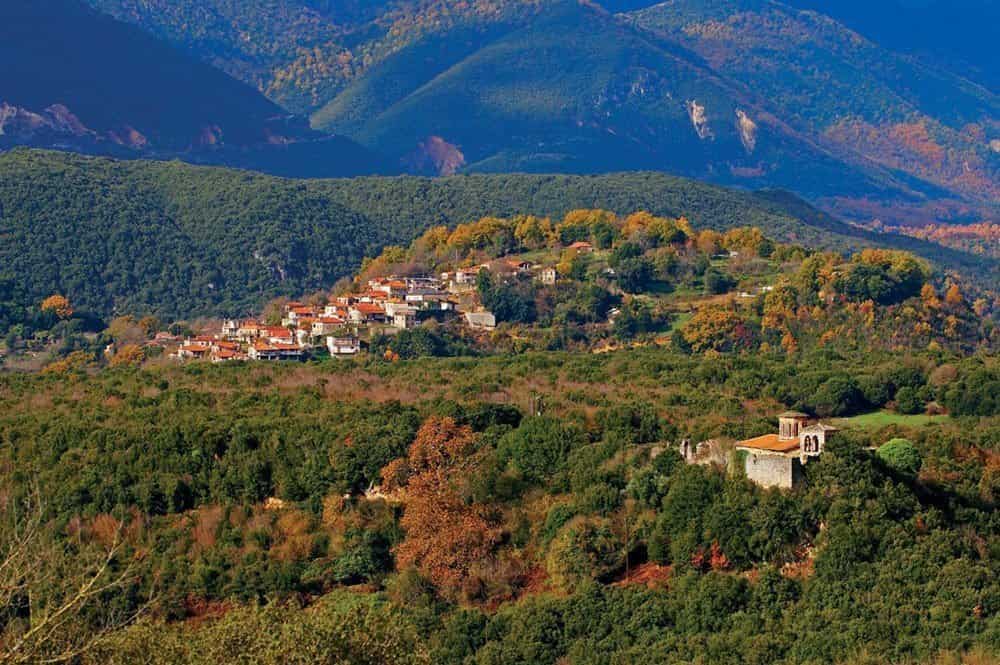
Perched on the slopes of the Pindus Mountains, the historic village of Zitsa is one of Epirus’ most distinctive destinations for wine, gastronomy, and authentic rural experiences. Located approximately 25 kilometres northwest of Ioannina, at an altitude of around 600 metres, Zitsa combines dramatic mountain landscapes, traditional stone architecture, centuries-old vineyards, and a cuisine deeply connected to the land.
Known as the homeland of the indigenous Debina grape, Zitsa is famous for its crisp white wines and elegant semi-sparkling wines that have become a symbol of Epirus winemaking. Yet the identity of the village extends far beyond wine. Surrounded by forests, pastures, and fertile valleys, Zitsa offers a culinary journey shaped by mountain herbs, wild greens, local cheeses, handmade pies, and traditional recipes passed down through generations.
A visit to Zitsa is an invitation to slow down and experience authentic Epirus hospitality, where every dish reflects the landscape and every glass of wine tells a story about the people who cultivate it.
A Village with Deep Historical Roots
The wider region of Zitsa has been inhabited since antiquity and lies close to some of Epirus’ most important historical sites, including Dodoni, the ancient sanctuary and oracle of Zeus. This connection with the ancient world highlights the importance of Epirus as a centre of religion, culture, and tradition for thousands of years.
During the Byzantine and Ottoman periods, Zitsa developed into an important mountain settlement. Like many villages in Epirus, it was prosperous, relying on agriculture, livestock farming, craftsmanship, and trade. The region produced skilled artisans, scholars, and merchants who contributed greatly to Greek cultural and economic life.
The village also attracted travellers because of its natural beauty. The famous British poet Lord Byron visited the region in the early 19th century and admired the dramatic landscapes of Epirus, helping to bring the area’s beauty to international attention.
The Birthplace of Debina Wine
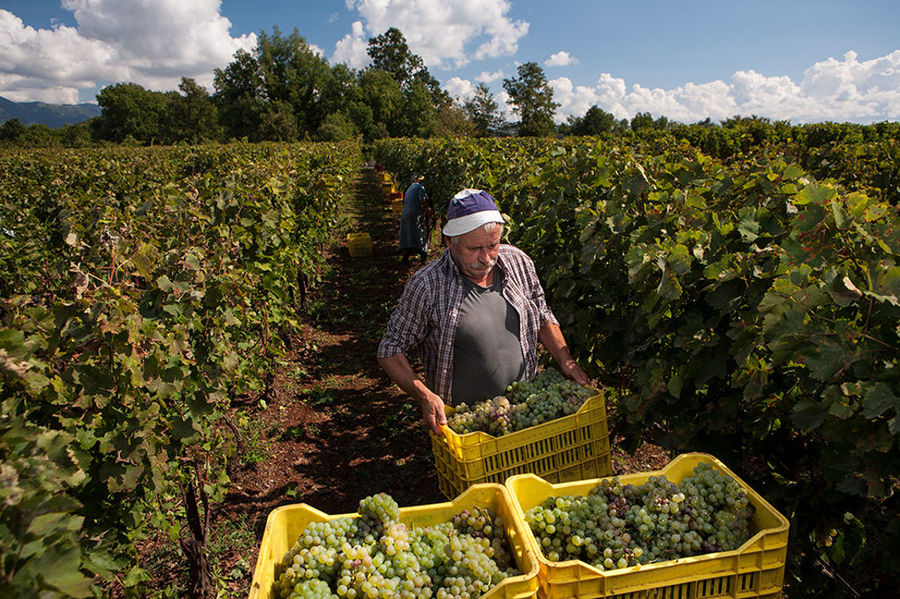
Zitsa’s greatest claim to fame is its wine tradition. The village is the heart of the PDO Zitsa wine zone, where the indigenous Debina grape variety has been cultivated for centuries.
Debina thrives in the region’s cool mountain climate, producing wines characterised by freshness, delicate aromas, lively acidity, and notes of citrus, green apple, and white flowers. The grape is particularly valued for producing semi-sparkling wines, which have become one of Greece’s most distinctive expressions of mountain viticulture.
The vineyards surrounding Zitsa benefit from altitude and temperature variations between day and night, allowing grapes to mature slowly while maintaining their natural freshness and aromatic complexity.
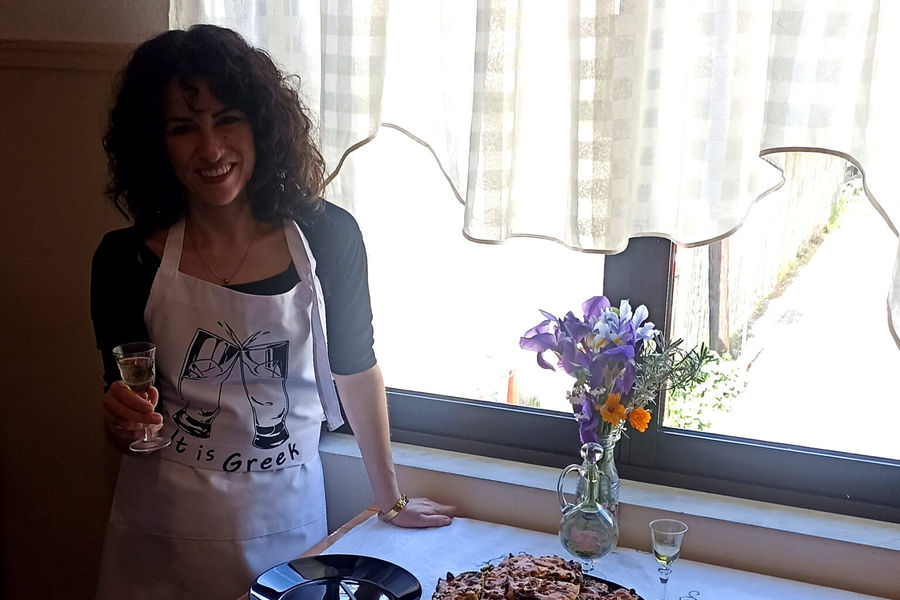
Local wineries welcome visitors for vineyard walks, tastings, and wine experiences, offering insight into traditional and modern winemaking techniques. Pairing Debina wine with local cheeses, seafood, pies, and regional dishes reveals the exceptional harmony between the landscape and the local table.
A True Mountain Table: The Gastronomy of Zitsa
The cuisine of Zitsa reflects the rugged beauty of Epirus. High mountains, rich pastures, forests, and seasonal changes have shaped a gastronomy rooted in simplicity, high-quality ingredients, and traditional preparation methods.
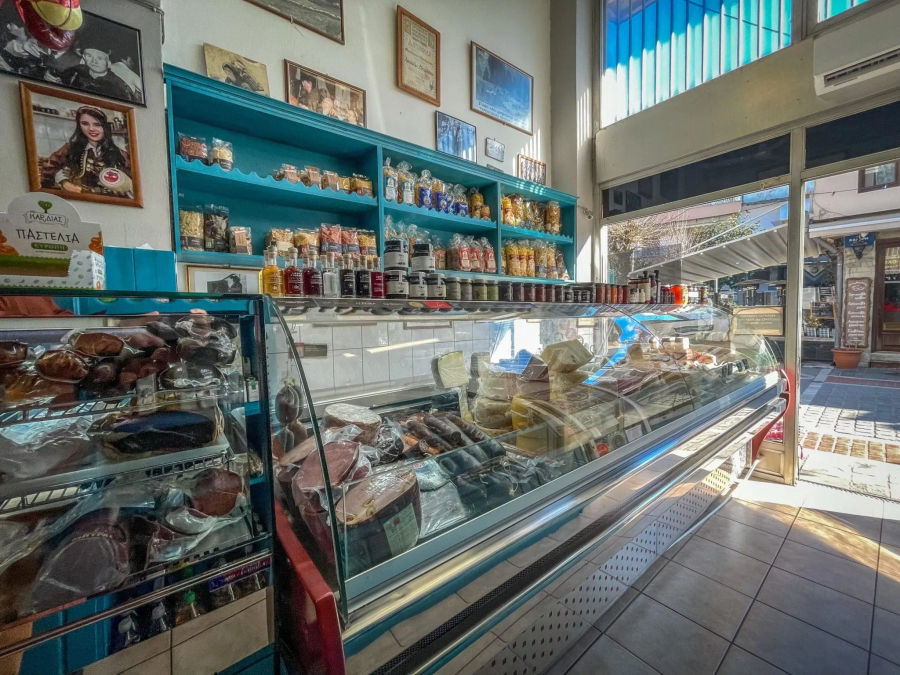
Dairy products are central to local cuisine. Small family dairies produce excellent cheeses including feta, galotiri, and kefalotiri, known for their rich flavour and distinctive character. These cheeses accompany many local dishes and pair perfectly with the region’s fresh white wines.
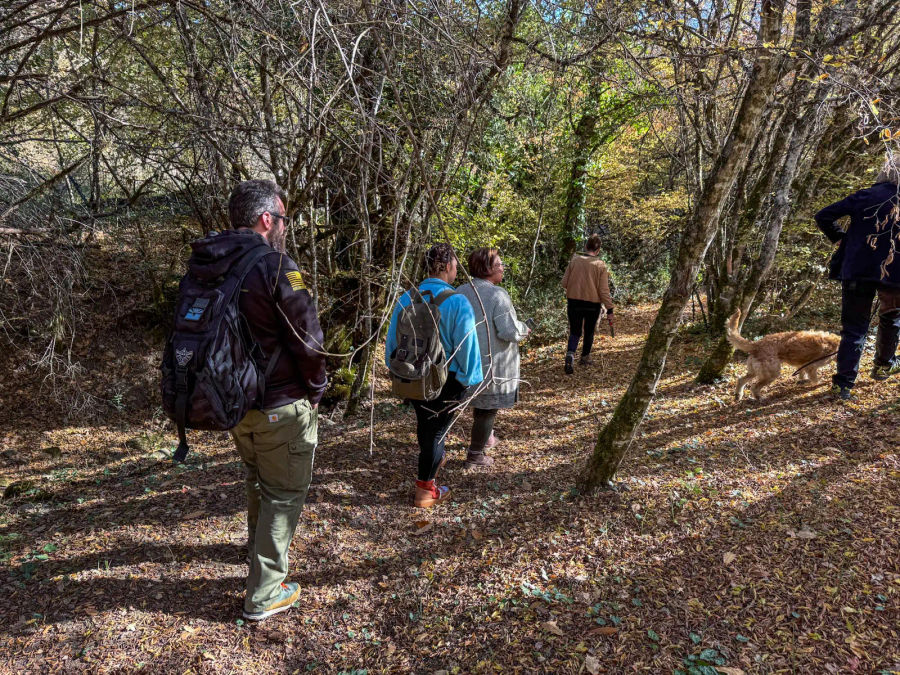
The surrounding forests provide another important element of Zitsa’s culinary identity. During autumn, local foragers collect wild mushrooms, while spring and summer bring an abundance of horta (wild greens) and aromatic mountain herbs such as oregano, thyme, rosemary, and sage.
The Famous Pies of Epirus
No culinary exploration of Zitsa is complete without tasting the legendary pies of Epirus. Considered among the finest examples of Greek rural cooking, Epirus pies reflect the creativity and resourcefulness of mountain communities.
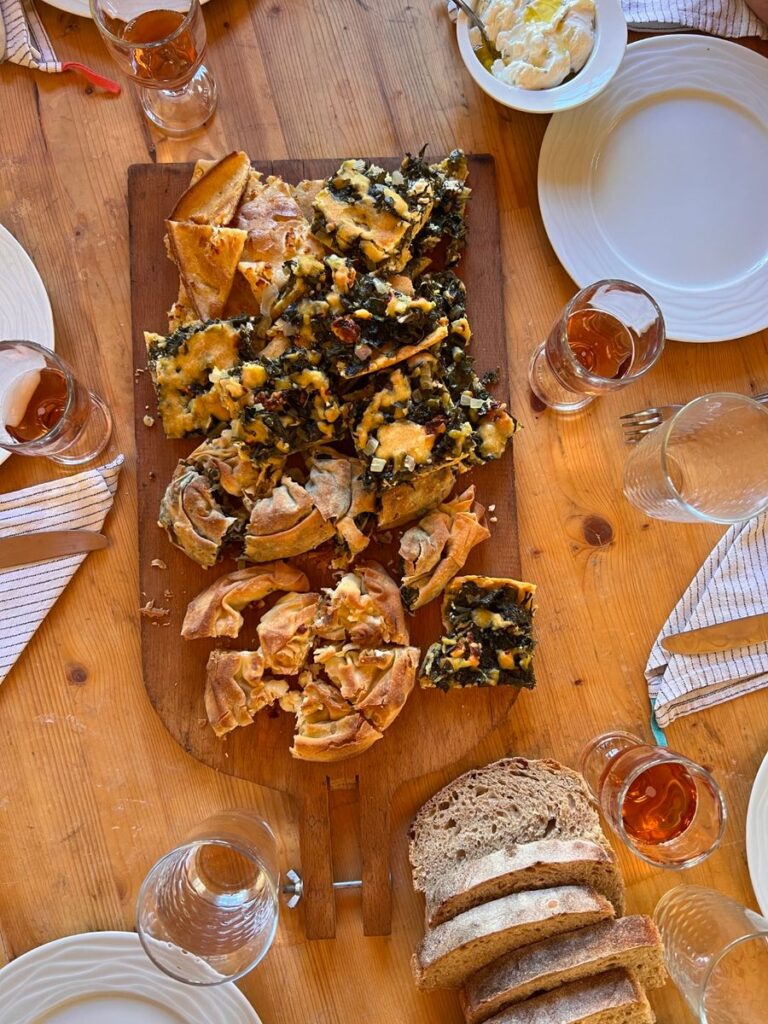
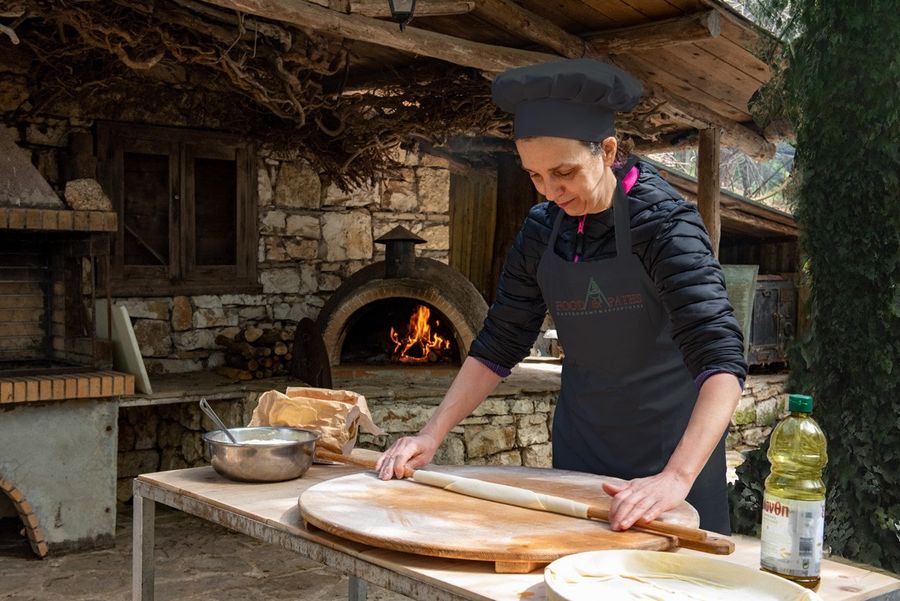
Traditional varieties include spanakopita with greens and feta, tiropita with local cheese, mushroom pies, pumpkin pies, and the distinctive blatsaria—a rustic pie made with cornmeal, wild greens, and feta, traditionally baked in wood-fired ovens.
These dishes represent the essence of Epirus gastronomy: humble ingredients transformed into exceptional food through patience and craftsmanship.
Local Meats, Forest Flavours and Traditional Recipes
Livestock farming remains an important part of life in Zitsa and the surrounding villages. Local lamb, goat, and beef feature prominently in traditional cooking, often prepared slowly with herbs, wine, and seasonal vegetables.
Visitors may discover dishes such as kokkinisto (slow-cooked meat in tomato sauce), lamb with mountain herbs, hearty stews, and, where available, game dishes such as wild boar prepared with local wine, bay leaves, and aromatic spices.
These robust flavours reflect the mountainous environment and the pastoral traditions that have shaped Epirus for centuries.
Traditional Sweets and Local Delicacies
The gastronomic journey continues with traditional desserts that showcase the region’s love for simple but memorable flavours.
Local favourites include spoon sweets made from quince, sour cherry, and other seasonal fruits, as well as karydopita, a walnut cake soaked in syrup and flavoured with cinnamon and cloves. These desserts are often served with Greek coffee or accompanied by a final glass of local wine or liqueur.
Beyond the Plate: Nature, Villages and Experiences
Zitsa’s appeal extends far beyond its food and wine. The village is surrounded by a peaceful mountain landscape of vineyards, forests, stone houses, and scenic paths.
Visitors can explore traditional architecture, walk through vineyards, follow routes through the countryside, and visit nearby attractions such as the Kalamas River Gorge and the Monastery of Agia Paraskevi, which offer both natural beauty and spiritual tranquillity.
The rhythm of life in Zitsa encourages visitors to slow down—enjoying a meal in a hidden courtyard, tasting wine overlooking vineyards, or sharing stories with local producers.
Discover Zitsa Through Food and Wine
Zitsa embodies the essence of Epirus: a place where wine, nature, tradition, and hospitality converge. From tasting Debina wines in mountain vineyards to enjoying handmade pies, local cheeses, wild greens, and traditional recipes, visitors experience a genuine connection with the land.
A Zitsa food and wine experience offers much more than a meal—it is a journey into the culture, flavours, and traditions of one of Greece’s most authentic mountain regions.