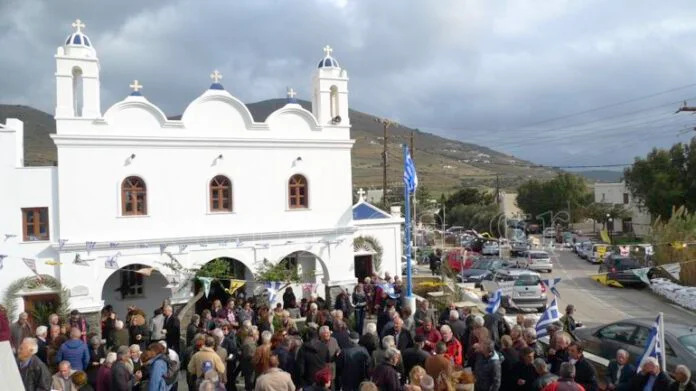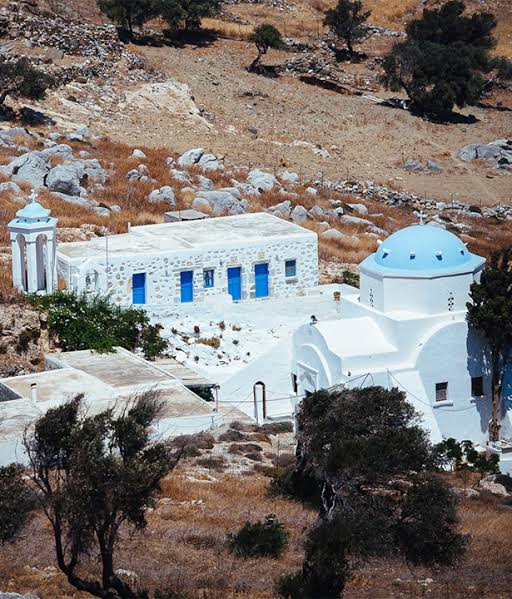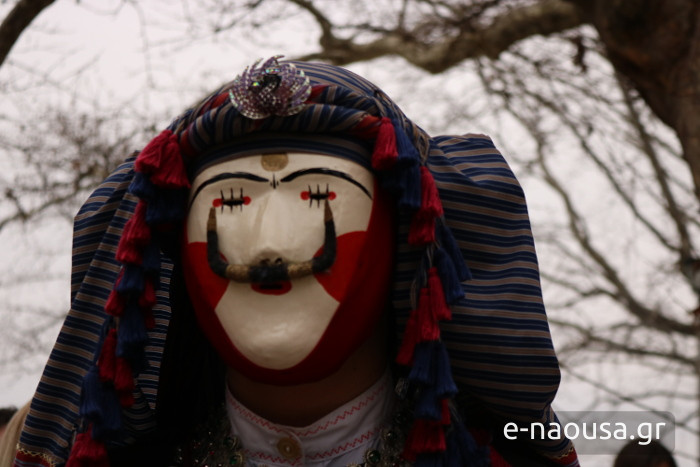
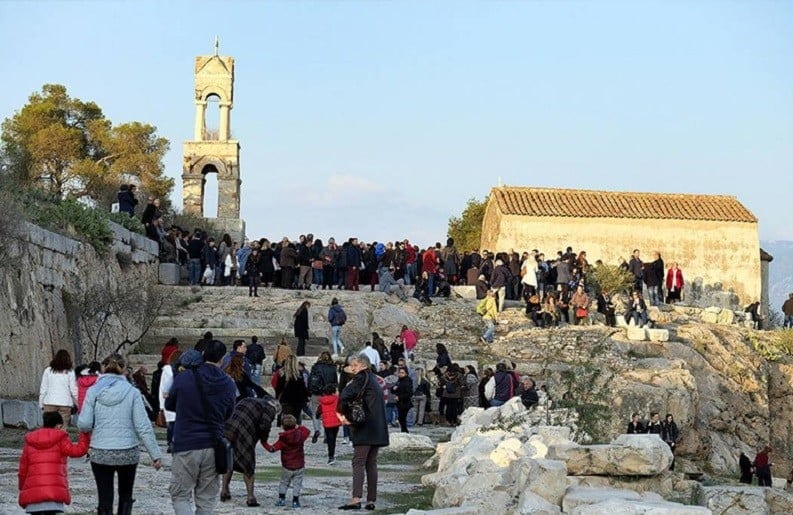
The celebration takes place every year in the town of Eleusis, on the eve of the Presentation of Mary, 21 November, in the post-Byzantine chapel of the Holy Virgin of Mesosporitissa.
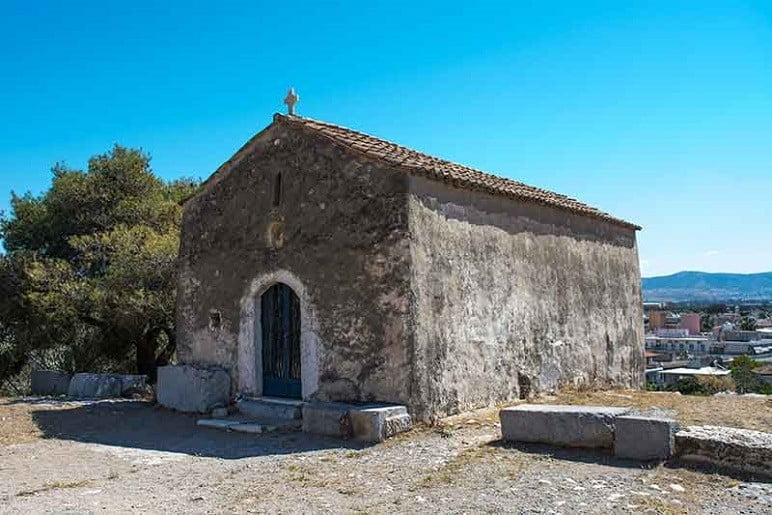
The chapel was built above the ancient locale of Telestirio. It represents the revival of an ancient custom that began in the Mycenaean era in honour of the goddess Demetra (Ceres). In Christian times, locals assigned that role to the Virgin Mary, calling her Mesosporitissa (sporos meaning seed) because it was the season when seeds were sown.
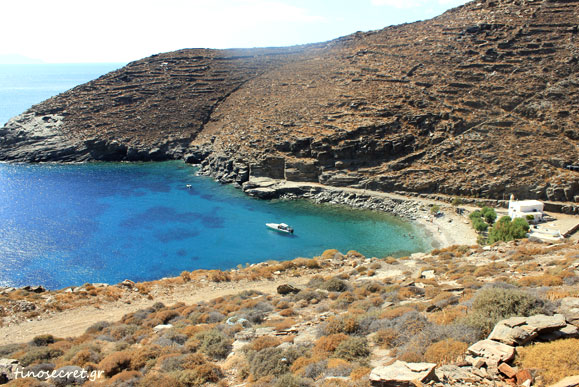
The Chapel of Panagia Mesosporitissa is located inside the Archaeological Site of Eleusis, on the sacred hill, in Elefsina, West Attica, Greece.
The celebration
The Custom of the Holy Virgin of Mesosporitissa in Eleusis takes place every year in Eleusis, Attica, on 20 November, the eve of the Orthodox feast of the Presentation of the Virgin Mary (21 November). The festivities are held at the post-Byzantine chapel of Panagia Mesosporitissa, situated on the hill within the archaeological site of Eleusis, a place closely associated with the ancient Eleusinian Mysteries.
The Custom of the Holy Virgin of Mesosporitissa in Eleusis is particularly significant because it brings together the area’s ancient agricultural traditions, religious beliefs and Christian heritage. It centres on the preparation and sharing of polysporia (literally, many seeds), a mixture of boiled cereals and legumes offered as a symbolic expression of gratitude for the earth’s produce and a wish for fertility, abundance, and a prosperous agricultural year.
The Greek Ministry of Culture officially documents the celebration in its National Inventory of Intangible Cultural Heritage under the title Panagia Mesosporitissa in Eleusis: The Celebration of Panagitsa at the Ancient Site. It is recognised as an example of oral traditions, social practices, rituals and festive events preserved by the local community.
Historical and Mythological Background
The chapel stands on the hill of the archaeological site, immediately above the ancient Telesterion and close to the Ploutonion, traditionally associated with the entrance through which Persephone was taken to the Underworld.
Eleusis was one of the most important religious centres of ancient Greece. It was particularly renowned for the Eleusinian Mysteries, the religious ceremonies dedicated to Demeter, goddess of agriculture, fertility and the harvest, and her daughter Persephone.
According to Greek mythology, Hades, god of the Underworld, abducted Persephone. Her mother, Demeter, searched for her throughout the world, causing the earth to become barren in her grief. Eventually, they reached an agreement whereby Persephone would spend part of the year with her mother and the remaining part in the Underworld. Her return symbolised nature’s renewal and the cycle of vegetation.
This myth’s agricultural significance is particularly relevant to the custom of Mesosporitissa. Demeter was associated with cultivating cereals, especially wheat, and with transmitting agricultural knowledge. According to the Homeric Hymn to Demeter, she taught the people of Eleusis about agriculture, making the region an important centre of ancient agricultural and religious traditions.
The chapel’s location therefore gives the modern celebration a particular historical and symbolic significance: a Christian religious ceremony takes place in a landscape that had been sacred to Demeter and Persephone for centuries. Archaeological and folkloric records document the relationship between the ancient worship of Demeter and the later local devotion to the Virgin Mary.
An important historical distinction: Although The Custom of the Holy Virgin of Mesosporitissa in Eleusis is associated with ancient fertility rituals, this should not be understood as proof that the exact same ceremony has continued uninterrupted since Mycenaean times. Rather, it represents the preservation and transformation of agricultural beliefs and symbolic practices across different religious periods.
Sources: Greek Ministry of Culture, National Inventory of Intangible Cultural Heritage; The Sanctuary of Demeter and Kore at Eleusis, archaeological publication by the Greek Ministry of Culture, 2020.
The Meaning of Mesosporitissa
The name Mesosporitissa derives from the Greek words meso (middle) and spora (sowing or seed). It refers to the middle of the agricultural sowing season, which traditionally falls around November in this part of Greece.
The feast of the Presentation of the Virgin Mary, celebrated on 21 November in the Orthodox calendar, has traditionally been associated with agricultural activities in many Greek rural communities. Depending on the region and the progress of the agricultural season, the Virgin Mary is also known by names such as Polysporitissa (the one of many seeds), Aposporitissa (marking the end of sowing) and, more rarely, Archispeiristra (marking its beginning).
Farmers traditionally regarded this feast as an important moment in the agricultural calendar. They prayed for favourable weather, fertile soil, healthy crops and an abundant harvest in the coming year.
The association between Demeter and the Virgin Mary is particularly strong in Eleusis, where local religious traditions gradually incorporated elements of the area’s ancient agricultural symbolism into Christian celebrations.
The Custom of the Holy Virgin
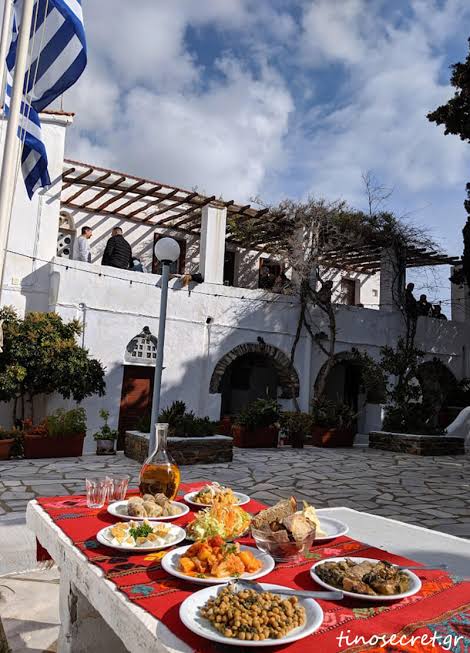
The central element of the celebration is the preparation and distribution of polysporia, a traditional mixture of various grains, cereals and legumes.
The Custom of the Holy Virgin of Mesosporitissa in Eleusis takes place on 20 November, the eve of the Presentation of the Virgin Mary. Traditionally, women prepared the ingredients at home, using agricultural products they had cultivated or collected during the year. These included wheat, chickpeas, beans, lentils and other grains and legumes.
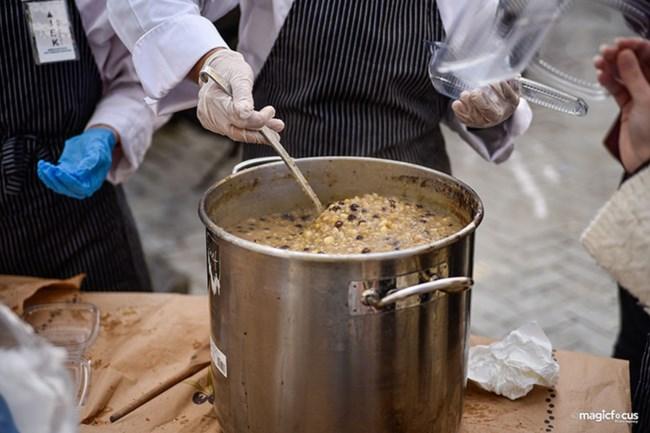
In Eleusis, preparing polysporia has also become a collective activity. According to the Greek Ministry of Culture’s documentation, members of the Eleusis Folklore Association To Adrahti revived the preparation and public distribution of the dish in 2014, after the tradition had gradually declined during the twentieth century.
The ingredients are generally boiled separately, then combined. The local Eleusinian preparation includes:
- Wheat, lentils, beans and chickpeas.
- Boiled corn.
- Raisins and pomegranate seeds.
- Petimezi (traditional grape molasses).
- Cinnamon and aromatic herbs.
- Sugar and, in some preparations, orange zest.
The combination of cereals, legumes, dried fruits and sweet ingredients creates a nutritious dish with a distinctive sweet flavour.
The polysporia is not simply a traditional seasonal food. Its ingredients carry symbolic meaning, representing the fruits of the earth, agricultural fertility and the hope for abundance. The mixture is also associated with the ancient concept of panspermia, meaning a mixture or offering of many different seeds.
The Religious Ceremony and Distribution
The celebrations of the Custom of the Holy Virgin of Mesosporitissa in Eleusis begin in the afternoon of 20 November, when local residents and visitors make their way up the archaeological hill towards the small chapel.
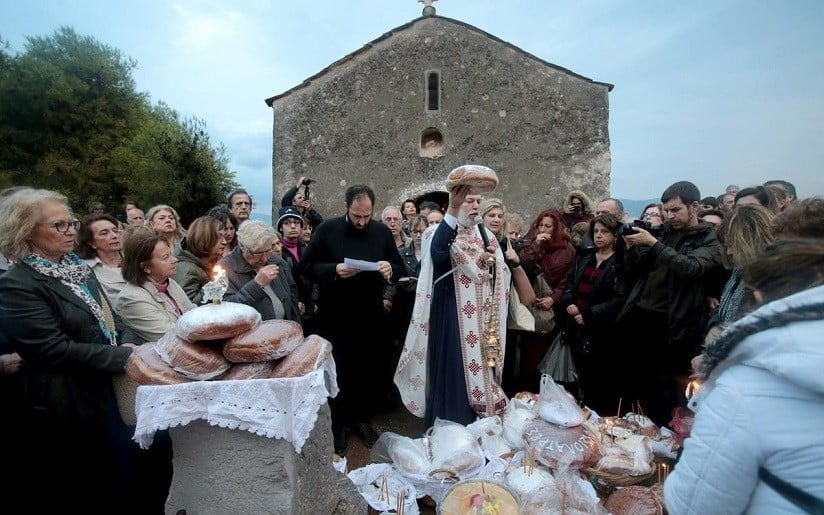
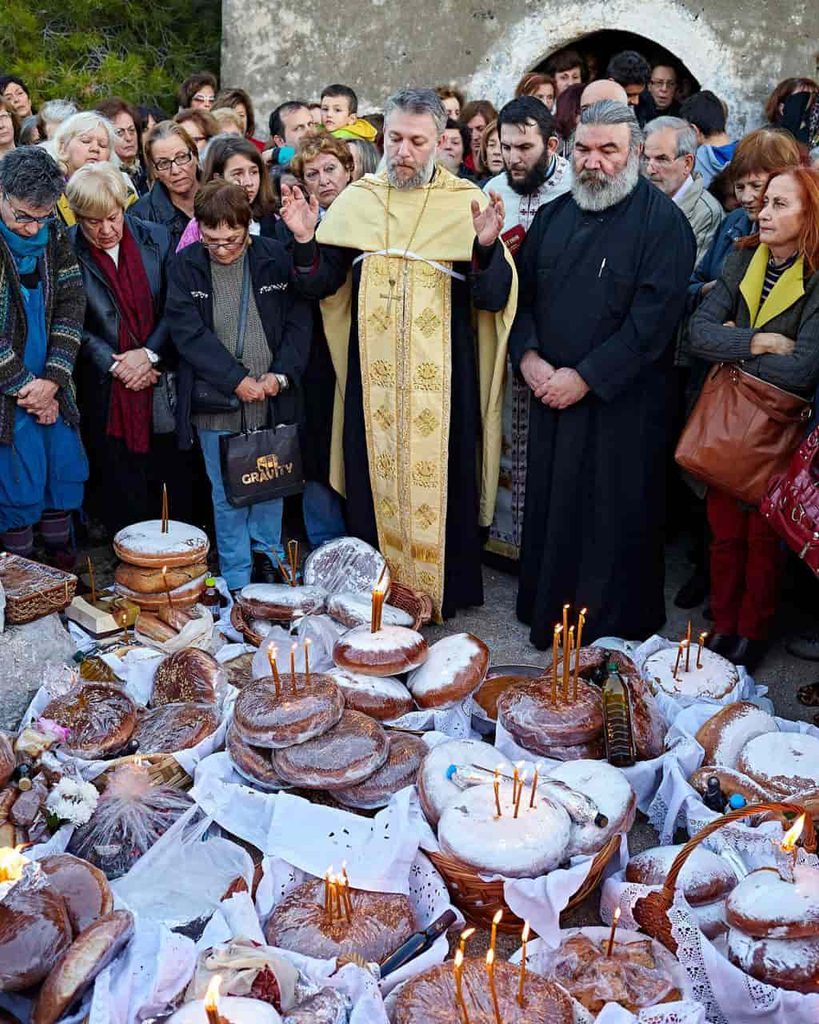
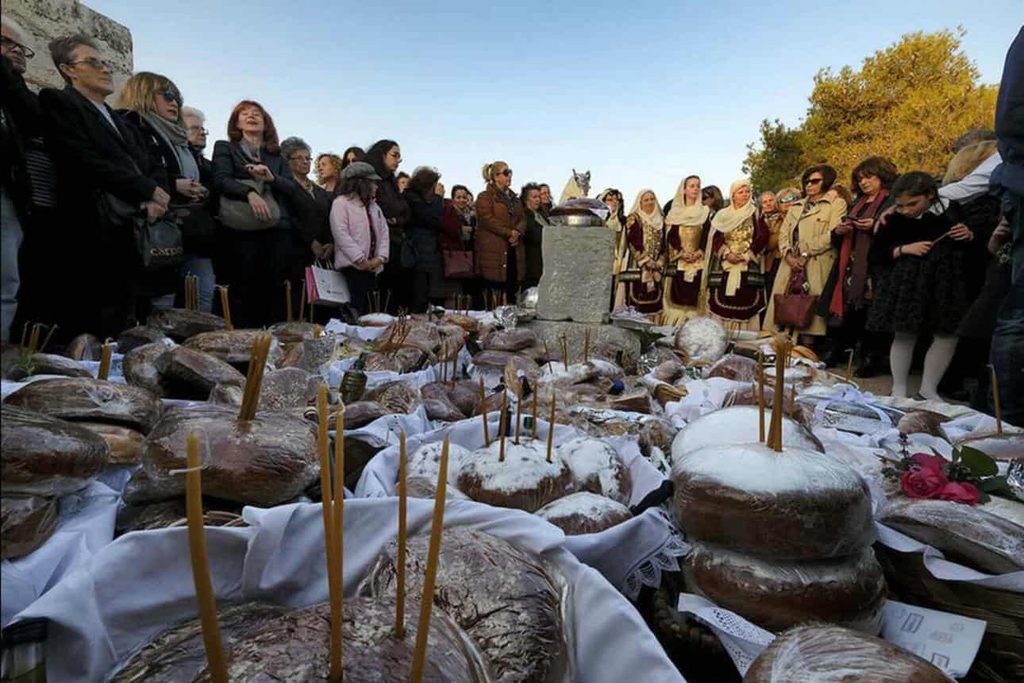
Traditionally, women carry baskets containing specially prepared bread, often placed on carefully arranged white embroidered tablecloths. The bread, known as artos, forms an important part of the religious offering.
During the afternoon, the faithful gather around the chapel for the solemn Vespers service. The priest blesses the bread offerings and invokes God’s blessing for the fertility of the land and the abundance of its produce.
One of the most evocative moments occurs around sunset, when candles placed on the loaves are lit, and the offerings are blessed. Following the service, the bread is cut and distributed among the congregation, accompanied by traditional wishes such as Chronia Polla (many happy returns) and Kai tou chronou (until next year).
After the religious ceremony, visitors receive portions of freshly prepared polysporia. The dish is traditionally offered as a communal blessing and is shared among the participants.
According to the Ministry of Culture’s detailed documentation, members of the local Folklore Association now prepare the polysporia at its museum on the morning of 20 November. They distribute it to visitors as they leave the archaeological site.
Sharing the food is particularly important: it turns the celebration into an occasion of hospitality, community participation, and the preservation of local identity.
The Revival and Preservation of the Tradition
Although the custom was once an integral part of Eleusis’s agricultural society, it gradually declined as the town became increasingly industrialised and its inhabitants moved away from traditional farming activities.
The Eleusis Folklore Association To Adrahti revived the preparation and distribution of polysporia in 2014, with support from the local community.
The association also helped document the celebration’s historical and cultural significance, preserving its traditional practices and passing them on to younger generations.
In 2020, the Ministry of Culture officially included the custom in Greece’s National Inventory of Intangible Cultural Heritage. Its recognition highlights the importance of safeguarding not only monuments and archaeological remains but also the customs, rituals, culinary practices and collective memories that give a place its cultural identity.
Today, the celebration attracts residents of Eleusis as well as visitors from neighbouring areas and further afield. It remains a distinctive example of how ancient agricultural symbolism, Christian religious traditions and local community life can coexist in the same historical landscape.
Important: If you are visiting specifically for the annual celebration on 20 November, check access arrangements with the archaeological site beforehand, as the chapel is within the controlled archaeological area.