A Culinary Mosaic of the Dodecanese
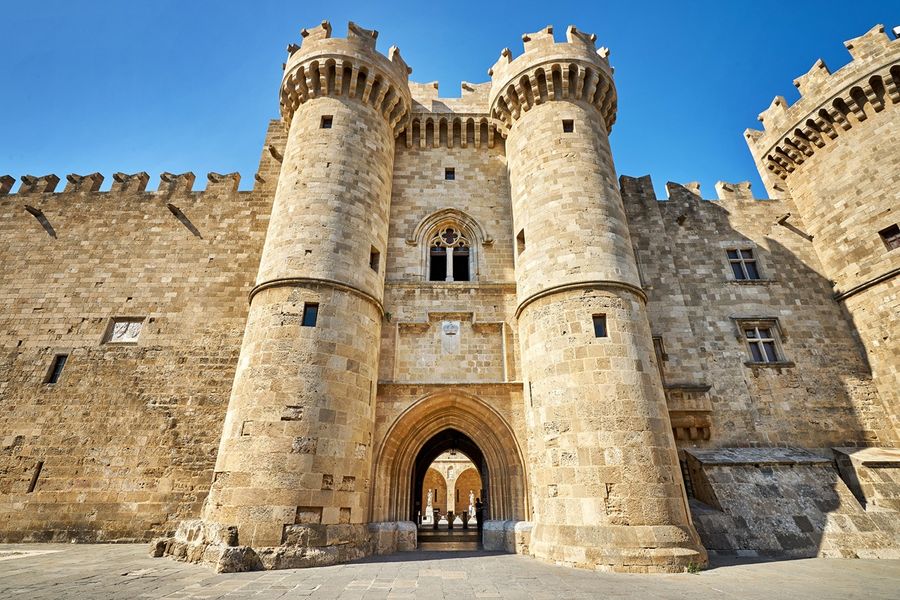
The largest island of the Dodecanese is a true crossroads of civilisations where history is tasted as much as it is seen. Shaped by centuries of conquest and cultural exchange, the island’s cuisine reflects influences from East and West alike. Ottoman Turks, Venetians, Franks, and Italians each left their imprint on local gastronomy, creating a culinary identity layered with tradition, adaptation, and creativity.
On a Food Tour, travellers discover a living cuisine rooted in agriculture, seasonal rhythms, and multicultural heritage—where every dish tells the story of the island’s complex past and vibrant present.
What Makes it a Unique Culinary Destination
A Crossroads of Cultures
Few Greek islands possess such a diverse culinary history. Ottoman techniques introduced aromatic spices and slow-cooked dishes; Venetian and Frankish traditions influenced baking and preservation; and Italian rule in the early twentieth century added new culinary nuances. The result is a cuisine that feels both distinctly Greek and uniquely local.
Agriculture and Island Diversity
Although modern tourism has reshaped parts of the Island, many inland villages maintain strong agricultural traditions. Mountain communities continue producing vegetables, grains, cheeses, and meats that form the backbone of local cooking. Seasonal ingredients remain central, preserving the authenticity of Rhodian flavours.
Tradition Meets Everyday Life
Rhodian cuisine is not elaborate for its own sake; it is practical, generous, and deeply connected to family life. Recipes passed down through generations transform humble ingredients into comforting dishes meant for sharing.
Local Highlights & Gastronomic Treasures
Vegetable-Centred Heritage
Vegetables and wild greens play a starring role in Rhodian cooking. Traditional dishes include:
- Amaranth and purslane ragout, showcasing wild Mediterranean greens.
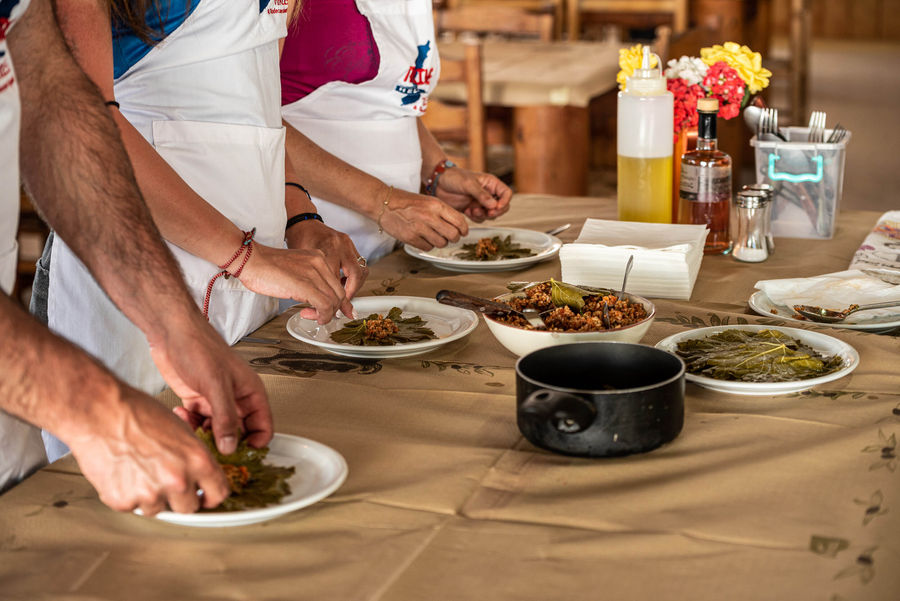
- Stuffed vegetables such as tomatoes, peppers, onions, and zucchini blossoms filled with rice and herbs.
- Baked squash and fried zucchini balls, highlighting seasonal produce.
- Pitaroudia, the island’s famous chickpea fritters flavoured with herbs and onions.
- Cyclamen-leaf rolls stuffed with lentils, a rare and historic recipe.
- Fakorizo is a comforting combination of lentils and rice cooked together.
- Green beans slowly simmered with tomatoes and peppers in olive oil.
These dishes reflect the island’s long tradition of plant-based cooking influenced by fasting customs and agricultural abundance.
Meat Dishes from the Countryside
In rural areas, meat dishes reveal the Island’s pastoral heritage. Goat meat is often cooked in a tall ceramic vessel known as a pydiakos, allowing it to simmer slowly and intensify flavour. Other favourites include:
- Chicken cooked with bulgur wheat
- Spentzofai, sausage with peppers in a rich tomato sauce
- Handmade loukoumi pasta, served with meat or vegetable sauces
These recipes showcase the balance between rustic cooking methods and refined flavours.
Seafood Traditions
Surrounded by the Aegean Sea, the Island naturally features fresh fish and seafood. Fried fish served with bulgur wheat, grilled catches of the day, and simple olive-oil-and-lemon preparations highlight the island’s maritime identity.
Cheese from Mountain Villages
Rhodian cheeses, often produced in small mountain communities, accompany nearly every meal. Made primarily from sheep and goat milk, they reflect local grazing traditions and the island’s varied terrain.
Wines and Local Spirits
Rhodes enjoys an international reputation for its wines, supported by approximately 600 hectares of vineyards across the island. Indigenous grape varieties thrive in the sunny climate and mineral-rich soils:
- Rhodes’ main winegrowing zone lies on the island’s central-western side. Athiri vineyards are limited, mainly on the slopes of Mount Atavyros and in parts of Kamiros, while Amorgiano (Mandilaria) is cultivated more widely at lower altitudes.
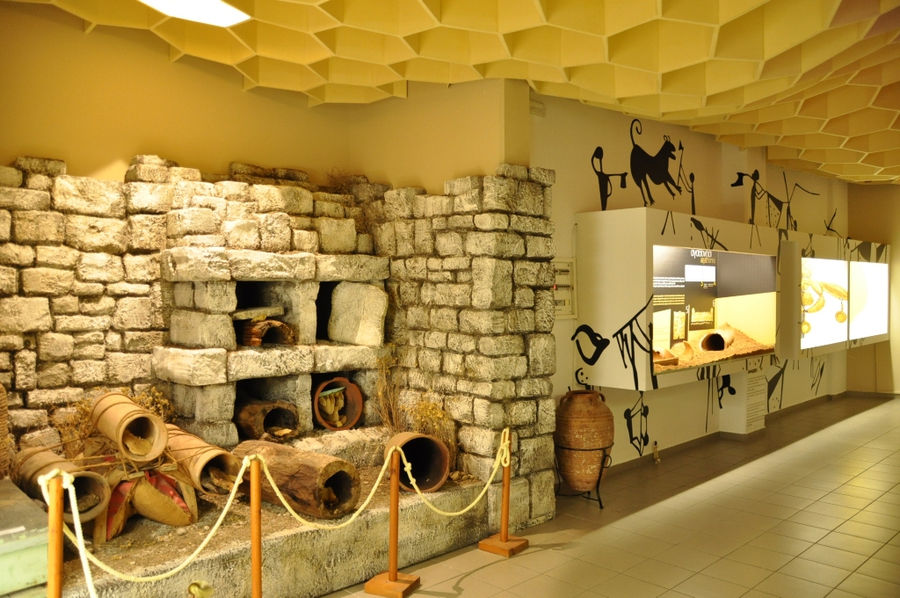
Athiri, grown at higher elevations, produces PDO Rhodes white wines noted for freshness. Viticulture has thrived here since antiquity, evidenced by stamped amphorae found across the Mediterranean. Although phylloxera reached Rhodes, rugged terrain protected many old, self-rooted vines. The island is renowned for bottled-fermented sparkling wines, combining ripe fruit with lively acidity; rosé examples rank among the Mediterranean’s finest. White wines mostly use Athiri, Assyrtiko, or Malagousia; reds emphasise Amorgiano and Mavrothiriko. - The PDO Muscat of Rhodes covers small, scattered vineyards across areas such as Archangelos, Embonas, Monolithos, Afandou, Apollona, Fanes and Psinthos, lacking the scale and continuity of the island’s Athiri and Amorgiano zones. Muscat White contributes both to this PDO and to several other Greek Muscat appellations, while Muscat di Trani — introduced by Italians during their rule of the Dodecanese — now survives in only a few vineyards. Wines labelled “Muscat of Rhodes” are dessert styles, produced either from sun-dried grapes (vin naturellement doux) or fortified (vin doux naturel). Low-yield, privately owned vineyards may additionally carry the prestigious “grand cru” designation.
Local wineries produce a wide range of wines—from crisp whites and rosés to sparkling, dry, and dessert wines—perfectly paired with Rhodian cuisine.
The island also boasts distinctive spirits. Ouzo, flavoured with anise and local herbs, is widely enjoyed alongside meze, while souma, a traditional distilled spirit, reflects village distillation customs. Another speciality is coriandolino, a unique liqueur combining ouzo, sugar, and an aromatic plant endemic to Rhodes.
Sweet Traditions
Desserts complete the island’s culinary story with flavours rooted in celebration and ritual:
- Melekouni, a honey-and-sesame sweet traditionally served at weddings
- Psychopita, a ceremonial cake associated with memorial gatherings
- Retseli, fruits preserved in grape must
- Moschopoungia, delicate, sweet pastries
- Pumpkin preserves and spoon sweets
- Creamy kaimaki, sweetened milk cream enjoyed as a comforting finale
These sweets reflect the island’s emphasis on hospitality and communal celebration.
A Destination Beyond the Plate
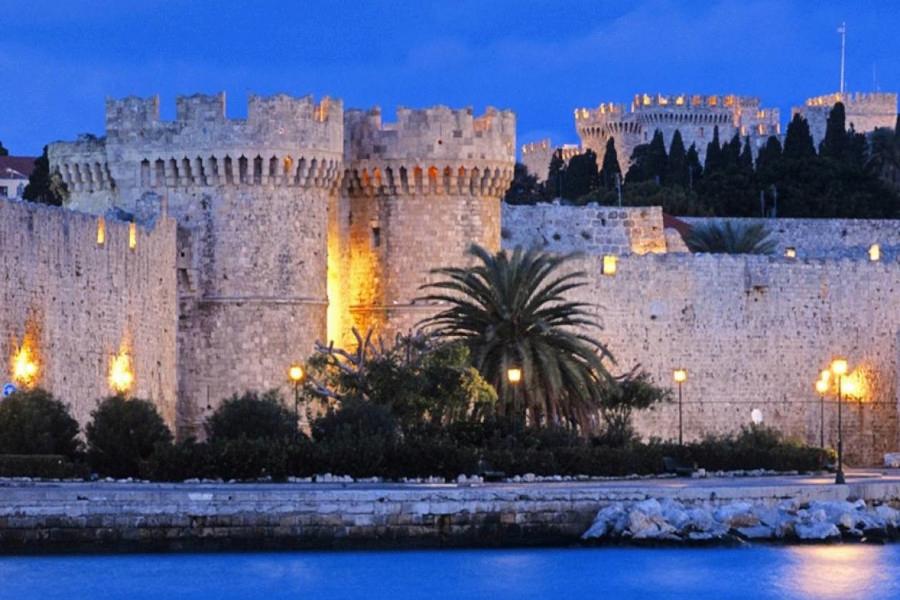
The Island offers more than exceptional food—it invites visitors into layers of history, from medieval streets and Byzantine churches to rural villages surrounded by olive groves and vineyards. Culinary exploration becomes a gateway to understanding the island’s identity, shaped by centuries of cultural exchange and resilient local traditions.
Explore Our Food Tours
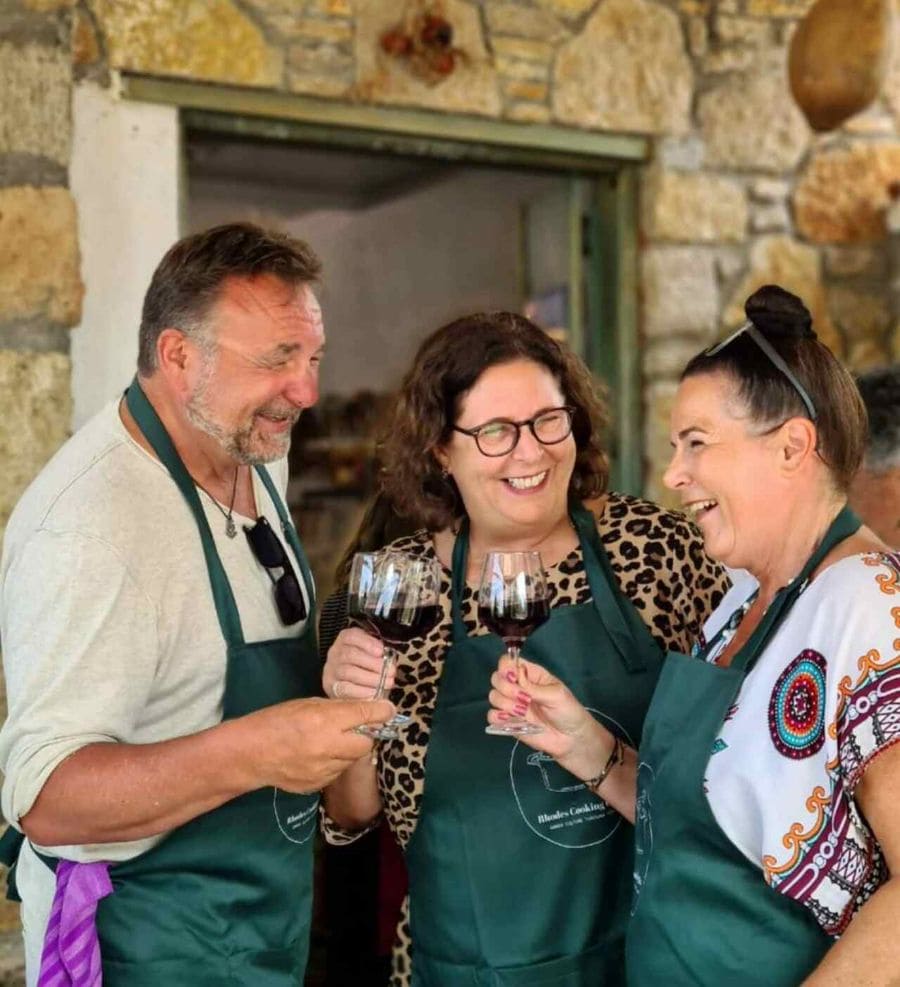
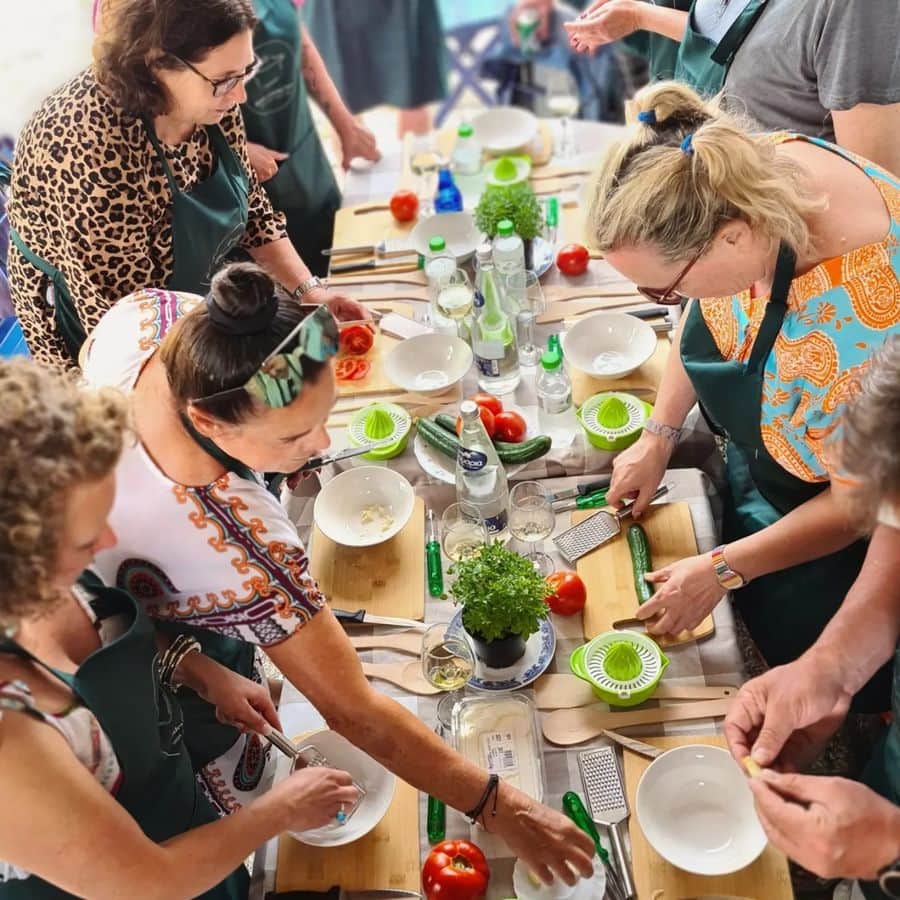
Join our Food Tours to experience the island through its flavours. Taste pitaroudia in family tavernas, sample mountain cheeses, enjoy Athiri and Mandilaria wines, and learn recipes shaped by centuries of Mediterranean history. From village kitchens to seaside tables, Rhodes offers a culinary journey where culture, history, and hospitality meet in every bite.