
A Traditional Greek Village Festival
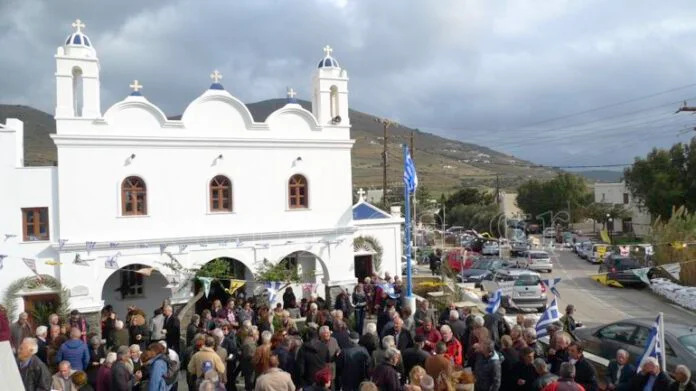
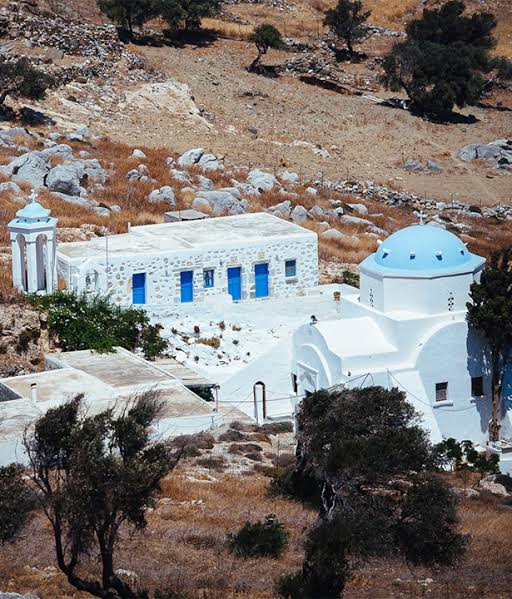
The Festival of St Gregory the Theologian in Falatados is a traditional religious celebration on the Greek island of Tinos. Celebrated every year on 25 January, the festival honours Saint Gregory the Theologian, Archbishop of Constantinople and one of the most influential Fathers of the Orthodox Church.
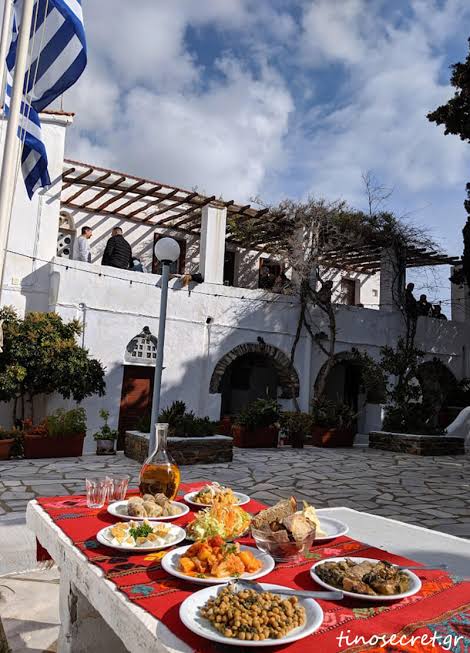
Like many panigyria (traditional Greek religious festivals), the celebration brings together faith, food and community life. After the religious services, villagers gather in the central square to share homemade dishes, local wine, and spirits, creating a warm winter celebration that reflects Tinos’ hospitality and customs.
For visitors interested in Greek island traditions, the festival offers an opportunity to experience Tinos beyond its busy summer season and discover the cultural character of one of its most distinctive inland villages.
Religious Significance: Honouring St Gregory the Theologian
Saint Gregory the Theologian, also known as Gregory of Nazianzus, was a fourth-century theologian and Archbishop of Constantinople. He is recognised as one of the great Fathers and teachers of the Orthodox Church and is particularly remembered for his theological writings and defence of Orthodox Christianity.
The Orthodox Church commemorates Saint Gregory on 25 January, the date traditionally associated with his death in 389. He is also honoured on 30 January, together with Saint Basil the Great and Saint John Chrysostom, during the feast of the Three Holy Hierarchs.
In Falatados, the religious celebration traditionally includes:
- Great Vespers: The evening service held on 24 January, the eve of the feast.
- Divine Liturgy: The principal morning service on 25 January.
- Local religious observances: Prayers and other ceremonies may form part of the celebration, depending on the parish programme.
The services provide the festival’s spiritual centre, bringing together residents and visitors to honour the saint.
The Traditional Panigyri of Falatados
Following the religious services, the celebration continues with a traditional panigyri in the village square. These gatherings are an important part of Greek island culture, combining religious observance with food, music and socialising.
For the occasion, local residents prepare and share homemade food and welcome fellow villagers, visitors and pilgrims. The gathering expresses filoxenia — the Greek tradition of hospitality — and offers a chance to experience the close-knit character of village life.
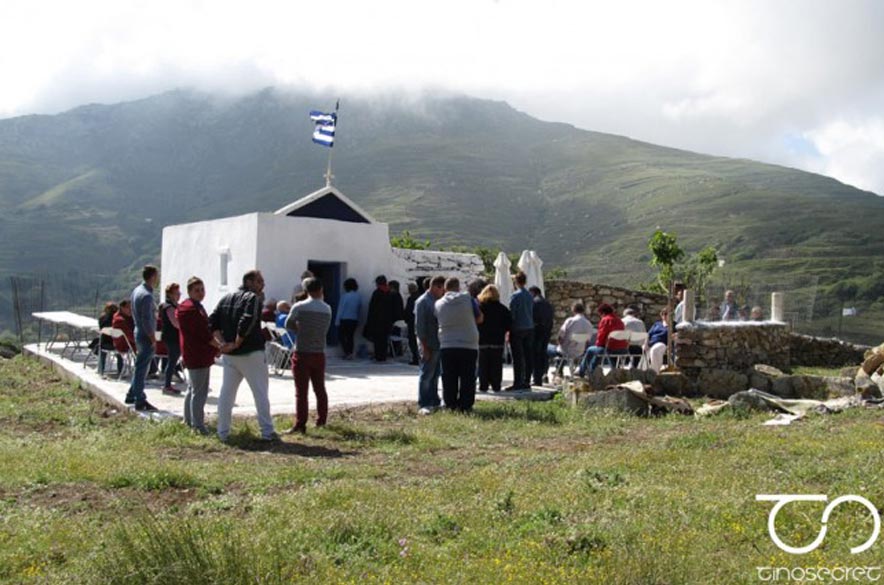
Depending on the arrangements made by the local organisers, the festivities may include:
- Homemade traditional dishes and local specialities
- Local wine and spirits, including raki
- Music, dancing and conversation
- A communal gathering that continues into the evening
As with many village festivals, the atmosphere is as important as the programme itself. The celebration brings generations together and helps keep local customs alive.
Tinian Gastronomy: Traditional Dishes and Local Products
Food is central to Tinian cultural identity. The island’s cuisine has developed around local agriculture, livestock farming, cheesemaking, fishing and winemaking. Many traditional recipes are closely connected with the religious calendar and village celebrations.
Although the exact food served at the Feast of St Gregory can vary, visitors to Falatados and the wider island can discover a rich range of local specialities.
Traditional Tinian dishes include:
- Artichokes: A celebrated local ingredient, prepared in several ways, including braised dishes, artichoke rice and artichoke pie.
- Sun-dried tomatoes in batter: A popular preparation using tomatoes dried under the Aegean sun.
- Froutalia: A hearty local-style omelette, often prepared with potatoes and sausage.
- Savore: A traditional sweet-and-sour fish preparation, sometimes made with petimezi (grape molasses).
- Pork sausages and saltsisi: Local cured-meat specialities, with saltsisi being a type of Tinian salami.
- Louza: Air-dried pork fillet seasoned with spices and traditionally served in thin slices.
Tinos is also known for its cheeses. Visitors should look out for graviera and kopanisti, as well as other island varieties such as petroma, malathouni and kariki.
The island’s traditional sweets are equally tempting. Worth trying are amygdalota, xerotigana, karidota, pasteli, loukoumi, and different varieties of halva. Tinian honey, often scented with the island’s aromatic herbs, is another local product to discover.
Falatados: A Village of Raki, Wine and Traditional Architecture
The festival also invites you to explore Falatados, one of Tinos’ most interesting traditional settlements. Located inland, approximately 11 kilometres from Chora, Falatados is widely described as the island’s second-largest village after Pyrgos. Its history is believed to date back to around 1400.
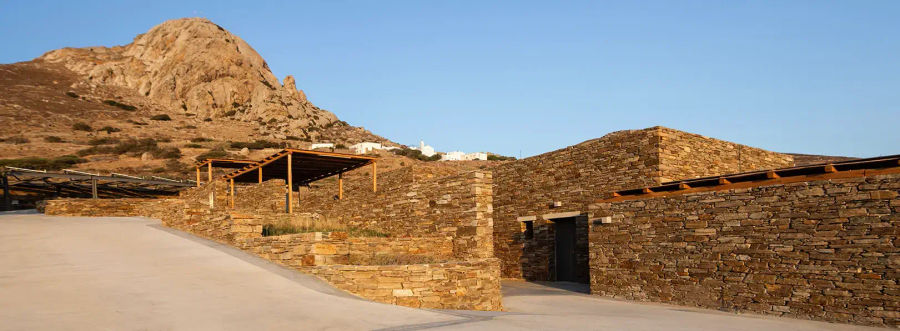
The village is known for its traditional Cycladic architecture, narrow lanes, stone features and welcoming square. Its agricultural heritage remains an important part of its identity, particularly its association with wine and raki production.
Falatados is especially famous for its raki, a traditional grape-based spirit. The village has a long tradition of distillation, and its rakizio—the communal celebration of making raki—is a notable local tradition. The annual Rakizio festivities are generally held in September, when distillation becomes a social occasion marked by music, food, and hospitality.
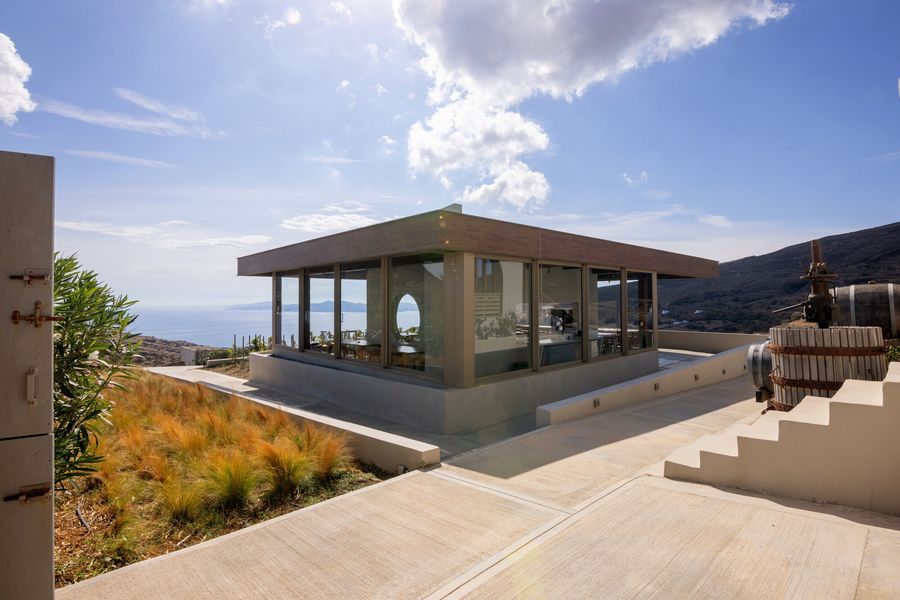
The village is also known for its wine production. Its vineyards and local wineries are part of Tinos’ wider winemaking tradition, where local grape varieties and the landscape contribute to a distinctive wine culture.
The House of Sketch: A Unique Cultural Attraction
One of Falatados’s most unusual attractions is the House of Sketch (Spiti tou Skitsou), a museum dedicated to the cartoons and caricatures of brothers Costas and Vassilis Mitropoulos, two well-known Greek political cartoonists.
Located near the village entrance, the museum offers an entertaining cultural stop for visitors interested in illustration, satire, and contemporary Greek history. Its collection celebrates the Mitropoulos brothers’ work and their connection to Falatados.
The village also has a folklore museum, making it worth spending time exploring its cultural attractions rather than visiting only for the festival.
Why Visit the Feast of St Gregory in Falatados?
The Feast of St Gregory the Theologian is more than a religious occasion. It expresses the relationship between faith, gastronomy, and community that remains central to traditional Greek island life.
A January visit offers a different perspective on Tinos than the familiar summer experience. The island is quieter, village life is less shaped by seasonal tourism, and visitors can discover local customs in a more intimate setting.
The celebration is particularly appealing to travellers interested in:
- Traditional Greek panigyria and Orthodox religious celebrations
- Authentic Cycladic village life
- Tinian food, wine and local spirits
- Raki-making and the island’s agricultural heritage
- Cultural attractions and traditional architecture
- Winter travel and cultural experiences in the Cyclades
Experience Tinos Beyond the Summer Season
The Feast of St Gregory the Theologian on 25 January is a lovely opportunity to discover Falatados and its traditions. From the religious services to the communal gathering in the village square, the celebration reflects the enduring importance of hospitality and shared customs in Tinian life.
Visitors can combine the festival with a walk through Falatados, a visit to the House of Sketch and an exploration of the island’s local food and wine culture. For anyone wishing to understand the authentic character of Tinos, this winter panigyri offers a memorable glimpse into the island’s living heritage. After the religious services, Falatados hosts a traditional panigyri (village festival) in the central square. This is a characteristic feature of Cycladic village life, in which religious celebrations are closely linked to communal feasting and social gatherings.
Local residents prepare and offer homemade dishes and local products, welcoming visitors and pilgrims with generosity and hospitality. The festival typically includes:
- Traditional food and local wine
- Raki (tsikoudia) and other spirits
- Music, dancing, and socialising until late
The event strengthens community bonds and preserves local culinary and social traditions.
Gastronomy & Local Products During the Festival
Food plays a central role in the festival. Typical dishes offered include:
- Artichokes cooked in various traditional recipes
- Sun-dried tomatoes in batter
- Froutalia (local omelette with potatoes and sausages)
- Fried fish with petimezi (grape molasses) sauce
- Pork sausages and the traditional dish “saltsitsi”
- Louza of Tinos (cured pork delicacy)
Visitors can also taste local cheeses such as graviera and kopanisti, as well as traditional sweets like amygdalota, xerotigana, karidota, pasteli, loukoumi, and various types of halva, accompanied by Tinos’ famous thyme honey.
Cultural & Tourism Importance
The Festival of St. Gregorios the Theologian is more than a religious event—it is a living cultural heritage tradition that highlights Falatados’ identity. The village is known for its wine presses, distilleries, and raki production, and the festival often offers visitors a chance to see local agricultural and wine traditions.
The celebration also attracts travellers interested in:
- Authentic Cycladic village festivals
- Religious tourism
- Local gastronomy and wine culture
- Winter cultural events in the Cyclades
Unlike summer festivals, the January celebration offers a rare chance to experience Tinos in the quiet winter season, providing deeper insight into local life and traditions.
Why the Festival Matters
The Festival of St. Gregorios the Theologian in Falatados is a vivid example of how religion, gastronomy, and community coexist in Greek island culture. It preserves ancestral traditions, strengthens social bonds, and offers visitors an authentic experience of Tinos’ spiritual and cultural heritage. The village of Falatados, renowned for its raki, is the second-largest village on the island of Tinos after Pyrgos, and features wonderful traditional architecture. At the village entrance, visitors can see the “Spiti of Skitso” (House of Cartoons), a museum featuring satirical drawings by the Mitropoulos brothers (Famous Greek cartoonists). The village has numerous wine presses and distilleries. Its wines are well-known and of excellent quality. The church of St. Gregorios is celebrated on January 25th. After vespers, a festival takes place in the central square, with food prepared by the local villagers.