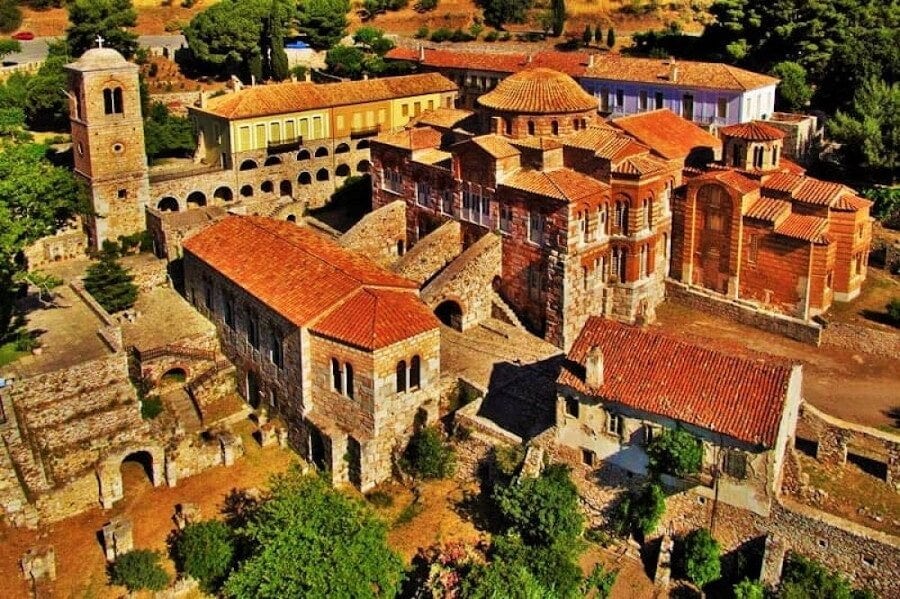
A Sacred Landmark in Central Greece: A Masterpiece of Byzantine Art & Sacred Heritage
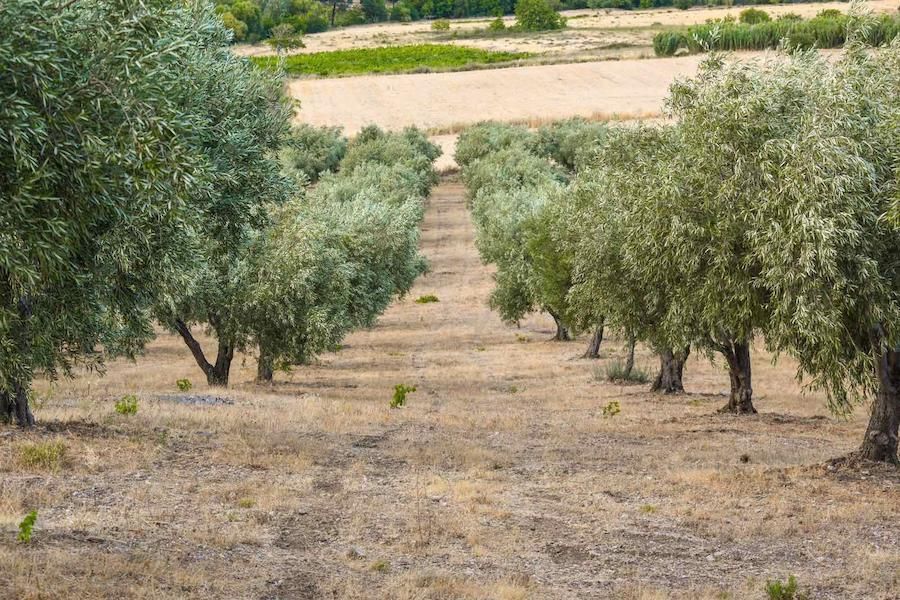
Hossios Loukas Monastery is one of the most significant monuments of Middle Byzantine art and architecture and is listed as a UNESCO World Heritage Site. Located on the slopes of Mount Helicon in Boeotia, it stands within a serene landscape of olive groves and rocky hills, offering a powerful combination of spirituality, history, and artistic excellence.
The monastery is dedicated to Saint Luke the Stiriote (Hossios Loukas), a 10th-century hermit monk renowned for his ascetic life and miracles, who became one of the most venerated saints of the Byzantine world.
Life, Death and the Origins of the Hossios Loukas Monastery
Saint Luke (Hossios Loukas) lived as a hermit in the area and was eventually buried beneath his cell. In 955 CE, monks built a cruciform church and the first monastic cells around his grave, marking the beginning of an organised monastic community.
The construction of the Hossios Loukas monastery complex itself dates to around 1011 CE, during a period of Byzantine cultural and artistic flourishing. Over time, the monastery became an important religious and pilgrimage centre, widely known across Byzantium for its extraordinary decoration and craftsmanship.
Byzantine Splendour and Artistic Richness
Hossios Loukas Monastery is celebrated for its exceptional architectural harmony and richly decorated interiors. The complex includes two main churches—the Church of the Theotokos and the Katholikon—along with monastic buildings enclosed within fortified walls.
The monastery is especially famous for its mosaics, considered among the finest examples of Byzantine art. These mosaics, often placed on curved and concave surfaces, display remarkable depth, colour, and spiritual symbolism.
Beyond mosaics, the monastery was originally adorned with sculpted marble, gold and silver plates, icons, chandeliers, silk curtains, and finely woven altar textiles. While only part of this decorative wealth survives today—such as coloured marble cladding and window railings—the remaining elements still reflect its former splendour.
History, Damage and Preservation
Throughout its long history, the monastery experienced periods of disaster, damage, and looting. Despite these challenges, much of its architectural and artistic heritage has been preserved.
Systematic restoration began in 1938 under the Greek Archaeological Service and the Archaeological Society. Conservation work has continued to the present day, ensuring the protection of one of Greece’s most important Byzantine monuments.
A Sacred and Natural Setting
Set within a quiet natural environment, the monastery is surrounded by olive trees and the slopes of Mount Helicon. This landscape reinforces its original monastic purpose: isolation, contemplation, and spiritual devotion.
The harmony between architecture and nature enhances its atmosphere, making it both a cultural monument and a place of reflection.
A Living Legacy of Byzantine Civilisation
Today, the Monastery of the Holy Cross (Hossios Loukas) remains one of the finest surviving examples of Middle Byzantine religious architecture. It continues to attract visitors interested in history, art, and spirituality, offering a rare glimpse into the artistic and religious achievements of Byzantium.
Combining sacred history, architectural brilliance, and centuries of preservation, the monastery stands as one of Greece’s most treasured cultural landmarks and a timeless symbol of Byzantine heritage. The originator of monastic life in this abbey was the saint, who practised asceticism there during the last seven years (946-953) and was buried beneath his cell. In 955 CE, monks built a cruciform building around his grave, along with the first cells of the monastic community.
The construction of the Hossios Loukas monastery itself dates to around 1011 CE. Over the ages, it has experienced disasters and looting, but its rare architecture and ornamental riches have been preserved. Restoration work began in 1938 by the Greek Archaeological Service and the Archaeological Society and continues today with great success.
There is evidence that the monastery was widely known throughout Byzantium for its elaborate ornamentation gracing all its surfaces. Aside from the walls, the sculpture, the gold and silver slabs, and its frescos and mosaics (particularly impressive on its concave surfaces), the inside of the monastery is adorned with icons, chandeliers, silk curtains and altar weavings. Only part of them has been preserved in place today, namely the coloured marble dressing and the window railings. The monastery is among the most important monuments of Middle Byzantine art and architecture and is on the UNESCO World Heritage List.