
Geography, History, Culture and Gastronomy
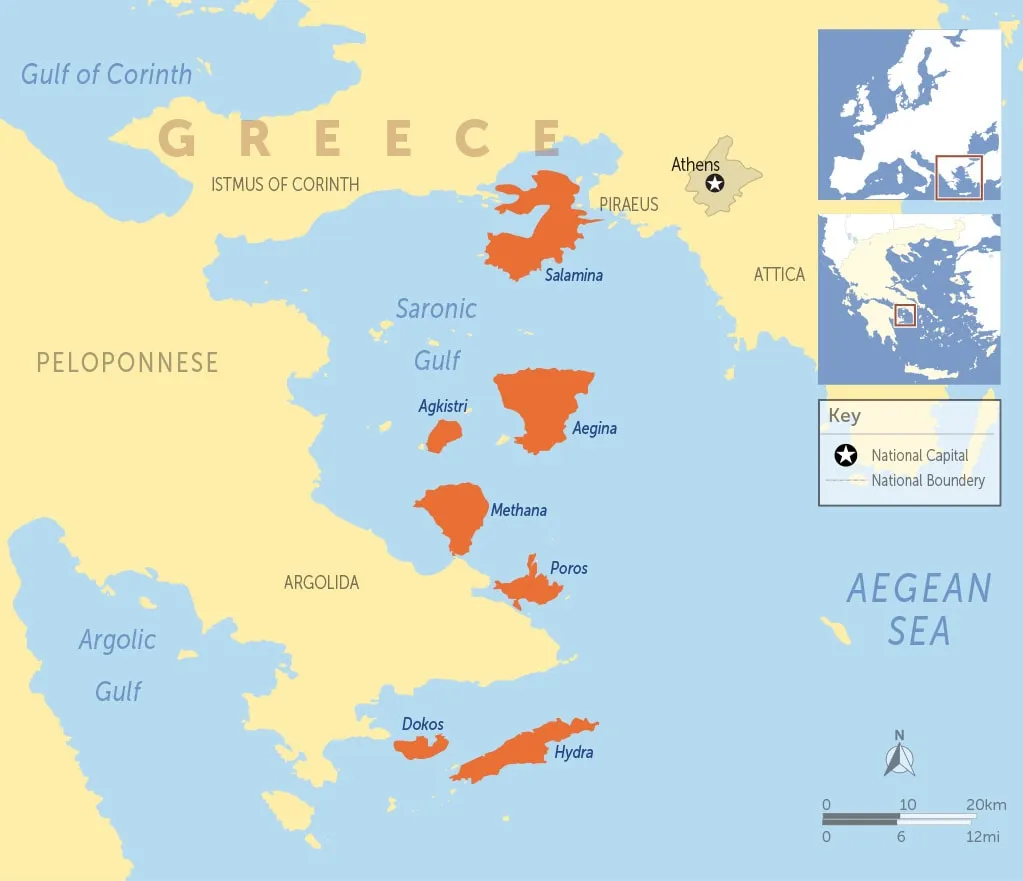
The Argosaronic Gulf Islands are a group of islands located in the Argosaronic Gulf, close to the coast of Athens. Because of their proximity to the Greek capital and regular ferry connections, they are a popular destination for short holidays, weekend trips, and day excursions. The islands are known for their beaches, traditional settlements, archaeological sites, and maritime history, offering visitors a combination of natural landscapes and cultural heritage.
The Argosaronic Gulf Islands include both inhabited and uninhabited islands. Among the most visited are Aegina, Poros, Hydra, Spetses, Agistri, Salamina, and Methana, each with distinct geographical features and historical development.
Location and Geography of the Argosaronic Gulf
The Argosaronic Gulf is situated between the southeastern coast of mainland Greece and the northeastern Peloponnese. The sheltered nature of the gulf contributes to relatively calm sea conditions, which historically supported maritime trade and, today, facilitate regular passenger transport and sailing activities.
The islands vary in size, terrain, and vegetation. Some, such as Aegina and Salamina, are relatively large and densely populated, while others, such as Agistri, are smaller and more sparsely developed. Pine forests, rocky coastlines, low hills, and cultivated land are common features throughout the region.
Historical Overview
Archaeological evidence indicates that the Argosaronic Gulf Islands have been inhabited since prehistoric times. Their location along maritime routes connecting mainland Greece, the Peloponnese, and the Aegean Sea contributed to their historical importance.
During antiquity, several islands played roles in trade, naval activity, and religious life. Salamina is historically significant as the site of the Battle of Salamis in 480 BC, a major naval engagement during the Greco-Persian Wars.
In later periods, including the Byzantine and Ottoman eras, the islands continued to be associated with shipping, fishing, and commerce. Their maritime traditions remained strong into the modern era.
The Greek War of Independence
The Greek War of Independence (1821–1830) marked an important chapter in the history of the Argosaronic Islands. Hydra and Spetses, in particular, contributed naval forces and resources to the revolutionary effort. The economic activity of these islands during the late 18th and early 19th centuries is reflected in the preserved architecture found in their main towns.
The Islands of the Argosaronic Gulf
Aegina
Aegina is one of the closest islands to Athens and has long been a destination for short visits. The island is known for agricultural production, including pistachios, which are closely associated with the local economy.
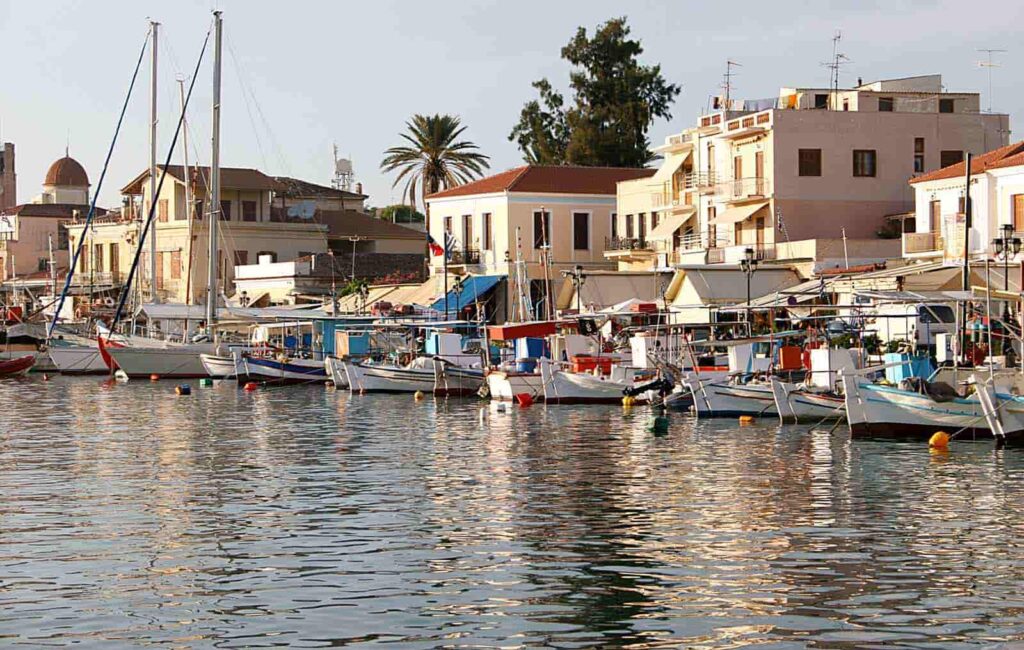
Aegina is also home to important archaeological sites, most notably the Temple of Aphaia, dating to the early 5th century BC. The island has several towns and villages, organised beaches, and traditional harbours.
Poros
Poros consists of two landmasses connected by a bridge and is separated from the Peloponnese by a narrow channel. The island is characterised by pine-covered hills and a compact town built amphitheatrically above the port.
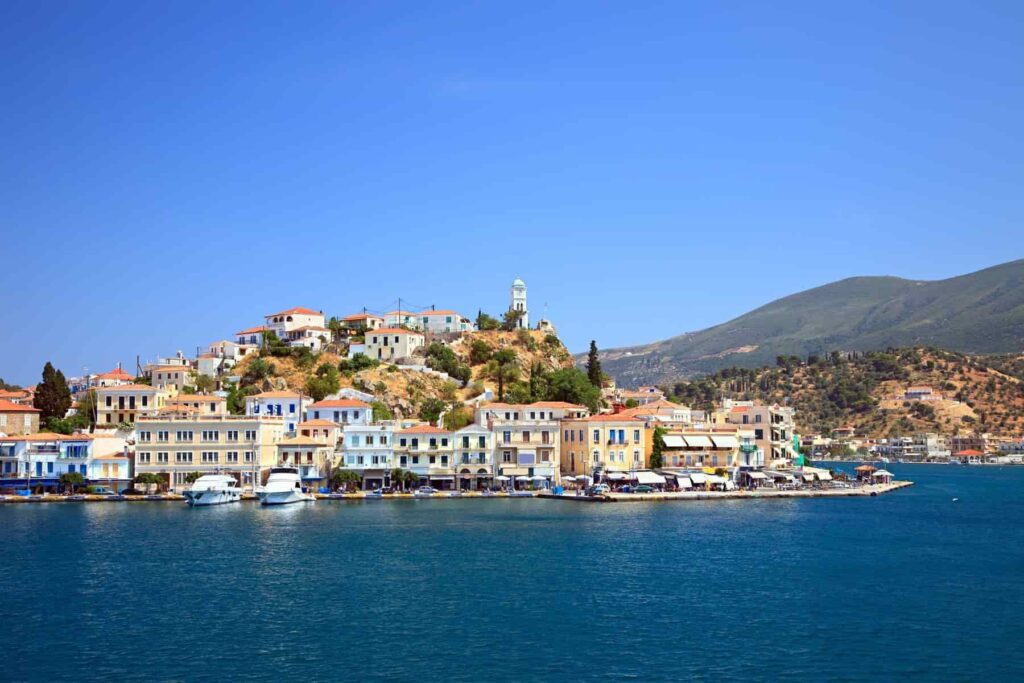
Poros has a naval presence and a long association with maritime activity. Today, it attracts visitors seeking a quiet environment, coastal walks, and access to nearby beaches.
Hydra
Hydra is known for its preserved architectural character and restrictions on motor vehicles. Transportation on the island is primarily by foot, on an animal’s back, or by boat. The main town features stone houses and historic mansions built during the island’s period of maritime prosperity.
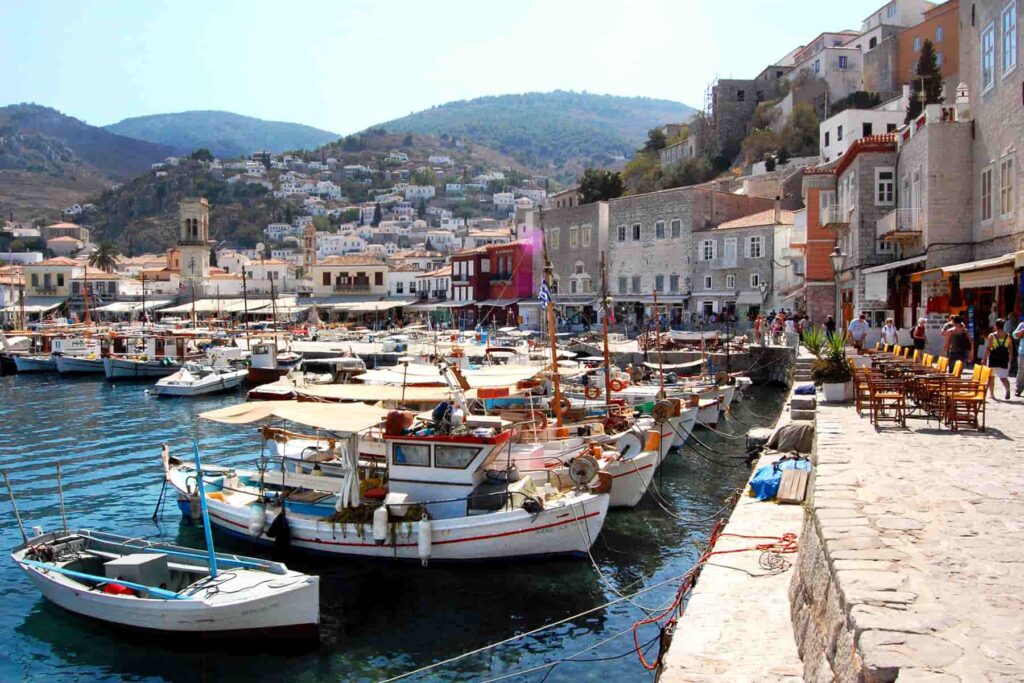
Hydra has been associated with artistic and cultural activity, particularly during the 20th century, and hosts museums and cultural institutions.
Spetses
Spetses is located near the eastern coast of the Peloponnese and has a long maritime tradition. The island played a role in the Greek War of Independence and preserves notable historic residences.
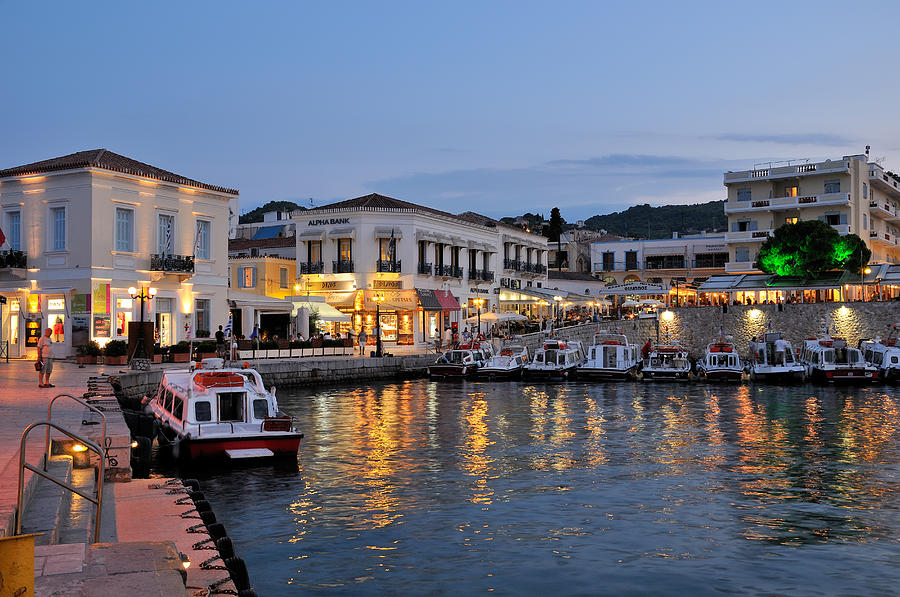
The main town includes neoclassical buildings, a harbour area, and museums related to local history. Cultural events, including commemorations of historical events, take place annually.
Agistri
Agistri is a small island with a limited permanent population and development. It is known for its natural environment, pine forests, and coastal areas suitable for swimming.
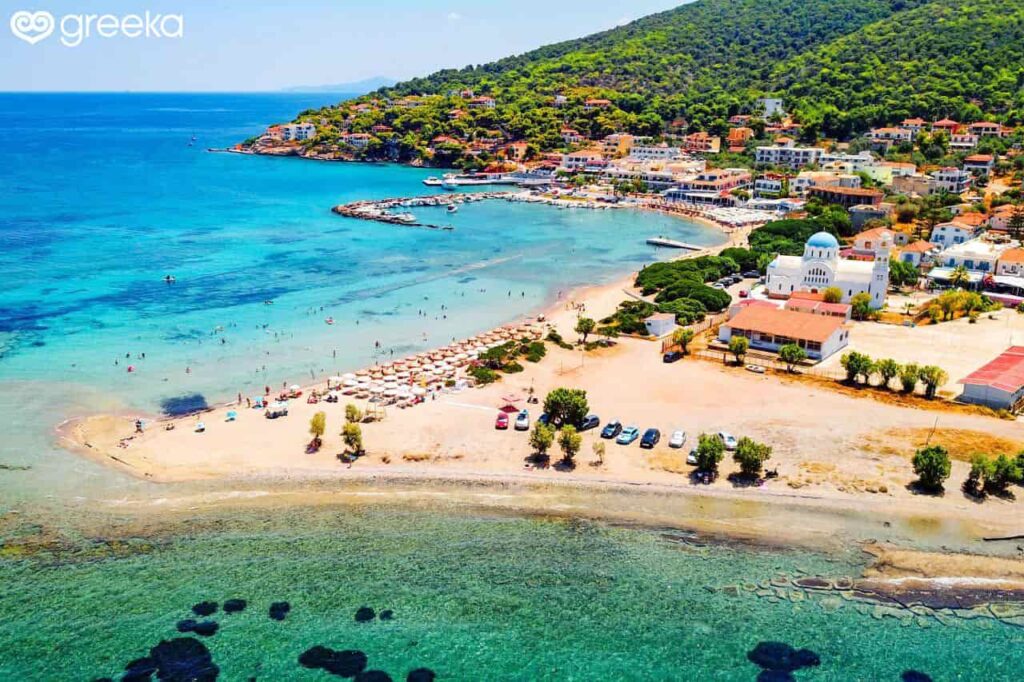
Agistri attracts visitors primarily during the summer months and offers basic tourist facilities, small settlements, and access to nearby beaches.
Salamina and Methana
Salamina is the largest island in the Argosaronic Gulf and is connected to the mainland by frequent ferry services. While parts of the island are urbanised, others retain traditional settlements and coastal landscapes.
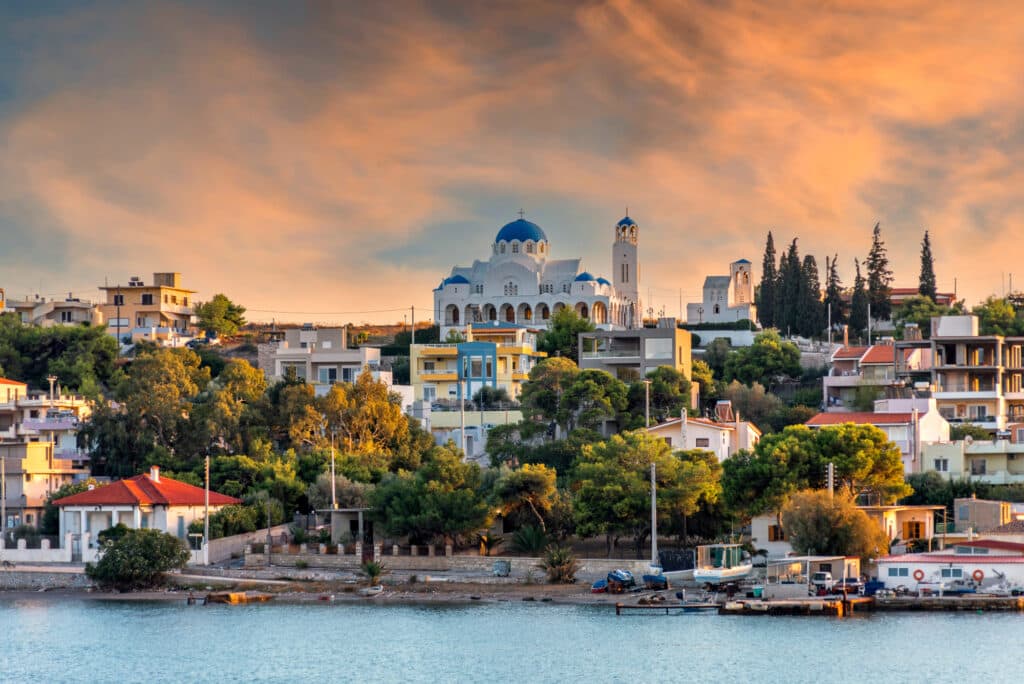
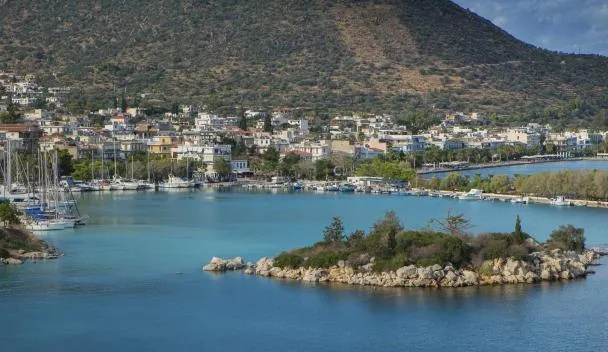
Methana, technically a peninsula, is often included in the Argosaronic Gulf. It is of geological interest due to its volcanic terrain and includes thermal springs and walking paths.
Gastronomy of the Argosaronic Gulf Islands
The local cuisine of the Argosaronic Gulf Islands reflects traditional Greek cooking practices and the use of fresh, locally available ingredients. Due to the islands’ long-standing fishing traditions, seafood plays a central role in regional gastronomy, alongside seasonal vegetables, olive oil, and simple preparation methods.
Common dishes found across the islands include:
- Fresh fish, prepared grilled or fried
- Octopus and squid
- Fish soups such as kakavia
- Seasonal vegetable dishes cooked with olive oil
Aegina pistachios are a widely recognised local product and are commonly used in sweets and confectionery. Desserts throughout the Argosaronic Islands often include almond-based sweets (amygdalota), pastries made with honey or syrup, and traditional biscuits.
Each island contributes its own variations to the region’s gastronomy. While cooking styles remain rooted in simplicity, differences emerge based on local produce and culinary influences. Hydra and Spetses, shaped by their maritime history, feature dishes that reflect broader culinary influences. In contrast, Poros and Agistri are known for more rustic fare that emphasises local ingredients and the daily catch.
Dining in the Argosaronic Gulf Islands typically takes place in traditional tavernas, small restaurants, and seaside eateries, often located near harbours or within village centres. Meals are generally based on fresh ingredients and local recipes, offering visitors an authentic introduction to the region’s culinary traditions.
Tourism and Accessibility
One of the defining characteristics of the Argosaronic Islands is their accessibility from Athens. Regular ferry and hydrofoil services operate from the port of Piraeus, allowing visitors to visit several islands in a short time.
Tourism infrastructure varies by island, ranging from developed accommodation options to more limited facilities in smaller destinations. Activities generally include swimming, walking, cultural visits, and boating.
Conclusion
The Argosaronic Gulf Islands form a geographically compact and historically significant region of Greece. Their long association with maritime activity, combined with archaeological remains, preserved architecture, and traditional lifestyles, contributes to their cultural importance.
Close to Athens and accessible year-round, the islands offer visitors opportunities to explore Greek history, coastal landscapes, and local gastronomy in a setting shaped by centuries of human activity. The Argosaronic Islands remain an integral part of Greece’s cultural and geographic identity.