Mount Athos (Aghio Oros): The Living Heart of Orthodox Monasticism
Rising from the azure waters of the northern Aegean Sea, Mount Athos, or Aghio Oros (Holy Mountain), is one of the most extraordinary spiritual and cultural landscapes in the world. Located on the easternmost peninsula of Chalkidiki in the region of Macedonia, northern Greece, it is a self-administered region of the Greek State and the foremost centre of Orthodox monasticism. For more than a thousand years, Mount Athos has remained a place of prayer, contemplation, and devotion, preserving traditions that have largely disappeared elsewhere.
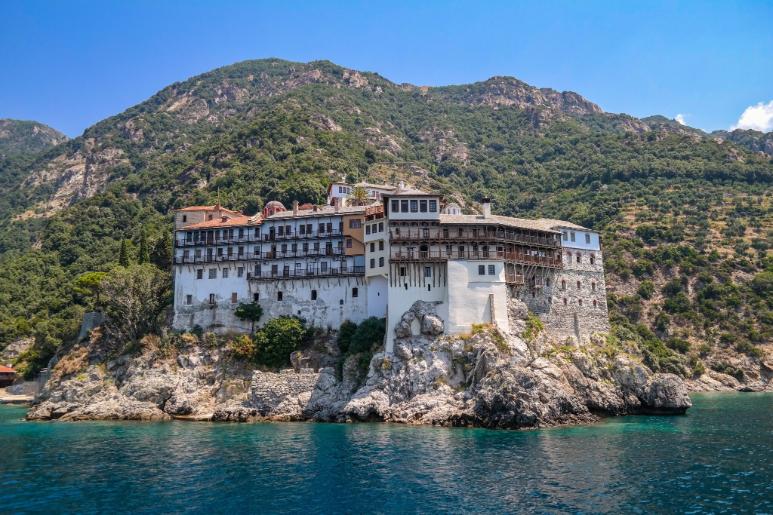
The Athos peninsula is the easternmost and most rugged of the three peninsulas that form Chalkidiki. Dominating the landscape is the majestic Mount Athos, which rises dramatically to 2,033 metres above sea level. Its steep slopes, dense forests, hidden coves, and spectacular cliffs create a setting of remarkable natural beauty, where the grandeur of nature and the tranquillity of spiritual life exist in perfect harmony.
The history of organised monastic life on Mount Athos dates back to the middle of the ninth century. Drawn by the peninsula’s isolation and serenity, monks and hermits settled there in search of a life dedicated to prayer and spiritual discipline. Over time, these small communities developed into a unique monastic republic that continues to flourish today.
Scattered throughout this wild and awe-inspiring landscape are twenty Holy Monasteries, each possessing its own architectural character, spiritual traditions, and historical significance. Most of these monasteries are Greek, reflecting the deep connection between Mount Athos and Greece’s Orthodox heritage. However, the Holy Mountain has always maintained an international character within the Orthodox world. The Hilandar Monastery is Serbian, the Zograf Monastery is Bulgarian, and the Monastery of Saint Panteleimon is Russian, symbolising the spiritual unity of Orthodox peoples across national boundaries.
For over a millennium, Mount Athos has served as what many have called the “ark of the living presence” of Orthodox monastic tradition and Christian civilisation. Unlike many historic religious sites that function primarily as museums or monuments, Athos remains a living spiritual community where monks continue to follow ancient rules of worship, work, and communal life. Daily services, fasting, manual labour, and prayer remain at the centre of monastic existence, preserving a way of life that has changed little since Byzantine times.
The Holy Mountain is also one of the world’s most important repositories of religious and cultural treasures. Its monasteries house priceless libraries containing thousands of manuscripts, rare books, historical documents, and theological works. Many of these manuscripts date back centuries and provide invaluable insight into Byzantine history, Orthodox theology, philosophy, and medieval scholarship. Equally impressive are the collections of ancient icons, sacred vessels, holy vestments, reliquaries, and liturgical objects that have been carefully preserved through generations of monastic stewardship.
Much of the material wealth and artistic splendour of Mount Athos was accumulated during the Palaiologos Dynasty (1261–1453), the final and often culturally brilliant era of the Byzantine Empire. During this time, many monasteries received generous imperial patronage, enabling the construction of magnificent churches, defensive towers, frescoes, and libraries. These achievements transformed Athos into one of the most important centres of Byzantine art and spirituality.
The spiritual and cultural significance of Mount Athos has been recognised internationally. In 1988, it was inscribed on UNESCO’s World Heritage List in recognition of its outstanding universal value as both a cultural and natural treasure. The designation acknowledges not only the exceptional architecture and artistic heritage of the monasteries but also the unique continuity of monastic life that has endured for more than a thousand years.
One of the most distinctive features of Mount Athos is its special legal and administrative status. Although it is part of the Hellenic Republic, the Holy Mountain enjoys a significant degree of self-government under the authority of its monastic community. This autonomy has enabled Athos to preserve its traditions and institutions across centuries of political change, including Byzantine, Ottoman, and modern Greek rule.
Another characteristic of Mount Athos is the long-standing restriction on women’s entry, known as the Avaton. The exclusion of women forms part of the customary laws governing the monastic state and is rooted in centuries-old monastic tradition. Incorporated into the canons of the Holy Mountain, this practice was later validated under Greek constitutional law after Athos was incorporated into the modern Greek state. While the restriction continues to generate discussion in contemporary society, it remains a defining aspect of Athonite monastic life and identity.
Today, Mount Athos remains one of the world’s most remarkable spiritual communities. Pilgrims, scholars, and visitors who receive permission to enter often describe the experience as a journey into a different world—one where time seems to move more slowly, where ancient traditions continue uninterrupted, and where faith remains at the centre of everyday life. Surrounded by breathtaking natural beauty and enriched by an unparalleled cultural heritage, the Holy Mountain stands as a living monument to the enduring legacy of Orthodox Christianity and Byzantine civilisation.
More than a historic site, Mount Athos is a living testimony to the power of spiritual dedication, preserving a sacred tradition that has inspired generations for over a thousand years.
Food on Mount Athos: Simplicity, Tradition, and Spirituality
Food on Mount Athos is not just nourishment but part of monastic life and spiritual discipline. For more than a thousand years, monks have followed a diet based on simplicity, moderation, and Orthodox Christian fasting traditions, reflecting respect for body, soul, and nature.
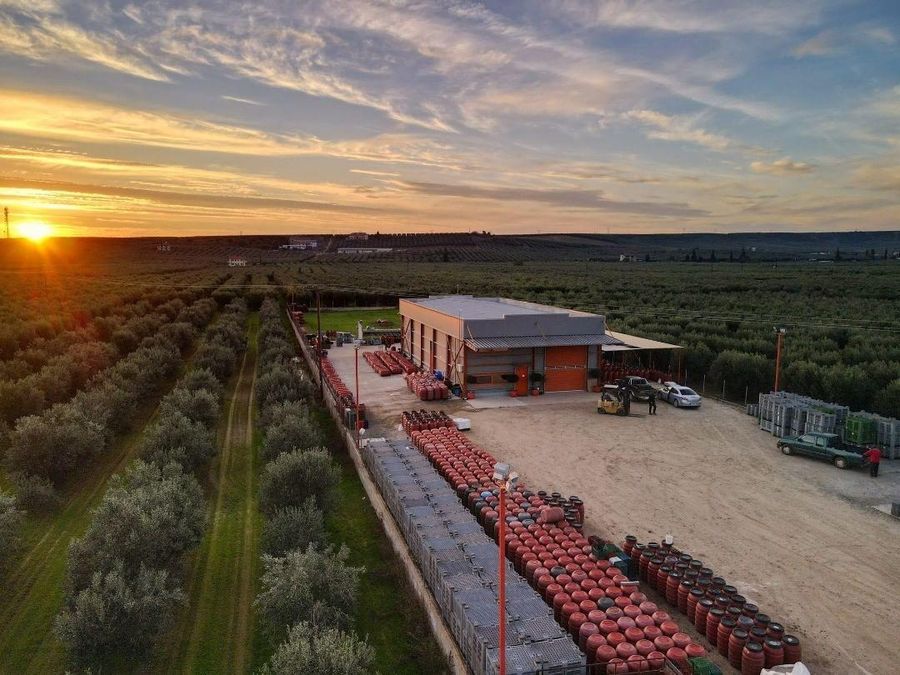
The Athonite diet is closely aligned with the Mediterranean diet. It is mainly plant-based, centred on vegetables, legumes, fruits, olives, nuts, herbs, and whole grains. Most ingredients come from monastery gardens or local production, and olive oil is a daily staple used in nearly all dishes.
Legumes such as lentils, beans, chickpeas, and broad beans form the core of meals, often prepared in soups and stews. Seasonal vegetables like tomatoes, peppers, courgettes, aubergines, onions, and greens are widely used, flavoured with herbs such as oregano, thyme, rosemary, and mountain tea gathered from the peninsula.
Orthodox fasting rules strongly shape the diet. Throughout the year, monks observe long fasting periods when meat is completely avoided, and dairy products and fish are restricted. As a result, plant-based cooking dominates daily meals. Fish is only eaten on specific feast days, and meat is traditionally absent entirely.
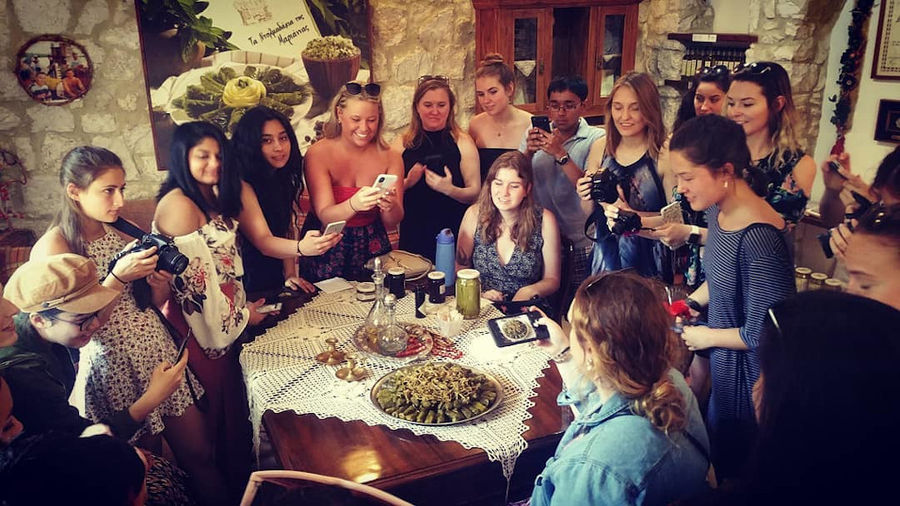
Despite its simplicity, Athonite cuisine is rich and varied. Typical dishes include lentil soup, bean stews, vegetable casseroles, stuffed vegetables, rice dishes, wild greens, salads, olives, and seasonal fruit. Desserts are modest, usually fruit, honey, nuts, or simple sweets prepared for religious celebrations.
Many monasteries produce their own wine, olive oil, honey, herbal remedies, and preserves using traditional methods that date back to Byzantine times. These products are known for their authenticity and quality.
Meals are taken in communal dining halls called trapezas, where monks eat in silence while religious texts are read aloud. Eating is brief and disciplined, reinforcing gratitude, mindfulness, and the spiritual purpose of food beyond physical nourishment.
In recent years, the Athonite diet has attracted scientific interest for its health benefits, particularly its links to longevity and well-being. However, for monks, its primary purpose remains spiritual rather than nutritional.
Overall, food on Mount Athos reflects a way of life rooted in faith, discipline, and harmony with nature, preserving a culinary tradition that has remained largely unchanged for centuries.
Photo: timothysfamily.com