
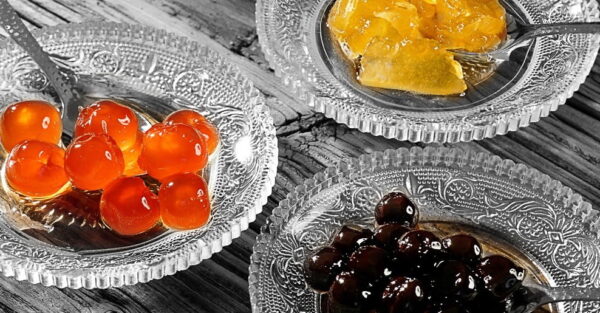
A Traditional Greek Delight
Spoon sweets are traditional sweet preserves, served on a spoon as a gesture of hospitality in Greece and other parts of the Eastern Mediterranean. They are more than just desserts—they are symbols of warmth, generosity, and cultural tradition. Offering spoon sweets to a guest is considered a heartfelt welcome, often accompanied by a small glass of cold water and a cup of Greek coffee or tea.
What Are Spoon Sweets?
Spoon sweets are made by preserving fruits, nuts, or even flowers in sugar syrup. The process allows the natural flavours, colours, and aromas of the ingredients to remain intact, resulting in a sweet preserve that is both visually appealing and delicious. Unlike regular jams or marmalades, spoon sweets are meant to retain the original shape, texture, and essence of the fruit or ingredient used.
They are typically served in small porcelain or crystal glass dishes, with only a teaspoonful offered at a time. This careful presentation highlights the treat as a special offering rather than just a casual dessert.
Popular Fruits and Ingredients for Spoon Sweets
Almost any fruit can be used to make spoon sweets, although sour and bitter fruits are especially prized for their balance of sweetness. Traditional fruits include:
-
Seedless grapes and mulberries
-
Berries such as blackberries and raspberries
-
Citrus fruits like bergamot, oranges, kumquats, lemons, tangerines, and grapefruit
-
Stone fruits such as apricots, cherries (both sweet and sour), and plums
-
Apples, pears, quinces, figs, and prunes
Even soft fruits like melon and watermelon can be used, though achieving the right texture is more challenging. The fruit must retain a slight firmness to withstand the cooking process without turning mushy.
Beyond fruits, nuts such as green unripe walnuts, pistachios, and hazelnuts are also used. Some varieties include flower petals, especially rose petals, which impart a delicate fragrance and flavour. In some regions, unusual ingredients such as citrus peels, blossoms, and even small vegetables like baby eggplants and cherry tomatoes are preserved as spoon sweets.
How They are Prepared
The preparation of spoon sweets is both an art and a science. First, the fruit or ingredient is carefully washed, peeled if necessary, and sometimes soaked in water or lemon juice to maintain colour and firmness. Next, it is cooked gently in sugar syrup, often with a splash of lemon juice or a hint of spice, such as cinnamon or clove.
The cooking process must be monitored closely to prevent overcooking, which can cause the fruit to lose its shape and vibrant colour. A well-made spoon sweet will have a translucent, glossy appearance, with the original texture, aroma, and flavour of the fruit intact.
Serving Spoon Sweets
Traditionally, spoon sweets are served in small glass or porcelain dishes, with a teaspoon for the guest. They are most commonly paired with Greek coffee, tea, or a glass of cold water, emphasising the ceremonial aspect of offering this sweet treat.
Modern uses of spoon sweets have expanded beyond traditional hospitality. They are frequently used as:
-
Toppings for ice cream or yoghurt
-
Ingredients in desserts and pastries
-
Spreads on toast or bread for breakfast
-
Simple snacks to be enjoyed alone
Homemade vs. Store-Bought Spoon Sweets
While homemade spoon sweets remain the most authentic, modern supermarkets often carry ready-made versions. These commercial products are usually made with glucose syrup instead of sugar for cost efficiency and ease of preparation. Although convenient, store-bought versions may lack the delicate flavours and aroma of homemade preserves.
Making spoon sweets at home allows for customisation of sweetness, texture, and flavour. Families often pass down recipes from generation to generation, maintaining unique techniques and regional variations.
Tips for Making Perfect Spoon Sweets
To make spoon sweets that impress, consider the following tips:
-
Choose fresh, ripe fruits or high-quality ingredients.
-
For soft fruits like melon or watermelon, cut them into small, uniform pieces and handle them gently.
-
Cook the fruit slowly in sugar syrup to maintain its colour and aroma.
-
Add lemon juice to help preserve the natural colour and prevent crystallisation.
-
Use small glass jars for storage to maintain freshness and presentation.
The Cultural Significance
Spoon sweets are deeply embedded in Greek culture. They are a gesture of hospitality, a symbol of generosity, and a reminder of family traditions. Offering spoon sweets to guests is a timeless practice that is still cherished today. Beyond Greece, variations of spoon sweets exist throughout the Eastern Mediterranean, reflecting the region’s rich culinary heritage.
In addition to being a treat for guests, spoon sweets also celebrate the bounty of the seasons. From cherries in spring to quinces in autumn, the preserves reflect the natural cycles of local fruits and ingredients.