
History and Origins of Loukoumi
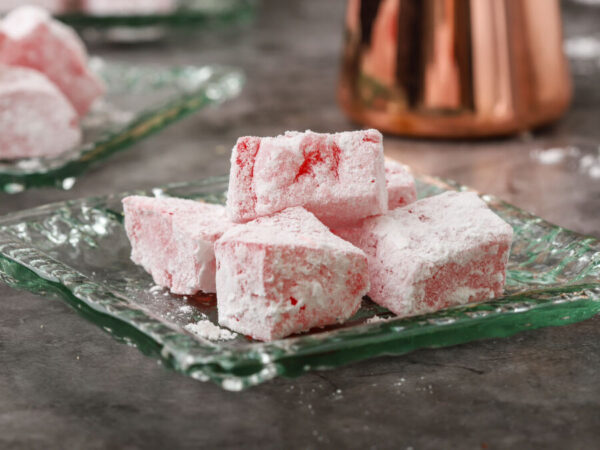
Loukoumi, commonly known as Turkish delight, is a traditional confection originating from Turkish cuisine. Its earliest form, called rahat lokum, dates back to the 15th century in the Ottoman Empire. Over time, the name evolved into “loukoumi,” which is widely recognised today across Greece, Europe, the Mediterranean, and the Arab world.
Loukoumi was introduced to Greece in the 19th century, where local variations and ingredients enriched the original recipe, creating distinct flavours and textures that reflect regional culinary traditions.
Ingredients and Preparation
Loukoumi is made from simple yet versatile ingredients:
-
Sugar – provides sweetness
-
Starch – for structure and chewiness
-
Glucose – enhances texture and preserves freshness
Additional ingredients such as almonds, pistachios, or flavouring extracts are often added. The cubes are traditionally dusted with powdered sugar or corn starch to prevent sticking and enhance presentation.
Traditional Flavours of Loukoumi
Loukoumi comes in a wide array of flavours, with three classic varieties being the most popular:
-
Rose (Red Loukoumi): Fragrant, floral, and subtly sweet
-
Bergamot (Green Loukoumi): Citrus-flavoured, refreshing and aromatic
-
Mastic (Yellow Loukoumi): Unique resinous flavour, characteristic of the Aegean islands
Modern variations include pistachio, hazelnut, chocolate, vanilla, and fruit-infused loukoumi, reflecting contemporary tastes while maintaining its traditional appeal.
Regional Greek Variations
Greece has developed several regional styles of loukoumi, each with distinctive characteristics:
-
Syros Loukoumi: The most famous Greek loukoumi is produced on the island of Syros, known for its delicate texture, high-quality ingredients, and variety of flavours.
-
Serres Akanes: A regional variation from the town of Serres, notable for its intense flavour. Instead of fruit essences, goat butter is used to enrich the taste and aroma.
-
Komotini Sucuk Lokum: A speciality from Komotini, combining loukoumi with a chewy, slightly firmer texture and regional spices.
These local variations highlight the adaptability of loukoumi and its integration into Greek culinary traditions while preserving its Ottoman roots.
Cultural Significance and Uses
Loukoumi is a festive and symbolic sweet, served in small cubes at celebrations, family gatherings, and coffee rituals. It is often enjoyed:
-
As a dessert with Greek coffee or tea
-
Alongside nuts, dried fruits, or pastries
-
In gift boxes during festivals, weddings, and holidays
Its delicate texture, aromatic flavours, and aesthetic appeal make loukoumi a must-try confection for locals and travellers alike.
Why Loukoumi Is Special
-
Historical confection with over 500 years of tradition
-
Versatile flavours: rose, bergamot, mastic, and wide modern varieties
-
Regional Greek specialities: Syros loukoumi, Serres akanes, Komotini sucuk lokum
-
Cultural icon: served at celebrations, coffee rituals, and festive occasions
-
Mediterranean legacy: part of a wider culinary tradition spanning Turkey, Greece, and the Arab world
Loukoumi is more than just a sweet—it is a symbol of Mediterranean culinary heritage, combining history, flavour, and artistry in every cube.