The Island Where Tradition Meets the Aegean
Because of its remote location, local people have preserved many traditions, including their dialect of Greek and distinctive traditional clothing.
In general, all Dodecanese societies are known for the special and respected role women occupy in their communities. But this is even more true on Karpathos, an island where it is as if women rule and men have a secondary role. When one looks at photographs of people on Karpathos, one sees mostly women: Women in beautiful traditional garb on religious feast days, a woman baking bread, a woman leading a donkey along a path.
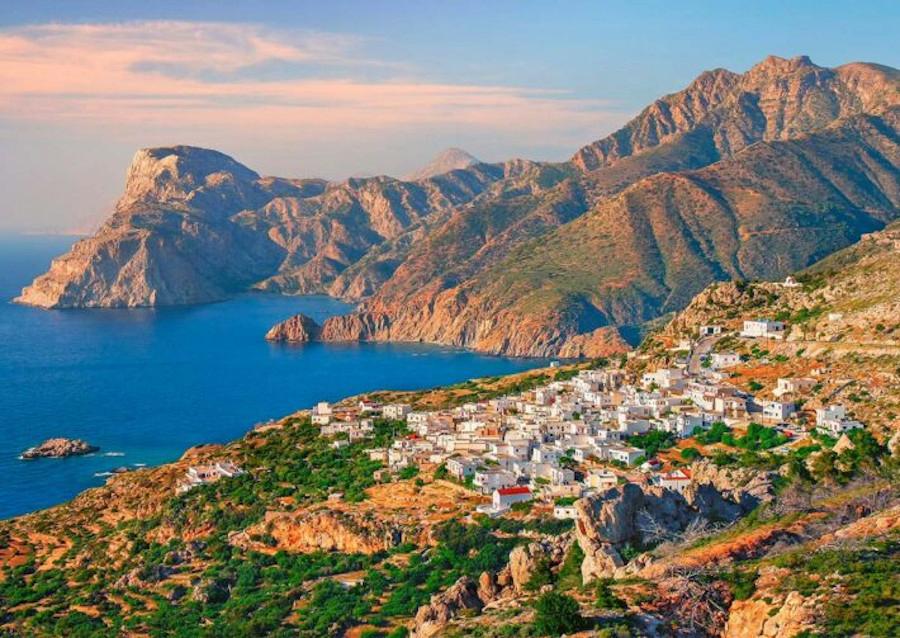
The most characteristic is the village of Olympus. Perched high on a mountain, away from tourists and travellers, it is a place where time seems to have stopped. In Olympus, the woman is, without question, the cohesive force within the broader family and the village, while social life begins with women’s relations.
Discover Karpathos Through Food Tours
Karpathos food tours focus on participation and cultural exchange. Visitors step into village life, engaging with local families and producers who continue practices passed down through generations. Food preparation here is not merely cooking — it is storytelling, cooperation, and celebration.
Due to the island’s remote location, traditional agricultural methods and home-based production remain central to daily life. Food tours guide guests through hands-on experiences such as kneading dough, shaping pasta, and learning preservation techniques that once ensured survival in an isolated environment.
Every activity highlights the connection between people, land, and seasonal rhythms, allowing visitors to understand Karpathos through authentic experiences rather than observation alone.
The Central Role of Women in Culinary Tradition
A defining aspect of Karpathos food tours is the prominent role women play in preserving local culture. Across the Dodecanese islands, women traditionally hold respected positions within society, but on Karpathos, this role is especially strong.
Daily life often revolves around women’s activities — baking bread, organising celebrations, maintaining family traditions, and teaching culinary skills to younger generations. Food tours frequently centre on these communal moments, where visitors join women working together in kitchens or outdoor ovens.
The mountain village of Olympus stands as the island’s most powerful example of this tradition. Perched high above the sea, Olympus feels untouched by time. Here, women remain the cohesive force of family and social life, and culinary practices serve as a foundation for community bonds. Participating in food preparation in Olympus offers travellers rare insight into a matriarchal cultural structure still alive today.
Bread-Making: The Heart of Karpathos Food Tours
Bread is the cornerstone of Karpathian gastronomy, making baking experiences a highlight of many Karpathos food tours. Visitors gather around traditional wood-fired ovens where locals knead dough collectively, following techniques preserved for centuries.
The island boasts an extraordinary variety of breads, each connected to seasonal or religious traditions. Participants may learn to prepare spicy onion bread, sesame-coated rusks flavoured with mastic and cumin, or large ceremonial breads seasoned with nutmeg and black sesame.
Festive breads hold special importance. Christopsoma, the aromatic Christmas bread infused with cinnamon and cloves, symbolises prosperity, while Easter Christokouloures — thin buns shaped into figure-eight forms and decorated with red eggs — represent renewal and celebration. Through these activities, travellers experience how baking strengthens social ties and preserves cultural symbolism.
Handmade Pasta and Everyday Island Cooking
Another essential experience within Karpathos food tours is the preparation of handmade pasta. The island’s signature macarounes are made with only flour and water, shaped by pressing fingers into small pieces of dough, then boiled and sautéed with butter and crispy roasted onions known as tsikomeno.
Visitors often participate directly in shaping the pasta, discovering how simplicity and technique define Karpathian cuisine. Equally meaningful is pseftomacarona (“false macaroni”), made from softened stale bread — a dish reflecting the island’s tradition of minimising waste and valuing every ingredient.
These recipes demonstrate how necessity, creativity, and resourcefulness shaped local gastronomy.
Traditional Recipes and Festive Dishes
Karpathos food tours introduce travellers to dishes connected to celebrations, agriculture, and communal gatherings. Savoury specialities include kremmydokouloures (spiced onion buns), cabbage and onion pies, and tourtes — Easter pastries filled with soft mizithra cheese and herbs.
Festive meals often feature byzanti, lamb or goat slowly cooked with rice and aromatic herbs in clay pots, and anderizia, carefully prepared, stuffed intestines that combine meat, rice, and spices. Chondros, cracked wheat cooked with meat or milk, is traditionally served at weddings and festivals, highlighting the agricultural roots of island cuisine.
Through guided preparation sessions, visitors learn not only recipes but also the patience and craftsmanship behind them.
Sweet Traditions and Celebration Foods
Desserts play an equally important role in Karpathos food tours. Travellers may help prepare zimbilia, sweet pies filled with raisins and spices, or moschopoungia, crescent-shaped pastries filled with nuts and sesame seeds.
Other highlights include Karpathian baklava layered generously with almonds and walnuts, sisamomeli made from honey and sesame and traditionally served at weddings, and takakia — syrupy fried sweets prepared during celebrations. Each dessert carries a symbolic meaning tied to joy, hospitality, and family gatherings.
Why Choose Karpathos Food Tours
Karpathos food tours offer a rare form of travel centred on authenticity and human connection. Visitors experience:
- Hands-on bread and pasta making
- Participation in seasonal and festive cooking traditions
- Encounters with women preserving cultural heritage
- Insight into agricultural and fishing practices
- Deep immersion in one of Greece’s most preserved island societies
A Living Cultural Experience
Karpathos remains a place where traditions are lived rather than displayed. Through immersive Karpathos food tours, travellers discover a community where food expresses memory, identity, and belonging.
Here, every recipe tells a story, every gathering strengthens community bonds, and every shared meal becomes an invitation to experience the island’s enduring spirit.