Engineering Wonder Between Two Seas
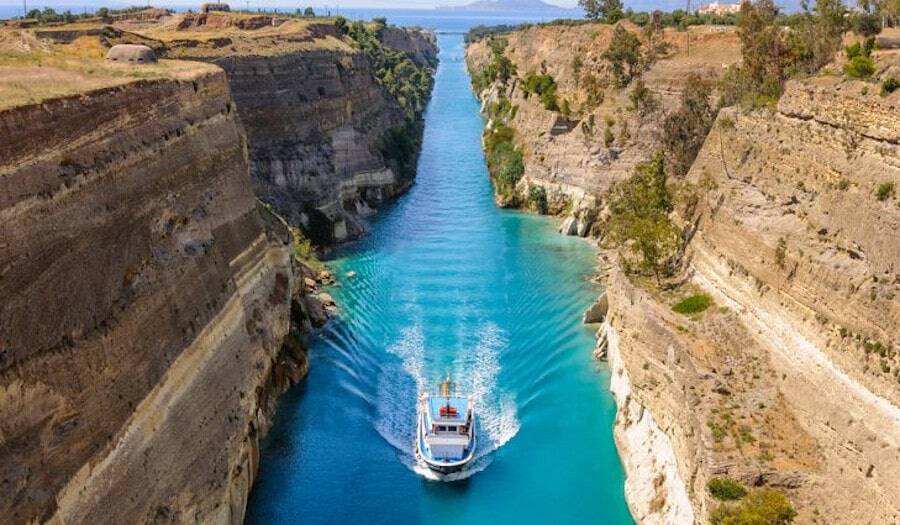
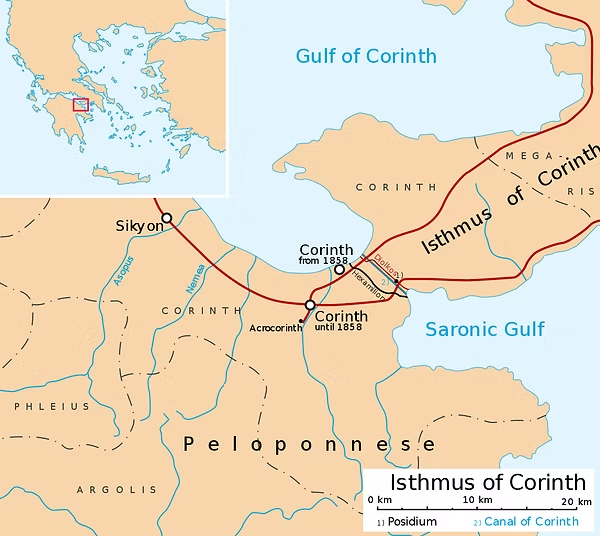
The Corinth Canal is one of Greece’s most remarkable engineering achievements, cutting through the narrow Isthmus of Corinth and connecting the Saronic Gulf of the Aegean Sea with the Corinthian Gulf of the Ionian Sea.
The Corinth Canal has historically served as the narrow land bridge connecting Central Greece with the Peloponnese, making it one of the most strategically important passages in the eastern Mediterranean for trade, transport, and military movement. The Corinth Canal, which traverses this narrow landmass, was constructed between 1880 and 1893 at the narrowest point of the isthmus and stretches approximately six kilometres in length.
By opening a direct maritime route between the two gulfs, the canal eliminated the need for ships to sail around the southern Peloponnese, significantly shortening sea journeys and improving navigation.
The Corinth Canal – Ancient Vision and Strategic Importance
The idea of cutting through the Isthmus of Corinth dates back to antiquity. Ancient rulers, including Periander, Julius Caesar, Caligula, and Nero, recognised the strategic and commercial importance of the route and explored the possibility of constructing a canal.
In the 1st century CE, the Roman Emperor Nero famously initiated excavation works using thousands of labourers and prisoners. Although the project was eventually abandoned after his death, traces of those efforts remained visible for centuries.
Before the canal existed, ships crossed the isthmus via the Diolkos, an ancient paved transport route where vessels were hauled overland on wheeled platforms. This remarkable system is considered one of the earliest known methods of overland maritime transport.
The Hexamilion Wall and Byzantine Defence
Due to the strategic significance of the isthmus, a major defensive fortification, known as the Hexamilion Wall, was constructed in the late 5th century CE. The wall stretched across the isthmus, roughly parallel to the route of the modern Corinth Canal, serving as a defensive barrier protecting the Peloponnese from invasions originating from Central Greece.
The fortification was repeatedly maintained and reinforced during the Byzantine period, underscoring the region’s ongoing military importance throughout the Middle Ages. Remains of the wall can still be seen today in parts of the wider Corinth area.
Modern Construction and Engineering Achievement
Modern construction of the Corinth Canal began in the late 19th century, following the independence of the modern Greek state. Completed in 1893, the canal represented a major technological achievement of its era.
The canal is approximately 24 metres wide with steep limestone walls rising dramatically above the waterway. Although the Corinth Canal’s narrow dimensions limit the passage of large modern ships, it remains operational and highly significant for smaller commercial vessels, tourist cruises, and private yachts.
Today, more than 12,000 vessels pass through the Corinth Canal annually, confirming its continuing importance as both a navigational route and a tourist attraction.
Tourism and Visitor Experience
Today, the Corinth Canal is one of the most visited landmarks in Greece. Observation bridges offer spectacular panoramic views of the narrow waterway and the towering rock walls carved through the isthmus.
Boat tours through the canal allow visitors to experience the engineering marvel from water level, while adventure tourism activities such as bungee jumping have become increasingly popular in the area.
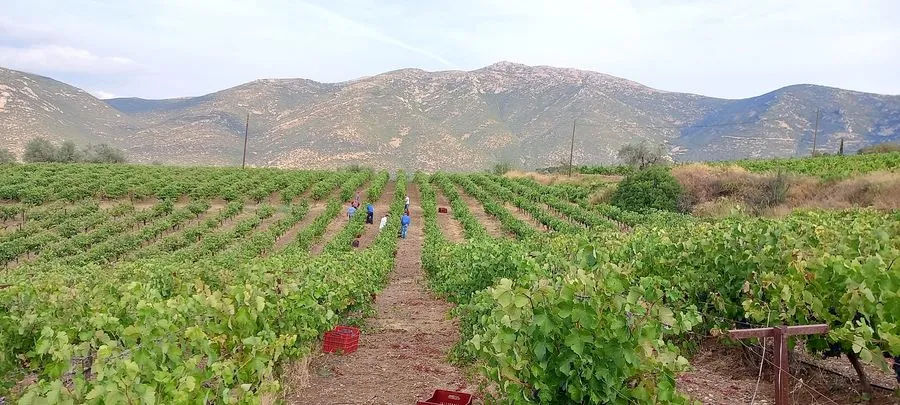
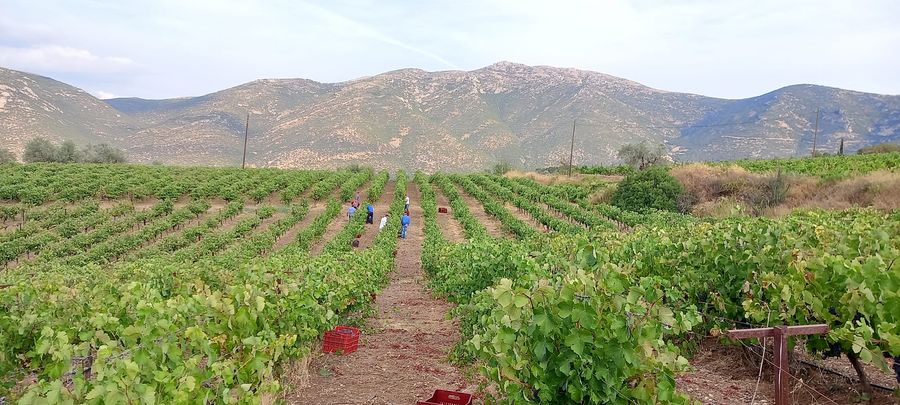
Nearby attractions include Ancient Corinth, the Temple of Apollo, Acrocorinth, and the vineyards and coastal villages of the Corinthia region.
Gastronomy and the Wider Corinthia Region
The wider Corinthia region is also known for its agricultural production and culinary traditions. Olive oil, citrus fruits, grapes, raisins, wine, and seafood from the Corinthian Gulf form an important part of local gastronomy.
Traditional tavernas in the area serve fresh fish, grilled meats, legumes, local cheeses, and regional wines that reflect the fertile landscape and maritime heritage of northeastern Peloponnese.
The Corinth Canal: A Symbol of Human Ambition
More than a transportation route, the Corinth Canal symbolises centuries of human ambition, strategic vision, and engineering ingenuity. From the dreams of ancient rulers to the technological achievements of the modern era, it remains one of the Mediterranean’s most fascinating landmarks.
Today, the Corinth Canal stands not only as a functional maritime passage, but also as a meeting point of history, geography, culture, and tourism—an enduring symbol of Greece’s connection between antiquity and modernity.