
Discover the Best Psara Food Tours & Authentic Local Flavours
Psara is one of Greece’s most remarkable yet unspoiled island destinations, located in the northeastern Aegean Sea, northwest of Chios. Small in size but immense in historical significance, the island combines dramatic maritime heritage, pristine natural landscapes, authentic island traditions, and a distinctive culinary identity.
Known as the Heroic Island of Psara, it holds a special place in Greek history for its decisive contribution to the Greek War of Independence of 1821. Its long seafaring tradition, courageous sailors, and legendary fireship captains helped shape modern Greek history.
Today, Psara offers visitors something increasingly rare in the Mediterranean: a genuine island experience, where history, nature, gastronomy, and hospitality remain closely connected.
Historical Landmarks & Cultural Heritage
Psara offers visitors a remarkable journey through Greece’s maritime and revolutionary history.
The Church of Saint Nicholas
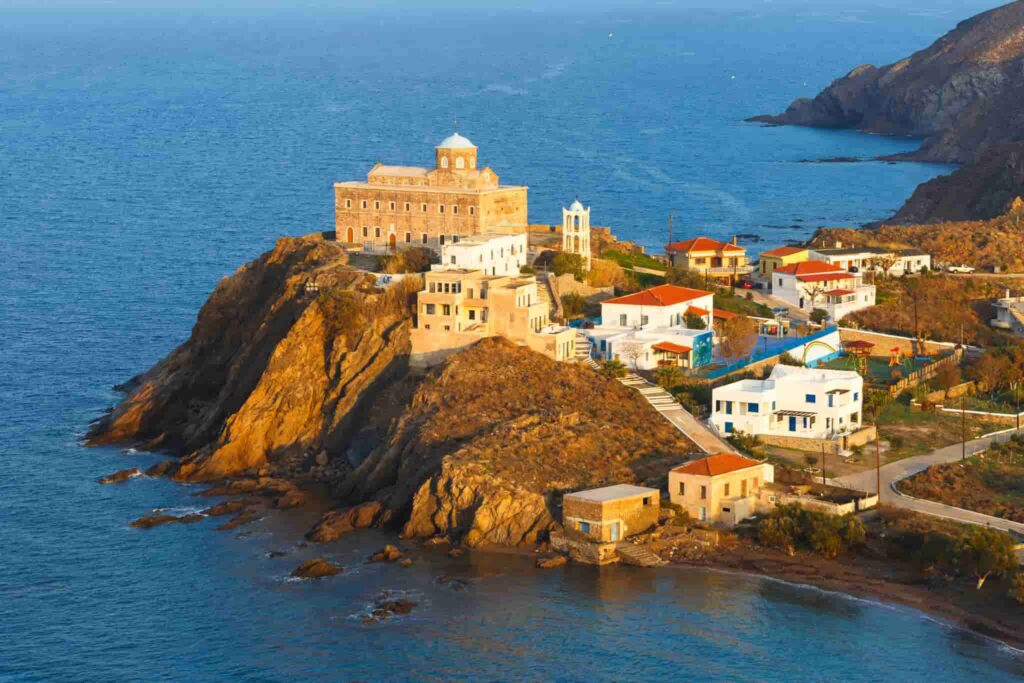
Standing proudly on a hill overlooking the settlement and the harbour, the Church of Saint Nicholas is one of the island’s most important historical monuments.
Built between 1785 and 1793, the impressive three-aisled church is closely connected with the events leading to the Greek Revolution. Here, important decisions about the island’s participation in the struggle for independence were made.
The church is also associated with Constantine Kanaris, who departed from Psara to carry out his famous naval operation against the Ottoman flagship.
Mavri Rachi – The Memorial of the Holocaust of Psara
Mavri Rachi (Black Ridge) is one of the island’s most symbolic places. It was the site of the final heroic resistance during the Ottoman invasion of 1824.
Today, the memorial commemorates the sacrifice of the inhabitants who chose freedom over surrender. The panoramic views of the Aegean Sea make this a particularly moving place to visit.
The Archaeological Site of Archontiki
Located on the southwestern coast of Psara, Archontiki is an important archaeological site featuring remains of a Mycenaean settlement and cemetery.
The discoveries reveal the island’s ancient past and its role within the maritime networks of the prehistoric Aegean.
The House of Constantine Kanaris and the Historic Settlement
The island preserves several monuments tied to its naval history and revolutionary heritage, including the site of Constantine Kanaris’s historic residence, the Old Parliament, traditional mansions, and monuments dedicated to distinguished Psarian sailors.
The harbour and traditional settlement offer an authentic glimpse into the island’s enduring maritime culture.
The Gastronomic Identity of Psara: The best Psara food tours
Psara’s gastronomy is deeply connected to its maritime heritage and the island’s natural resources. Its cuisine reflects a simple but distinctive culinary philosophy, based on fresh seafood, local livestock products, aromatic herbs, traditional recipes, and ingredients produced with respect for nature.
The surrounding waters are particularly rich in fish and seafood, making the island a special destination for lovers of authentic Aegean cuisine.
Seafood & Local Lobster
Fresh fish and seafood are central to Psarian gastronomy. The island is particularly famous for its local lobster, prepared in traditional ways: grilled over charcoal, served with pasta, fried, or accompanied by skordalia, the traditional Greek garlic dip.
Fresh fish, octopus, and other seafood are also essential elements of the local culinary experience, often prepared simply to preserve their natural flavours.
Traditional Cheeses & Local Livestock Products
Psara’s culinary identity also includes excellent sheep’s milk dairy products. Visitors should try the island’s traditional white cheese, fresh mizithra, and kopanisti, a distinctive soft, spicy cheese spread.
Local livestock farming also contributes to the island’s traditional cuisine. One characteristic dish is stuffed wild goat, prepared in the local style.
Thyme Honey: The Golden Treasure of Psara
One of the island’s most distinctive products is its exceptional thyme honey. Psara’s rocky landscape is covered with aromatic thyme plants that flourish under the Aegean sun and sea breeze.
The bees collect nectar from the island’s aromatic vegetation, producing honey with an intense fragrance and distinctive flavour. The main honey harvest takes place towards the end of August, making this local product a particularly valuable expression of the island’s natural environment.