Faith, Tradition, and Local Delicacies
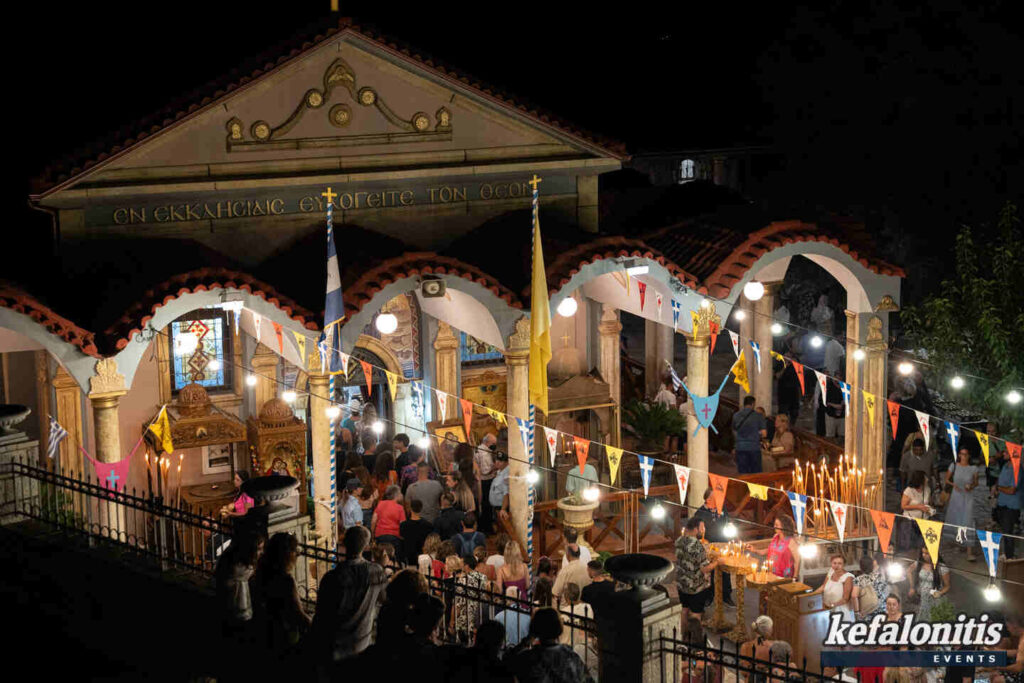
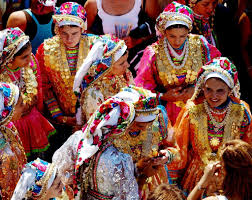
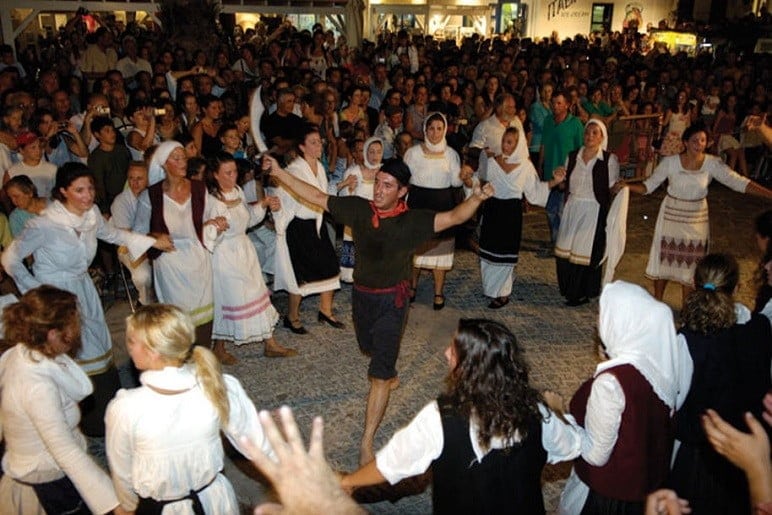
Every year on July 23, the island of Tinos comes alive with one of its most cherished religious celebrations: the Feast of Saint Pelagia. This event is not only a spiritual pilgrimage but also a vibrant celebration of the island’s rich cultural and culinary traditions.
The Vision of Saint Pelagia
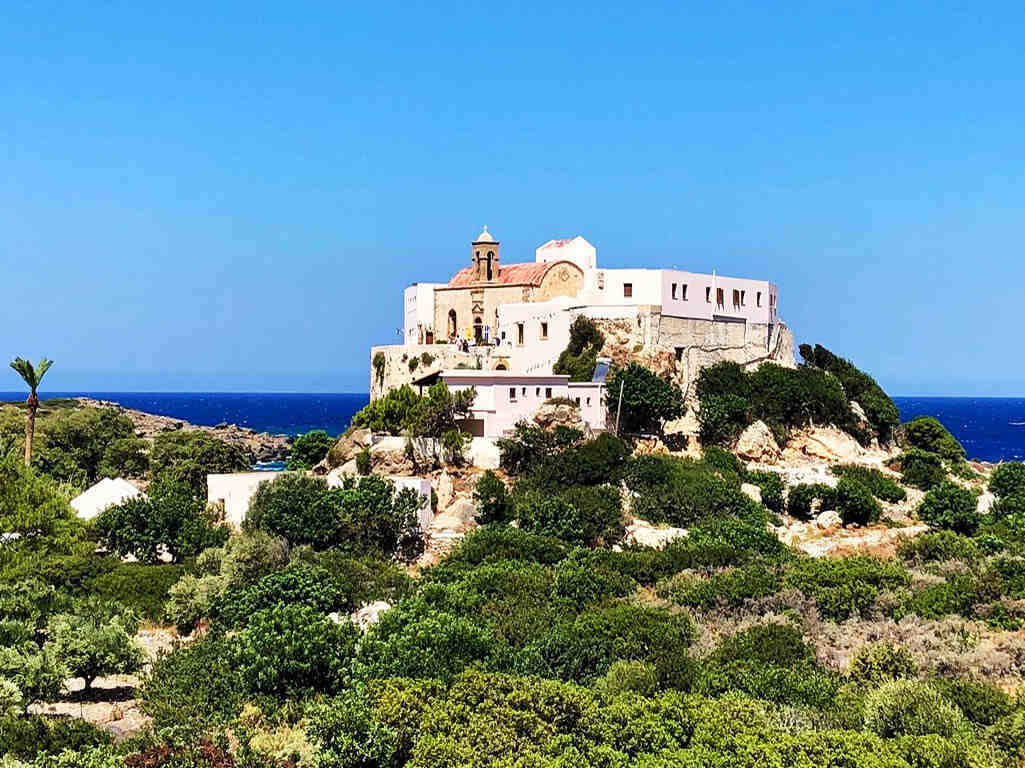
Saint Pelagia, a seventy-year-old nun at the Kechrovouni Monastery, became famous for her visions, which led to the discovery of a miraculous icon of the Virgin Mary. In July 1823, she had two dreams in which the Virgin Mary revealed the location of her buried icon. Fearing that her mind was deceiving her, Pelagia initially kept the visions to herself.
However, on July 23, 1823, in a third dream, the Virgin Mary appeared again. This time, Pelagia shared the message she had received. Excavations began shortly afterwards, culminating in the discovery of the miracle-working icon on January 30, 1824. Since then, this icon has become one of Tinos’ most sacred relics, and the day of its revelation is celebrated annually.
Kechrovouni Monastery and the Religious Ceremonies
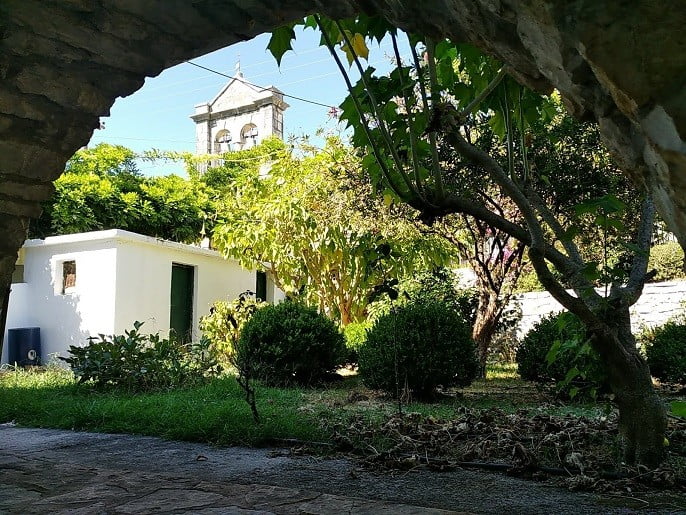
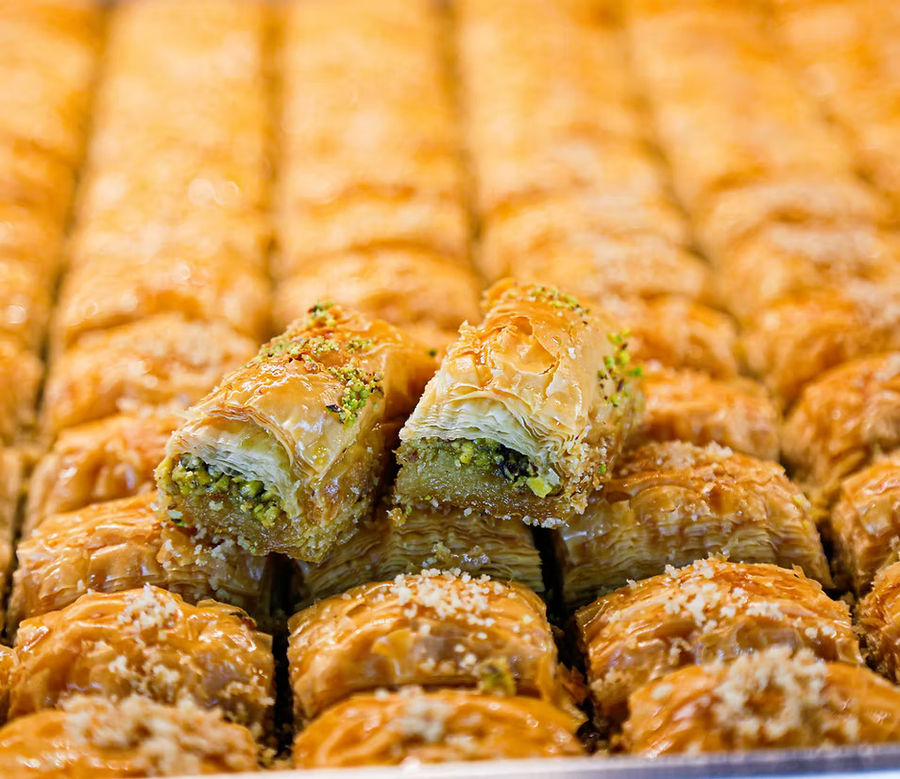
The Kechrovouni Monastery houses the relics of Saint Pelagia and a wealth of ecclesiastical artefacts, including icons and traditional vestments. During the feast, the nuns offer pilgrims coffee, loukoumi (Turkish delight), Tinos raki, traditional sweets, and local food.
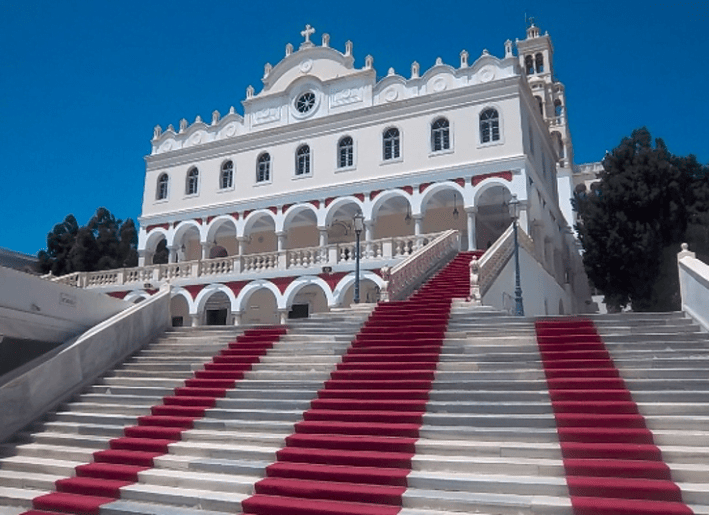
The religious celebrations begin in the morning at the Holy Church of Evangelistria, where a Divine Liturgy is held. After the service, priests and the faithful escort the icon to Eleftheria Square, and from there it is transported to Kechrovouni Monastery.
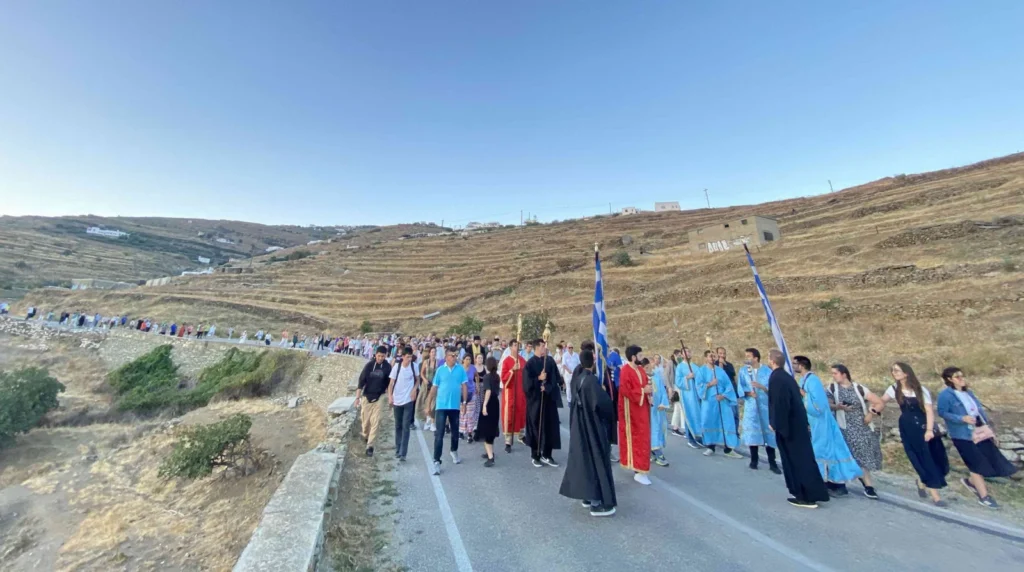
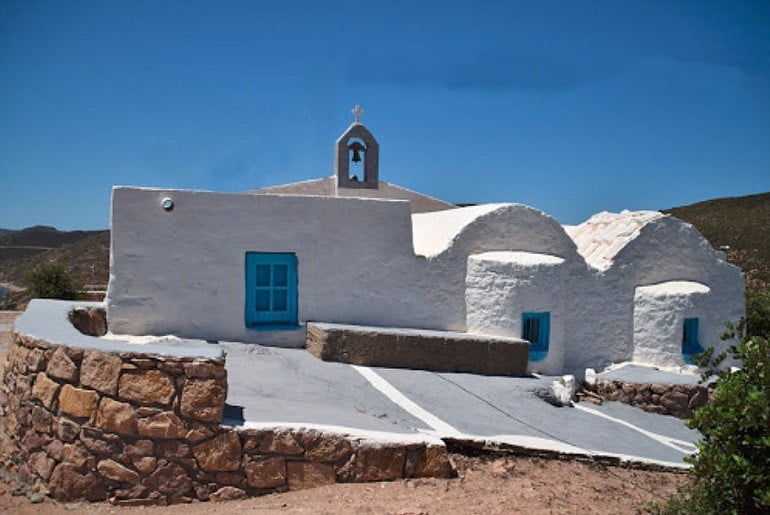
In the evening, around 7 p.m., the faithful follow the nuns carrying the icon as it descends eight kilometres toward Chora. Along the route, chapels greet the procession with the ringing of bells, creating a moving and solemn atmosphere. Just before 9 p.m., the procession arrives at the Church of Agia Paraskevi, continues toward the port with music from the island’s band, and culminates on a marble podium with fireworks and prayers. The icon is then returned to the Church of Evangelistria, accompanied by the municipal band.
Culinary Traditions of the Feast
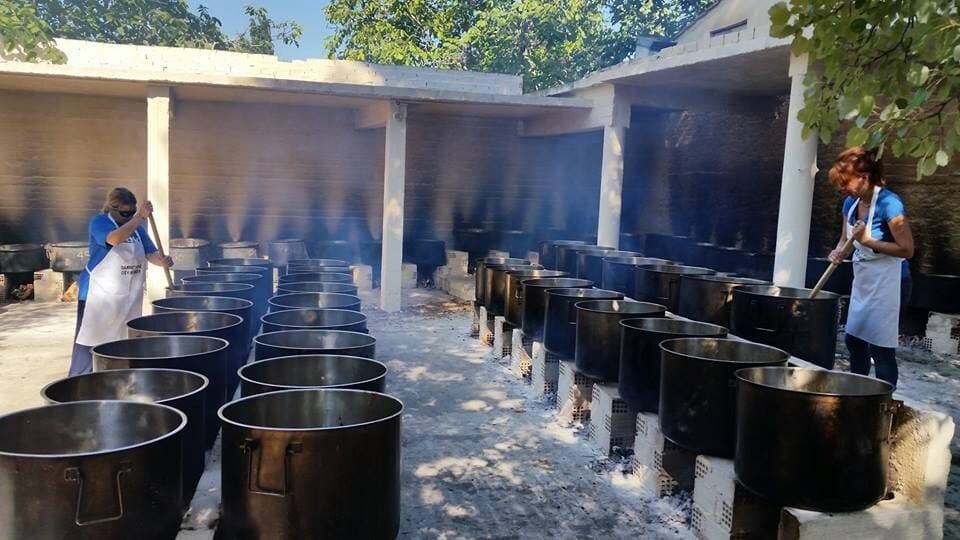
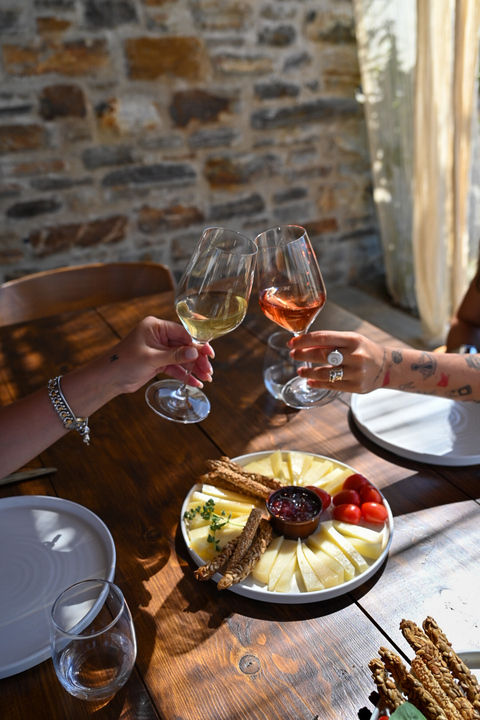
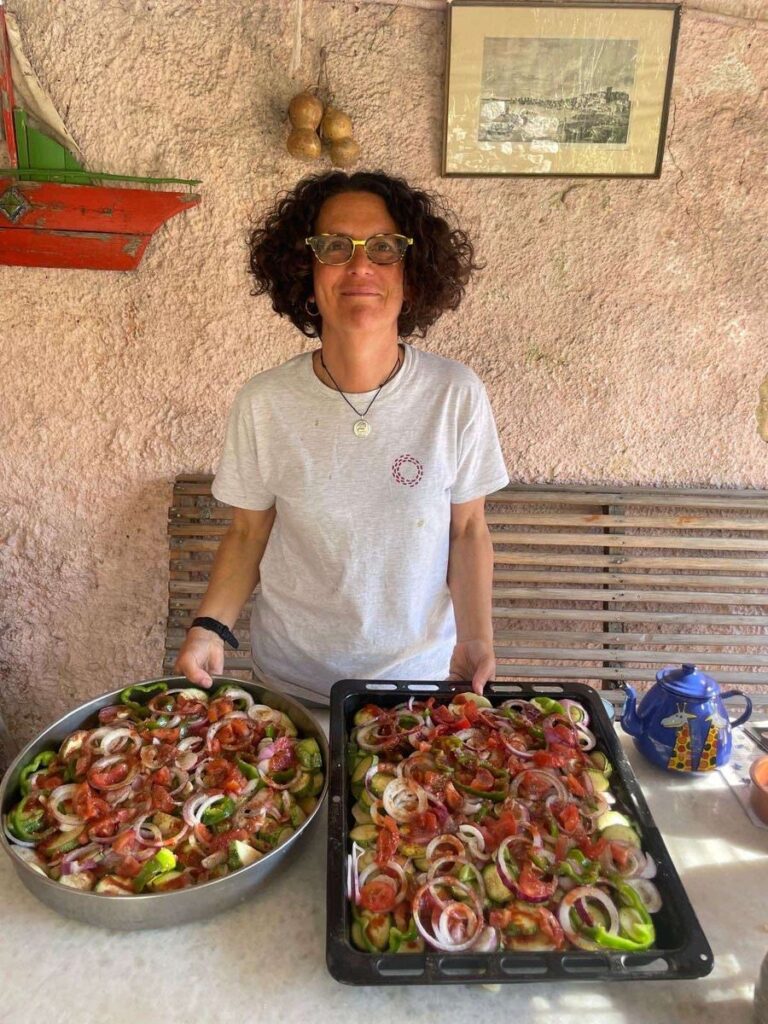
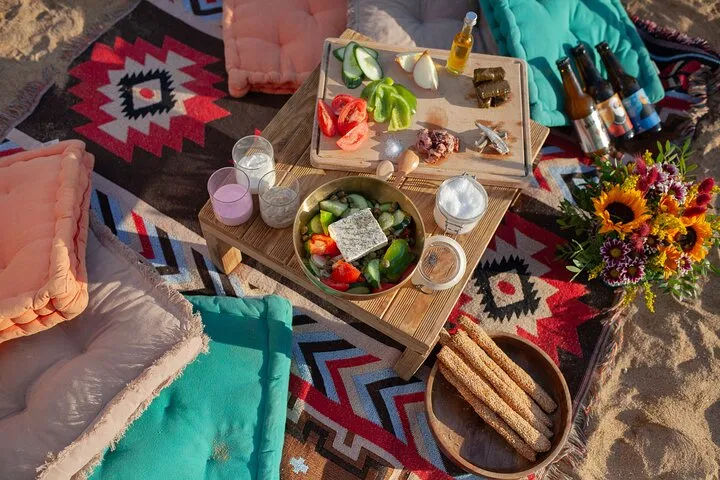
Food is an integral part of the celebration, reflecting Tinos’ rich culinary heritage. After the liturgy at the Church of Saint Pelagia, visitors are treated to coffee, loukoumi, Tinos raki, and traditional sweets. Midday meals feature local delicacies, highlighting the island’s distinctive flavours.
Traditional Dishes
- Artichokes cooked in various ways
- Sun-dried tomatoes with batter
- Froutalia (egg and greens casserole)
- Savore with molasses
- Fried fish with petimezi sauce
- Pork sausages, saltsisi, and louza of Tinos
Cheeses
Sweets
- Amygdalota
- Xerotigana
- Karidota
- Pasteli
- Loukoumi
- Various types of halva
- Tinos’ renowned thyme honey
These dishes, alongside the religious celebrations, highlight the feast’s unique combination of spiritual devotion, cultural tradition, and local gastronomy.
Feast Schedule – July 23, Indicative program
| Time | Activity |
|---|---|
| 6:00 a.m. | Divine Liturgy at the Church of Evangelistria. |
| 7:00 a.m. | General ringing of all church bells in Chora. |
| Morning | Procession of the icon from the Church to Eleftheria Square, then by car convoy to Kechrovouni Monastery. |
| 9:00 a.m. | Hierarchical Divine Liturgy at Kechrovouni Monastery. |
| 6:00 p.m. | Vespers at the Church of Saint Pelagia. |
| 7:00 p.m. | Foot procession of the icon toward Chora (8 km descent), with chapels greeting the procession with bells. |
| 9:00 p.m. | Reception of the icon at the Church of Agia Paraskevi, procession to the port with music and fireworks, followed by return to Church of Evangelistria. |
A Celebration of Faith and Community
The Feast of Saint Pelagia in Tinos is more than a religious observance; it is a vivid expression of the island’s identity. Pilgrims and locals gather to honour faith, partake in traditional foods, and celebrate the enduring cultural heritage of Tinos. Between the solemn processions, prayers, and fireworks, the feast offers a unique glimpse into the spiritual and social heart of the island.