The Island of Pistachios, Ancient Temples and Timeless Greek Flavours
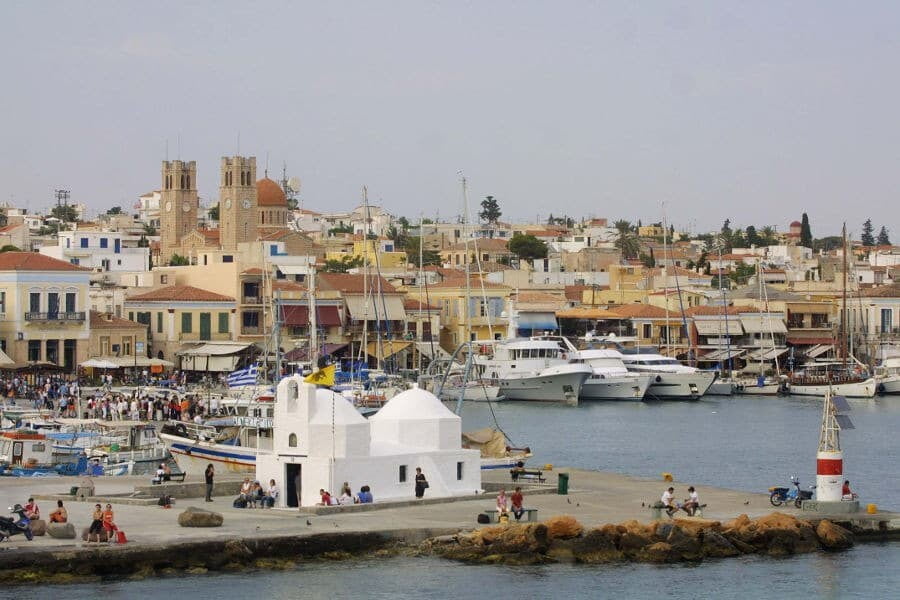
Aegina is a charming Greek island in the Saronic Gulf, just a short ferry ride from Athens. Known for its relaxed atmosphere, it is a popular quick getaway from the city. The island lies between Attica and the Peloponnese, making it easily accessible and strategically located.
Historical Significance
In ancient times, Aegina was a powerful naval and commercial centre. It was the first Greek city to mint its own silver coinage in the 7th century BCE, featuring a turtle. Its peak came in the 6th century BCE, when trade and maritime activity flourished.
Following the success of the Greek War of Independence, it briefly became the capital of the newly established Greek state. In 1829, the first official coins of modern Greece were minted on the island.
Landmarks and Culture
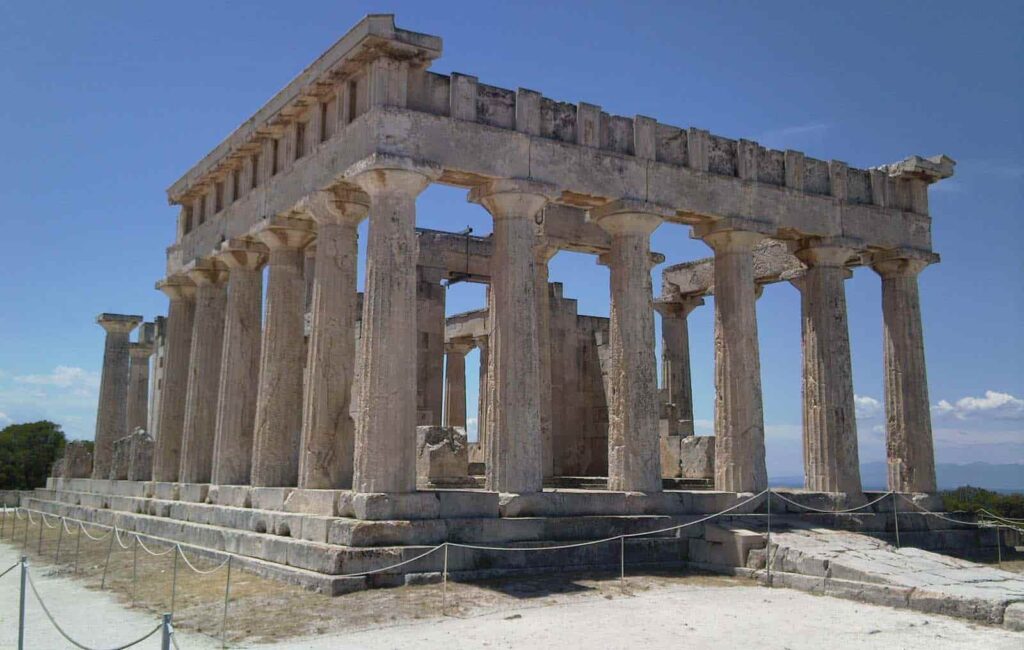
One of Aegina’s most important monuments is the Temple of Aphaia, a remarkably well-preserved Doric temple. It forms part of a “sacred triangle” with the Parthenon in Athens and the Temple of Poseidon at Sounion.
The island is also rich in later history. Cathedral of Saint Nectarios attracts many pilgrims, while Palaiochora features the remains of a Byzantine town surrounded by numerous small chapels. In Aegina, visitors can admire many neoclassical buildings dating back to the early years of the modern Greek state.
Economy and Tourism
Due to its proximity to Athens, tourism has become the island’s main economic activity in recent decades. Aegina is also a popular sailing destination and a convenient stopover in the Saronic Gulf. Religious and archaeological tourism further support the local economy.
Modern Character
Today, Aegina is famous for its pistachios, considered among the finest in the world. Visitors enjoy its seaside villages, clear waters, and welcoming atmosphere. The main town combines a lively harbour with cafés and elegant architecture, while quieter areas such as Agia Marina offer relaxation and natural beauty.
It is said that the Temple of Aphaia, the Parthenon, and the Temple of Poseidon at Sounio form an apparent isosceles triangle—the triangle of antiquity that the ancient Greeks took care to maintain in the architecture and dynamics of a temple. The Temple of Aphaia was built between 500 and 490 BCE on the site of a previous temple that had been severely damaged in a fire around 510 BCE. The people of Aegina decided to tear it down, keeping, however, the gate and the great altar and rebuilding a new temple graced by the sculptures of the “Aegina School”. The new temple took its final form in 500 BCE and is an outstanding example of ancient architecture, serving as a model for the construction of the Parthenon.
Gastronomy
Aegina is renowned for its pistachio cultivation, which, due to the exceptional quality of its pistachios, dominates the island’s agricultural activity. The pistachios are among the special Greek products with a Protected Designation of Origin (PDO) and are an excellent superfood. Today, Aegina cultivates roughly 200,000 trees with an average annual yield of roughly 1,300 tons.
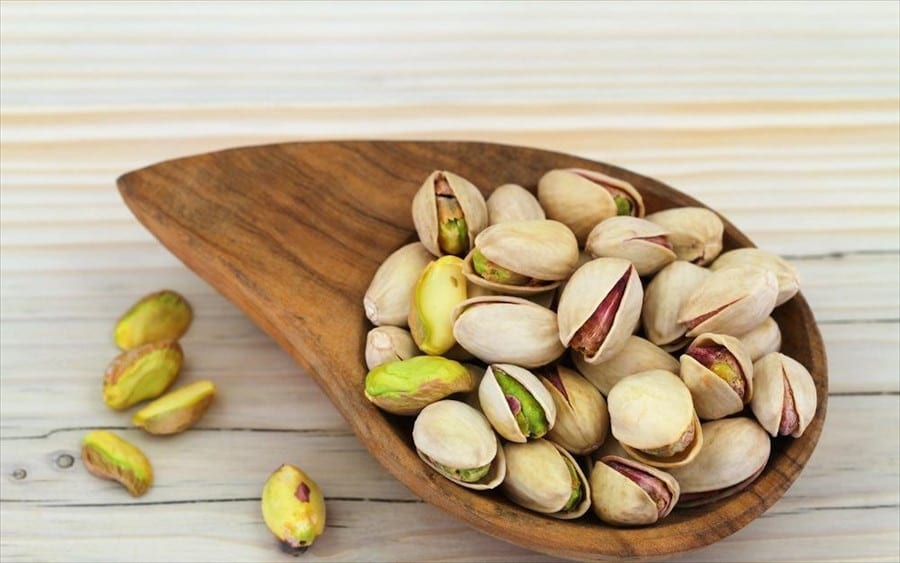
Let’s not overlook the pistachio festival, which takes place every year in September and lasts four days. Aegina’s pistachios are the best and tastiest in the Eastern Mediterranean. Aside from the salted or unsalted baked pistachios that accompany drinks, this delicious nut features in many kinds of delicacies, such as pasteli, liqueurs, and spoon sweets.
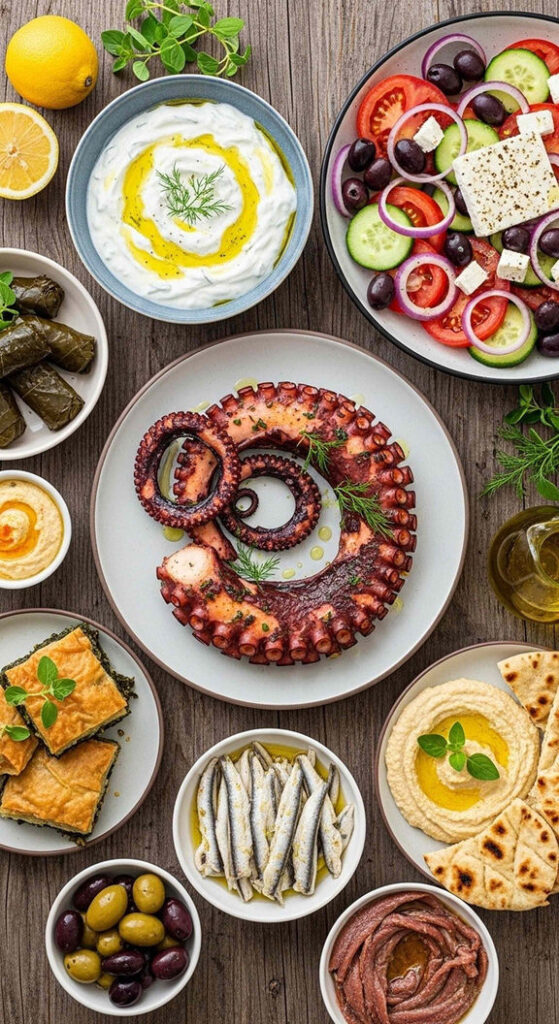
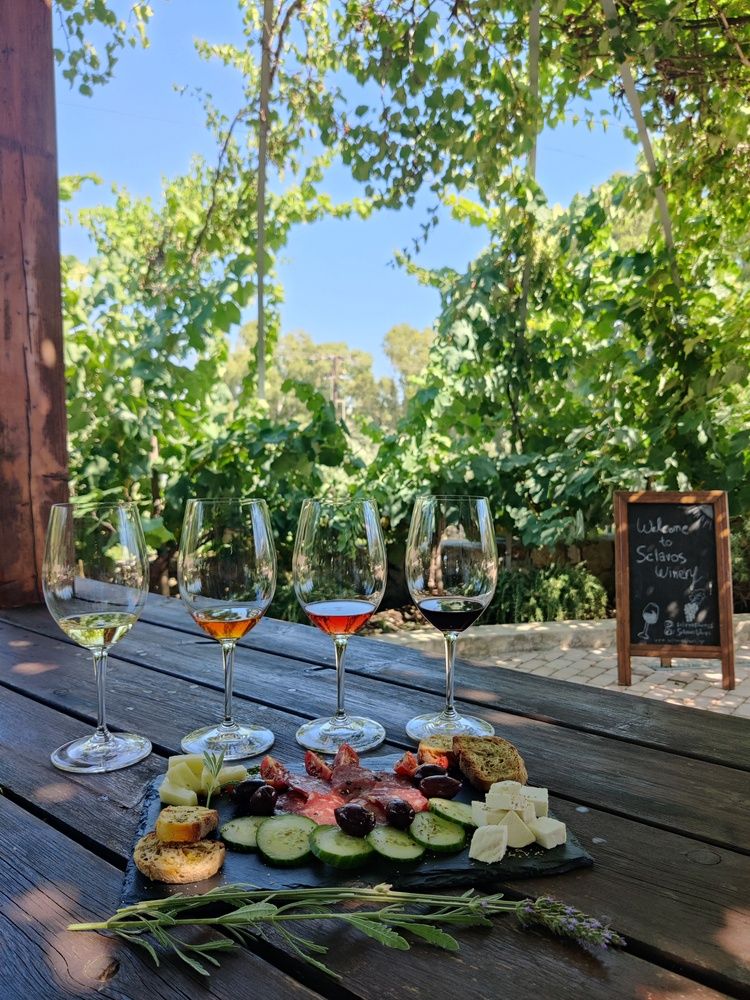
In terms of Aegina’s cuisine, the cosmopolitan, but not overly commercialised, unique character of the island offers a plethora of specialities, mainly fresh fish, pasta with sea urchins, octopus, fava bean purée, chickpeas, string beans, salads from the gardens of owners of sought-after tavernas by the sea, as well as plenty of gourmet dishes.