Saragli: A Golden Syrupy Treasure of Macedonian Pastry Tradition
A traditional siropiasta dessert, which is easy to prepare, and a variation of wrapped baklava. Initially consisting of honey, water, fruit, and dry nuts boiled in oil, the recipe, over time, added layers of dough and other kinds of dry nuts. Saragli is one of the most beloved traditional desserts in northern Greece, closely associated with the culinary heritage of Macedonia and Thrace, especially in cities such as Thessaloniki. It belongs to the wider family of syrup-soaked pastries found across the Balkans and the Eastern Mediterranean, yet it has a distinct Greek character shaped by local ingredients and techniques.
A Dessert of Layers and Craftsmanship
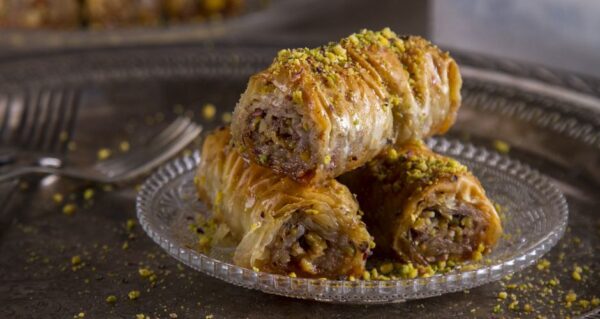
Saragli is made with thin layers of filo pastry that are carefully rolled around chopped nuts—usually walnuts or almonds—mixed with cinnamon and sometimes cloves. Unlike baklava, which is typically cut into diamond shapes, saragli is rolled into tight cylinders or spirals before baking, giving it a unique texture and appearance.
After baking until golden and crisp, the pastry is generously soaked in a hot sugar syrup infused with lemon or occasionally honey. This process allows the syrup to slowly penetrate the layers, creating a dessert that is crunchy on the outside and rich, moist, and aromatic on the inside.
It is made in several variants, both in form and in the small secrets of its preparation and baking.
Cultural Roots and Influence
Saragli reflects the layered cultural history of Macedonia, shaped by centuries of interaction between Greek, Ottoman, and broader Balkan culinary traditions. It is commonly prepared for celebrations, family gatherings, and religious holidays, symbolising hospitality and abundance.
In urban centres like Thessaloniki, saragli remains a staple in traditional pastry shops, often displayed alongside other iconic sweets such as baklava, kadaifi, and galaktoboureko.
A Taste of Tradition
Today, saragli continues to represent the essence of Macedonian pastry-making: simple ingredients transformed through patience and skill into a dessert that carries history in every bite. It remains a timeless example of how regional gastronomy preserves memory, identity, and tradition through flavour.