
Filo Dough: The Art of the Delicate Mediterranean Pastry
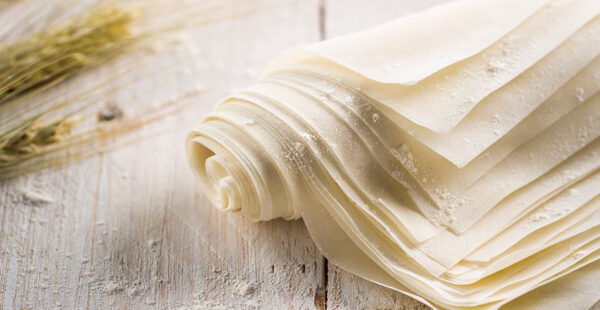
Filo or phyllo (Greek: φύλλο, meaning “leaf” or “sheet”) is one of the most refined and delicate pastry doughs in the culinary traditions of the Mediterranean, the Middle East, and the Balkans. Characterised by its paper-thin texture and remarkable versatility, filo has been used for centuries to create some of the world’s most celebrated pastries, from the syrup-soaked layers of baklava to the savoury Greek pies that form an essential part of everyday cuisine.
Unlike leavened doughs, filo is an unleavened pastry, meaning it contains no yeast or raising agents. Its unique texture comes not from fermentation or chemical leavening, but from the extraordinary thinness of the dough and the technique used to prepare and layer it. When baked, the individual sheets become crisp, golden, and beautifully flaky, creating a delicate contrast between the crunchy exterior and the rich fillings enclosed within.
Filo is a fundamental element of Greek gastronomy, used in countless sweet and savoury preparations. Traditional Greek pies such as hortopita (wild greens pie), spanakopita (spinach pie), and tiropita (cheese pie) showcase filo’s ability to highlight simple, high-quality ingredients. It is equally important in festive desserts such as baklava, galaktoboureko, and kataifi-inspired creations, where thin pastry layers are combined with nuts, custards, honey, and aromatic spices.
The Making of Filo Dough
The basic ingredients of filo are remarkably simple:
- Flour, traditionally a soft wheat flour
- Water
- A small amount of oil
- Salt
- Occasionally, vinegar or white vinegar to improve elasticity
Some dessert versions may include egg yolks, which enrich the dough and give it a slightly more tender texture.
Despite its humble ingredients, filo is considered one of the most technically demanding doughs to prepare by hand. The challenge lies in transforming a simple mixture of flour and water into a sheet so thin that it becomes almost transparent, while maintaining enough strength and elasticity to handle without tearing.
The Traditional Handmade Technique
Making handmade filo requires patience, experience, and considerable skill. After the dough is kneaded until smooth and elastic, it is allowed to rest. This resting period is essential, as it relaxes the gluten structure and allows the dough to stretch more easily.
The dough is then gradually rolled and stretched into an exceptionally large, thin sheet. Traditionally, this is done on a large wooden table using a long, thin rolling pin known in Greece as a plasti or verga. Skilled pastry makers gently rotate and stretch the dough, allowing it to expand until it reaches a size where it can almost cover the entire working surface.
Flour is continuously dusted between layers to prevent sticking and tearing, while careful handling ensures that the delicate sheets remain intact. The result is a translucent “leaf” of pastry that gives filo its name.
The Secret Behind Perfect Pastries
Filo-based pastries are created by layering multiple sheets of dough, with each layer brushed generously with melted butter or olive oil. This process creates separation between the sheets, allowing them to become crisp and flaky during baking.
The type of fat used influences the final character of the pastry:
- Butter provides a rich aroma, deep flavour, and golden colour, often preferred in sweet pastries.
- Olive oil gives a lighter texture and connects filo with the Mediterranean tradition, especially in savoury pies.
The number of layers varies according to the recipe. Some delicate desserts require only a few sheets, while others, such as traditional baklava, may contain dozens of layers carefully arranged to create a complex texture.
A Symbol of Mediterranean Culinary Heritage
Although it is now widely available commercially in supermarkets and used by professional kitchens around the world, handmade filo remains a symbol of craftsmanship and culinary heritage. In many Greek regions, especially in villages and family kitchens, the preparation of homemade filo has traditionally been passed from one generation to the next.
The skill of opening filo by hand reflects a deeper connection between food, place, and tradition. The baker’s movements, the quality of the flour, and even the local climate can influence the final result, making handmade filo a product of both technique and cultural identity.
From the mountains of Epirus, famous for their rustic pies filled with wild greens and local cheeses, to the pastry traditions of the Aegean islands and Constantinople-inspired desserts, filo continues to represent the creativity and simplicity of Mediterranean cuisine.
More than just a pastry dough, it is a culinary art form — a celebration of patience, precision, and the transformation of basic ingredients into something remarkably delicate and memorable.