
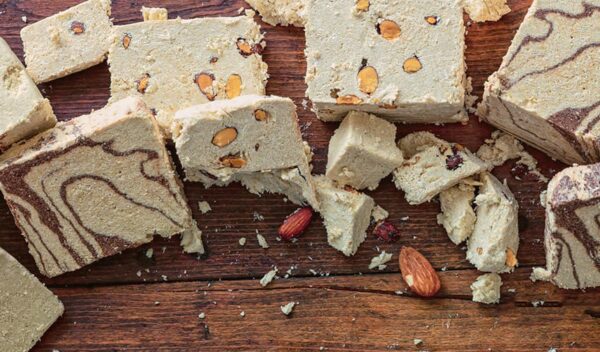
In Greece, “halva” isn’t a single dessert but a family of traditional sweets, each with distinct ingredients, textures, and regional roots. The most popular varieties include halva from Farsala, semolina halva, and Macedonian (tahini-based) halva—each offering a unique taste and cultural story.
1. From Farsala
It is the most famous local product of Farsala. A popular pan-baked sweet found in wide varieties across many Mediterranean and Middle Eastern countries, as well as in India and Pakistan. The term for it in these countries is roughly the same, apparently derived from the Arabic root meaning “sweet”. Already from the beginning of the 19th century, Farsala had become famous for it.
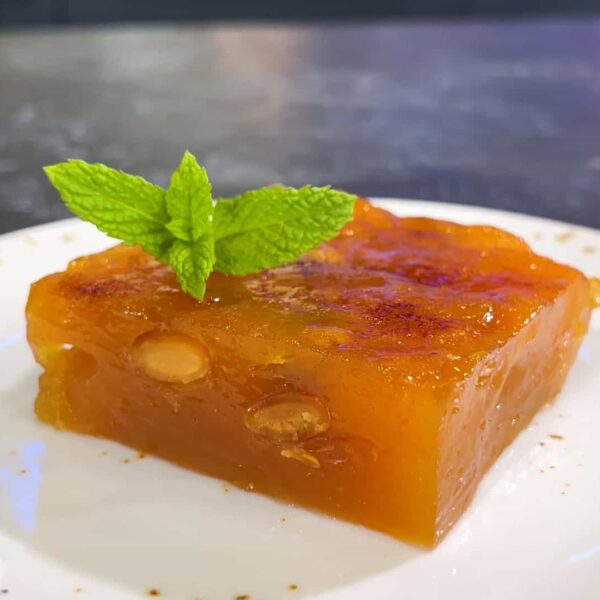
It is the softest of the three types, with a distinctly oily taste. It is made from rice flour, goat butter, sugar and almonds, all mixed in bronze cauldrons. Alternatively, and especially during Lent, sunflower oil is used instead of butter. It is considered a success when a crust is formed. It is a traditional speciality of Farsala and is usually sold during festivals.
It has a jelly-like consistency with a buttery caramel flavour, and the most authentic version is found during festivals in Thessaly, particularly at the popular Halva Festival, held every September in the town of Farsala.
2. The Simigdalenios (semolina)
A beloved and timeless Greek sweet holds a special place in Greek culture, particularly among families who treasure recipes passed down through generations. Its rich history is intertwined with the lives of refugees who fled to Greece from Smyrna (modern-day Izmir in Turkey) in 1922, settling in the northern Greek region of Macedonia. These refugees brought the art of halva-making, turning their tradition and know-how into a flourishing practice of production and trade in Greece.
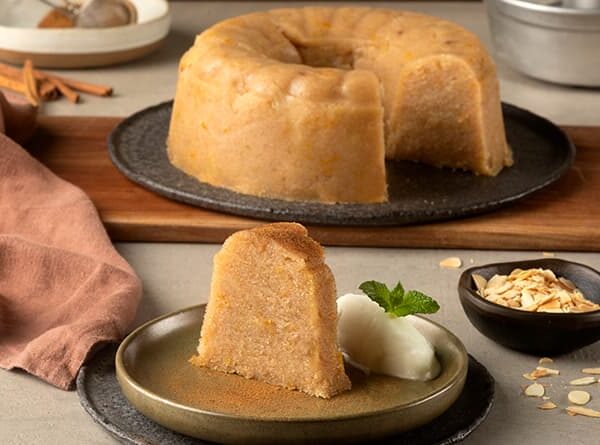
It is especially cherished during Lent, offering a sweet, comforting treat that complies with fasting traditions. While it’s most commonly associated with Ash Monday, halva is celebrated year-round for its high nutritional value. Traditionally made with simple yet rich ingredients, it’s a versatile dessert that can be adjusted in flavour and texture to suit different tastes.
The foundation of this dessert consists of a fat source—such as butter, olive oil, or sunflower oil—combined with starches like flour, semolina, or tahini. These are sweetened with sugar, honey, petimezi (grape syrup), or glucose. The semolina-based halva, often prepared at home, is quick and straightforward, using semolina (simigdali), butter or oil, sugar or petimezi, and water. To enhance its flavour, it’s commonly spiced with cinnamon, cloves, and orange zest and enriched with nuts like almonds, peanuts, raisins and other fruits.
Beyond its taste, halva embodies resilience and cultural preservation, connecting modern Greece to its historical roots.
To view George’s Grigoriadis recipe, click here.
3. The Macedonian
History of Macedonian Halva in Greece
After the destruction of Smyrna (modern-day Izmir, Turkey) in 1922, Greek refugees settled in the northern region of Macedonia, bringing with them generations of expertise in halva-making. These settlers preserved their culinary heritage, establishing small halva workshops and introducing their recipes to the local community. Over time, their halva-making tradition became a distinctive part of Greek gastronomy, blending the flavours and techniques of Asia Minor with Macedonian influences.
Today, the Macedonian remains one of the most cherished Greek sweets, particularly during the Lenten period, but it is also enjoyed year-round for its rich taste, chewy texture, and nutritional value.
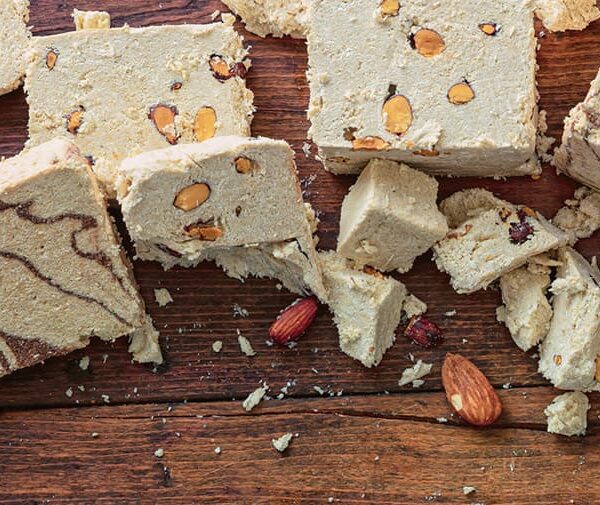
Macedonian halva is one of the most distinctive traditional Greek sweets, known for its unique texture and high nutritional value. For those who have never tried it, it is quite different from typical desserts, both in taste and in the way it feels when eaten.
It is mainly made from tahini (ground sesame paste) and sugar. What makes it stand out is its texture: it is fibrous and slightly crumbly, breaking easily into pieces. It is neither as soft as cake nor as creamy, which gives it a very special character.
Its flavour is sweet yet balanced, with a rich sesame flavour and hints of nuts. It often comes in different varieties, such as with cocoa, vanilla, or almonds, making it appealing to a wide range of tastes.
For someone trying it for the first time, the Macedonian offers a unique experience: it doesn’t melt like chocolate but gently crumbles in the mouth, leaving a full, slightly dry sweetness. At the same time, it is nutritious and filling, making it suitable for both a snack and a dessert.
Overall, Macedonian halva is a simple yet distinctive sweet that combines tradition, flavour, and nutritional value, and it is definitely worth trying.