
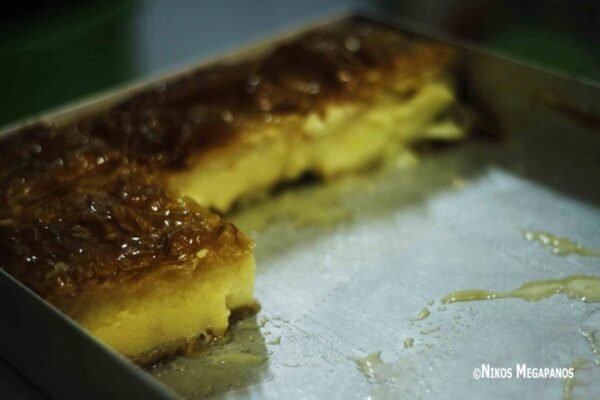
Galaktoboureko: A Traditional Greek Dessert With Filo and Custard
Galaktoboureko is one of Greece’s most cherished traditional desserts, famous for its irresistible combination of crispy filo pastry, creamy semolina custard, and aromatic sugar syrup. This classic syrupy dessert is baked in a pan until golden and enjoyed across the country in homes, bakeries, and festive celebrations.
Simple in ingredients yet rich in flavour, galaktoboureko perfectly reflects Greek culinary philosophy: balance, quality, and tradition. Its contrasting textures and comforting sweetness make it a timeless favourite for all ages.
What Is Galaktoboureko?
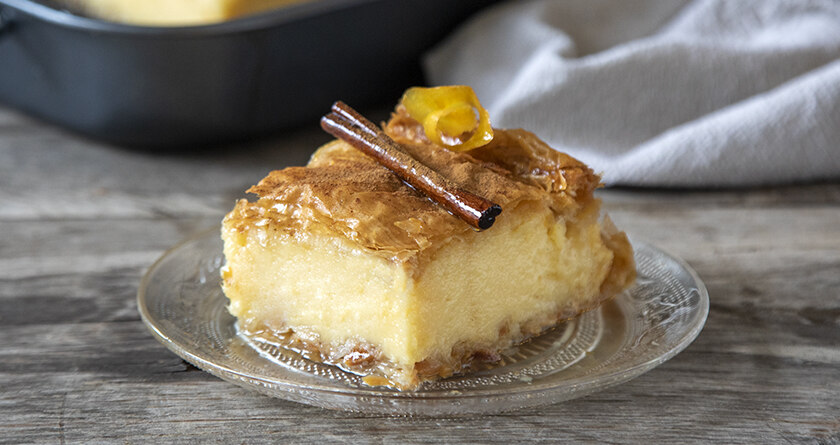
Galaktoboureko is a traditional oven-baked Greek dessert made by layering butter-brushed filo (phyllo) pastry around a smooth milk-based custard. Once baked to crispy perfection, the dessert is soaked in warm sugar syrup, allowing the sweetness and aromas to penetrate every layer.
The defining feature of galaktoboureko is its texture. The top layers of filo remain flaky and crisp, while the custard inside stays velvety and soft. The syrup binds everything together, creating a dessert that is indulgent without being heavy.
Key Ingredients That Define Galaktoboureko
Semolina Custard Filling
At the heart of galaktoboureko is its creamy custard. Made with milk, fine semolina, sugar, eggs, and butter, the custard is gently cooked until thick and smooth. Semolina provides structure to the filling while maintaining a silky texture that melts in the mouth.
Crispy Filo (Phyllo) Pastry
Filo pastry is essential to galaktoboureko’s character. Thin sheets of dough are layered and generously brushed with melted butter, ensuring a golden colour and a delicate crunch once baked.
Aromatic Sugar Syrup
The syrup is typically made from sugar and water and lightly flavoured with lemon peel or vanilla. Poured over the dessert while it is hot, the syrup absorbs evenly, enhancing flavour without making the pastry soggy.
The Origin and Meaning of Galaktoboureko
The name galaktoboureko comes from the Greek words “galakto,” meaning milk, and “börek,” referring to layered pastry pies common throughout the region. Together, the name translates loosely to “milk pie.”
Although galaktoboureko shares historical roots with other custard-filled pastries, it has become uniquely Greek over time. Passed down through generations, each household and bakery has its own subtle variation, yet the essence of the dessert remains unchanged.
How Galaktoboureko Is Traditionally Prepared
Galaktoboureko is traditionally baked in a large pan rather than assembled in individual portions. This method allows the custard to set evenly and the filo to bake uniformly. After baking, the dessert is cut into square or diamond-shaped pieces before the syrup is added, ensuring every slice absorbs just the right amount.
Timing is crucial: hot syrup over hot pastry (or sometimes cold syrup over hot pastry) is the golden rule for achieving perfect texture and balance.
How and When Galaktoboureko Is Served
Galaktoboureko can be enjoyed warm or at room temperature and is commonly served as a dessert after lunch or dinner. It is especially popular at Sunday family meals, name days, holidays, and festive gatherings.
Often paired with Greek coffee or enjoyed on its own, galaktoboureko is both a celebratory dessert and a comforting everyday treat.
Why Galaktoboureko Remains a Beloved Greek Dessert
What makes galaktoboureko truly special is its harmony of flavours and textures. The crisp filo contrasts beautifully with the creamy custard, while the syrup adds sweetness and aroma without overpowering the dish.
More than just a dessert, galaktoboureko is a symbol of hospitality, tradition, and home-style Greek baking. One bite reveals why this humble milk pie has stood the test of time and remains one of the most iconic Greek sweets.
If you are exploring traditional Greek desserts, galaktoboureko is an essential experience—a perfect blend of history, flavour, and indulgence.