
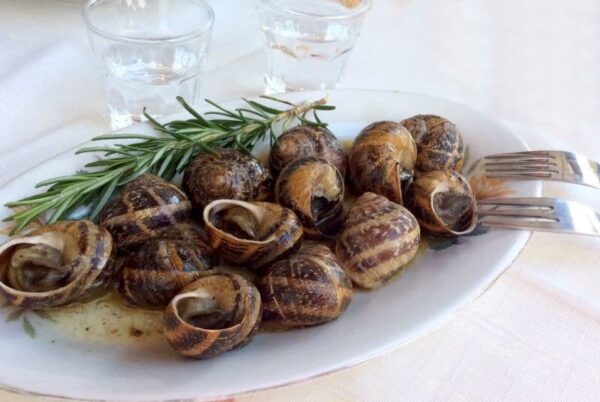
One of the most iconic preparations is chochli boubouristi, a dish that perfectly showcases the simplicity and boldness of Cretan cooking. In this version, snails are fried in generous amounts of extra-virgin olive oil until crisp, then finished with vinegar, salt, pepper, and aromatic herbs such as rosemary.
The contrast between the rich olive oil and the sharp vinegar creates a vibrant flavour profile, while rosemary adds a fragrant, earthy note. Traditionally, boubouristi is served as a meze dish, accompanied by crusty sourdough bread for dipping into the flavourful oil and juices.
Another popular preparation is boiled snails, cooked slowly in a tomato-based red sauce or with rice, onions, and herbs. These hearty stews are often cooked in clay pots, allowing the flavours to develop slowly and deeply. Each village and household has its own variation, passed down through generations.
Snail Species and Harvesting in Crete
The scientific name for the most common Cretan edible snail is Helix aspersa Müller, a species widely found across the Mediterranean. In Crete, two main varieties are traditionally harvested:
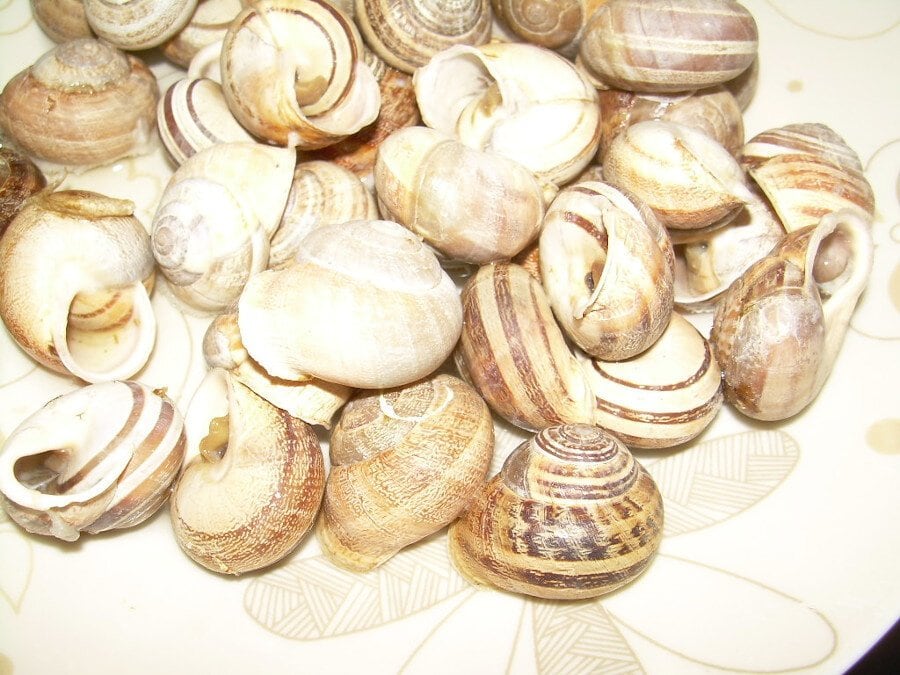
1. Small White Snails (Summer Snails)
These small white snails are collected during their summer dormancy, when they retreat into their shells to avoid the heat. They are typically used in quick, pan-fried dishes such as boubouristi, where their delicate texture pairs beautifully with olive oil and vinegar.
2. Fat Snails (Large Brown Snails)
The larger, brown “fat snails” are harvested from February to June, when they are at their plumpest, as well as during their summer slumber. These snails are prized for their tender, meaty texture and are often prepared à la Bourguignonne (with garlic butter and herbs) or in traditional Cretan cooking-pot recipes.
Cretans particularly favour fat snails for slow-cooked dishes, where they absorb the flavours of tomatoes, herbs, and wine. These recipes reflect the island’s agricultural heritage and the use of locally sourced ingredients.
Chochli in Cretan Culture and History
Snail consumption in Crete dates back thousands of years. Archaeological evidence suggests that snails were eaten in prehistoric times, making them one of the oldest known foods on the island. Historically, they were an accessible and sustainable protein source for rural communities, especially during times of hardship.
In traditional Cretan households, snail harvesting was a communal activity. Families would gather snails after rainfall or during specific seasons, then clean and prepare them at home. This practice reinforced the connection between people, land, and seasonal cycles—a core principle of the Mediterranean lifestyle.
Today, chochli remains a symbol of Cretan identity and culinary heritage. It is served at village festivals, family gatherings, and traditional tavernas, often accompanied by local wine or raki.
Nutritional Benefits of Snails in the Mediterranean Diet
Recent studies have shown that snail meat is among the most beneficial protein sources within the Mediterranean diet. Snails are:
-
High in protein and low in fat
-
Rich in iron, magnesium, and selenium
-
A good source of vitamin B12 and omega-3 fatty acids
-
Low in calories compared to many other animal proteins
Their nutritional profile makes them an excellent example of how traditional Mediterranean foods combine flavour and health benefits. Combined with olive oil, herbs, and vegetables, chochli dishes align perfectly with the principles of balanced, heart-healthy eating.
How to Enjoy Chochli Like a Local
In Crete, snails are often served as part of a meze spread, alongside olives, cheeses, salads, and fresh bread. Locals enjoy them with:
-
A glass of raki (tsikoudia) or local Cretan wine
-
Lemon wedges or vinegar for extra acidity
-
Rustic bread to soak up the sauce
Eating chochli is a social experience, often shared at long, leisurely meals that reflect the Cretan philosophy of hospitality and togetherness.
Chochli Today: Tradition Meets Gastronomy Tourism
With the rise of gastronomic tourism, chochli has become a must-try dish for visitors exploring Cretan cuisine. Food tours, cooking classes, and village tavernas introduce travellers to this ancient delicacy, explaining its cultural roots and culinary techniques.
Modern chefs are also reinventing snail dishes, combining traditional methods with contemporary presentation. However, the essence remains unchanged: simple ingredients, bold flavours, and respect for tradition.
Why Chochli Is a Symbol of Cretan Gastronomy
Chochli is more than just a dish—it is a symbol of Crete’s connection to nature, sustainability, and tradition. From prehistoric times to modern gastronomy, snails have nourished generations and continue to represent the island’s unique culinary identity.
Whether fried boubouristi with vinegar and rosemary, simmered in tomato sauce, or served à la Bourguignonne, Cretan snails offer a true taste of the island’s heritage. For anyone seeking an authentic Mediterranean food experience, chochli is a dish that tells the story of Crete—one bite at a time.