
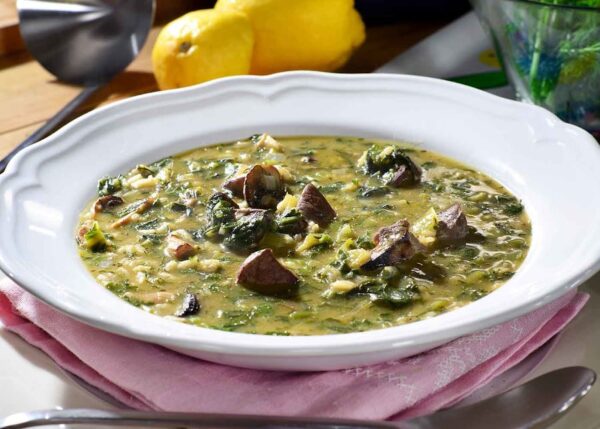
Mageiritsa: The Resurrection Soup That Tastes Like Greece
Magiritsa: As soon as the bells ring “Christ is Risen,” lanterns light up, and somewhere in every Greek kitchen, a pot is simmering, filled with the aromas of dill, lemon, and fresh spring onions. It’s Magiritsa — the soup that, for generations, has marked the end of Lent and the beginning of the Easter celebration.
A Ritual Meal That Marks Renewal
Magiritsa is far more than a soup. It’s a Greek Easter ritual, the first meal after forty days of fasting, symbolising renewal, faith, and family. Light yet hearty, it gently reintroduces the body to nourishment while capturing the essence of spring in every spoonful.
Served just after midnight on Holy Saturday, Magiritsa brings everyone together around the table — steaming, fragrant, and comforting — a true culinary sign of resurrection.
The Heart of the Recipe
At its core, Magiritsa is a lamb soup with avgolemono (egg-lemon sauce), but it’s also a celebration of seasonal freshness. The dish combines lamb offal with fresh onions, lettuce, dill, and lemon, creating a balance between rich, savory depth and bright, herbal freshness.
The lamb offal is first gently boiled, then chopped and sautéed in olive oil. Fresh spring onions, dill, and crisp lettuce are added, filling the kitchen with aromas that are unmistakably Greek. A little rice gives body to the soup, and finally, the silky avgolemono ties everything together, adding a smooth, velvety finish.
A Taste of Tradition — and Evolution
Every Greek household has its own version of Magiritsa. Some follow the classic recipe with lamb offal, while others opt for chicken or mushroom variations that offer a lighter or vegetarian twist. Modern cooks even bake it in the oven for a heartier, fricassee-style dish.
Whatever the version, the spirit remains the same: Magiritsa is comfort in a bowl, a dish that carries the warmth of home and the flavour of tradition.
Nutrition and Symbolism
Rich in protein, iron, and B vitamins, Magiritsa is both nourishing and symbolic. The lamb represents renewal and sacrifice, while the greens and lemon speak of spring and life returning to the earth. It’s a balanced and meaningful dish, bridging the solemnity of Lent with the joy of Easter.
Why Magiritsa Matters
To this day, Magiritsa remains the soul of the Greek Easter table. Each spoonful tells a story — of grandmothers stirring the pot, of families gathering after midnight Mass, of laughter and warmth that linger long into the night.
It’s more than food; it’s a memory, a moment, a taste of Greece itself — where faith, flavour, and family come together in one timeless bowl.