
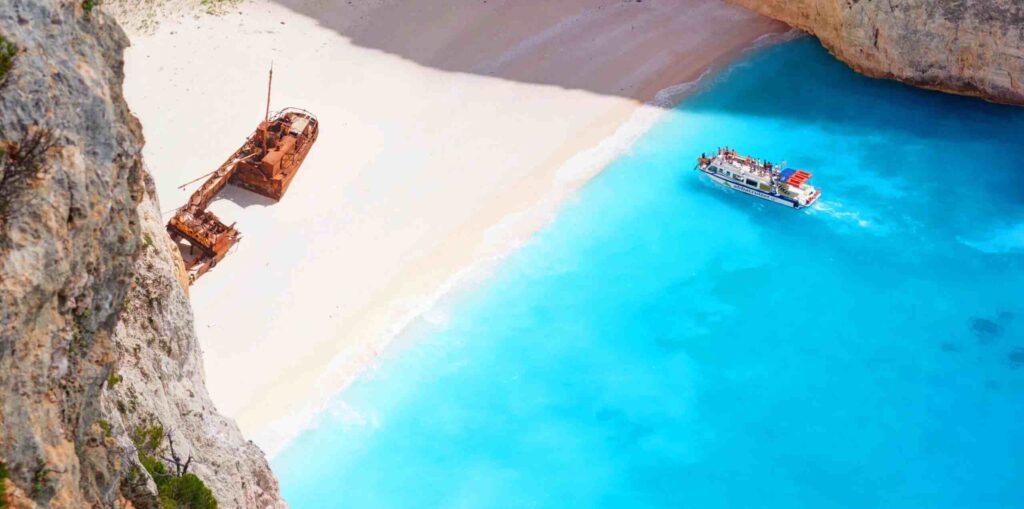
The Ionian Sea is a picturesque arm of the Mediterranean Sea in southeastern Europe. It is bordered by several countries known for their rich history and breathtaking landscapes. The sea lies west of mainland Greece, east of southern Italy, and south of Albania, making it an important maritime passage and cultural bridge between these regions.
Geography
The Ionian Sea is part of the wider Mediterranean basin and is among its deepest areas, reaching a maximum depth of about 5,267 meters (17,280 feet). It connects to the Adriatic Sea through the Strait of Otranto in the north and extends southward into the open Mediterranean. The Peloponnese forms its eastern boundary, while regions of southern Italy, such as Calabria and Apulia, shape its western shores.
Islands of the Ionian Sea
The Ionian Islands comprise seven main islands and numerous smaller islets, renowned for their lush landscapes and clear waters. Among the most notable are Corfu, known for Venetian architecture; Zakynthos, home to Navagio Beach and important turtle nesting areas; Kefalonia, celebrated for caves and Myrtos Beach; Lefkada, connected to the mainland by a bridge; Ithaca, linked to Odysseus in Homer’s Odyssey; and the smaller islands Paxos and Antipaxos, known for secluded beaches.
Natural Beauty and Ecology
The Ionian Sea is renowned for its crystal-clear waters and rich biodiversity. It provides habitat for dolphins and the Caretta caretta, commonly known as the loggerhead sea turtle, one of the most important marine species in the Mediterranean. This large sea turtle can live for more than 50 years and travel thousands of kilometres throughout its lifetime.
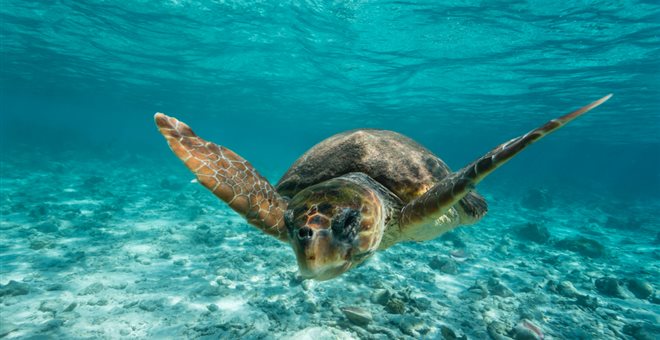
The Ionian Sea offers ideal conditions for reproduction thanks to its sandy beaches and warm waters. Zakynthos is especially significant, hosting one of the largest nesting populations in the Mediterranean. Every summer, female turtles return to the beaches where they were born to lay their eggs. After about two months, hatchlings emerge and instinctively move toward the sea, guided by the natural light of the horizon.
Despite its ecological importance, the loggerhead turtle faces serious threats, including plastic pollution, fishing nets, and intensive tourism. Conservation initiatives and protected areas, such as the National Marine Park of Zakynthos, help reduce human disturbance during the nesting season and safeguard critical habitats.
Protecting the Caretta caretta in the Ionian Sea is a shared responsibility. Its presence is a strong indicator of healthy marine ecosystems and highlights the need for sustainable human-nature interactions. It is home to various fish, making it a significant area for aquatic biodiversity. Efforts are underway to preserve its delicate ecosystem through marine conservation programs.