
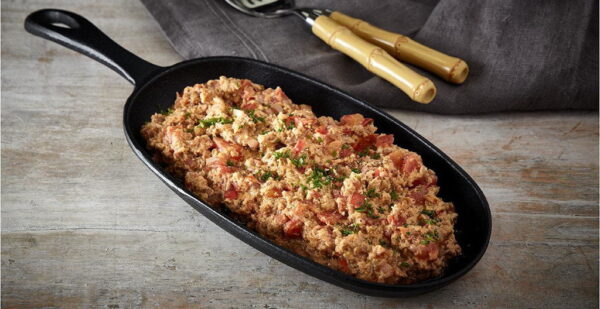
Strapatsada: The Taste of Greek Summer
Among the many dishes that define traditional Greek home cooking, strapatsada — also known as kagianas — holds a special place. Simple, rustic, and intensely flavorful, this classic combination of tomatoes, eggs, and feta cheese captures the essence of Mediterranean cuisine: fresh ingredients, seasonal cooking, and uncomplicated preparation that allows natural flavours to shine.
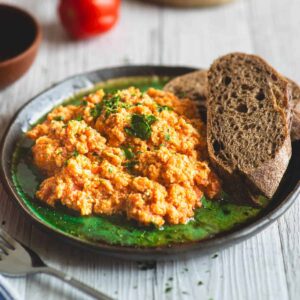
Strapatsada is prepared by cooking ripe tomatoes slowly in olive oil until they soften and release their sweetness, after which beaten eggs are added and gently stirred into the mixture. The result is a creamy, rich dish that sits somewhere between scrambled eggs and a light tomato stew. Crumbled feta cheese is often folded in at the end, adding saltiness and texture, while herbs such as oregano or mint provide a fragrant finishing touch. Traditionally, it is served warm over toasted bread, making it both comforting and satisfying.
The dish is closely associated with the Greek summer. Historically, it was a daily meal for farmers and islanders who relied on ingredients readily available in their gardens: sun-ripened tomatoes, fresh eggs, olive oil, and local cheese. Because tomatoes reach their peak flavour during the warmer months, strapatsada is considered a seasonal speciality, enjoyed most when produce is at its freshest. Its quick preparation and nourishing character also made it ideal for busy rural households and fishermen returning from the sea.
Although widely known across Greece, the dish is known by different names depending on the region. In many mainland areas and islands, it is called strapatsada, while in the Peloponnese, it is more commonly known as kagianas. Variations exist from place to place: some recipes omit feta, others include local cheeses or cured meats, and the choice of herbs may change according to local tradition. Despite these differences, the dish’s core identity remains the same — tomatoes and eggs cooked together in harmony.
Strapatsada is versatile in how it is enjoyed. It may be served as a light main course, a hearty breakfast, or as a meze shared among friends. In seaside tavernas, it is frequently paired with tsipouro, whose strong character balances the tomatoes’ acidity and the richness of the eggs and cheese. This pairing reflects the broader Greek dining culture, where food and drink are meant to encourage conversation and conviviality rather than formality.
Beyond its ingredients, strapatsada represents an entire philosophy of Greek cooking. It demonstrates how modest materials can produce remarkable flavour when treated with care and patience. The dish celebrates seasonality, local produce, and the social nature of eating — values that remain central to Greek culinary identity today.
Whether prepared in a village kitchen, an island taverna, or a modern urban home, strapatsada continues to evoke memories of summer, simplicity, and shared meals. Its enduring popularity lies not only in its taste but also in its ability to connect generations through a dish that is both humble and deeply rooted in tradition.