
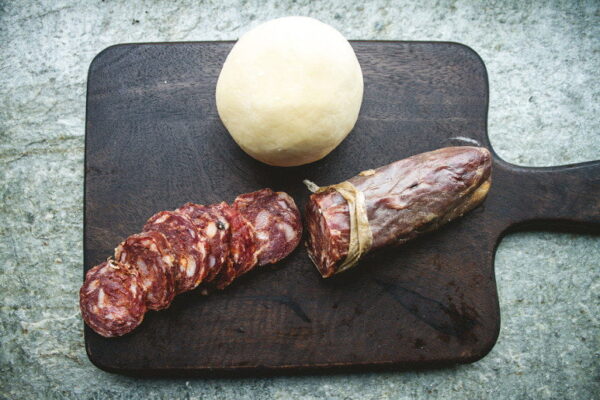
Saltsisi is a traditional cured pork sausage from the island of Tinos, Greece, and one of the most authentic Cycladic charcuterie products. It is typically consumed sliced, like salami, and served as a traditional Greek meze with local wine or raki.
This artisanal sausage reflects the island’s rich agricultural heritage and centuries-old meat preservation techniques.
Ingredients & Traditional Preparation
Saltsisi is made from high-quality pork meat, carefully selected and seasoned with:
-
Garlic
-
Aromatic spices
-
Fennel seeds
-
Black pepper
-
Red wine
The mixture is stuffed into natural pork viscera, following traditional family recipes passed down through generations.
After stuffing, the sausages are hung outdoors to dry and mature for at least 15 days, allowing them to naturally cure in the island’s fresh air. The unique climate of Tinos, with its strong winds and mild temperatures, contributes significantly to the sausage’s distinctive flavour and texture.
Flavour Profile & Culinary Use
Saltsisi is known for its bold, spicy, and aromatic flavour, with subtle notes of fennel and wine. Its firm texture and intense taste make it an amazing spicy meze, perfect for:
-
Wine and raki tastings
-
Traditional Greek meze platters
-
Local festivals and village feasts
-
Gastronomy tourism experiences
It pairs exceptionally well with local cheeses, olives, bread, and Cycladic wines.
Saltsisi and Tinos Gastronomic Tradition
Saltsisi is an important part of Tinos’ traditional cuisine and local charcuterie culture. Alongside other famous products such as louza, graviera cheese, and thyme honey, it represents the island’s strong connection to farming, livestock, and sustainable rural life.
Today, saltsisi is increasingly recognised as a premium Greek traditional cured meat, attracting food lovers and travellers seeking authentic Cycladic flavours.
Why Try Saltsisi in Tinos
-
Authentic traditional Greek sausage
-
Artisanal, naturally air-dried product
-
Unique Cycladic terroir flavor
-
Essential local meze experience
-
Part of Tinos’ cultural and gastronomic heritage
Photo: lifo.gr