
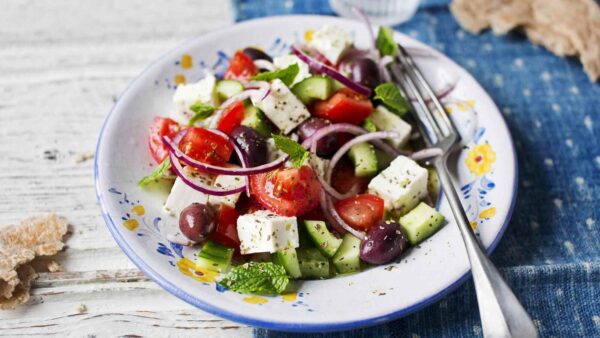
When travelling to Greece, food quickly becomes part of the experience, and few dishes represent the country better than the Greek salad, known locally as Horiatiki Salata. Fresh, colourful, and full of flavour, this simple dish reflects the heart of Greek cuisine and the Mediterranean way of life. Whether enjoyed at a seaside taverna, a village café, or a family-run restaurant, Greek salad is something every visitor should try at least once.
What Is a Traditional Greek Salad?
A traditional Greek salad is all about simplicity and balance. Unlike international versions, the authentic Greek recipe focuses on a small number of high-quality ingredients rather than complex dressings or extra additions.
Authentic Ingredients Used in Greek Salad
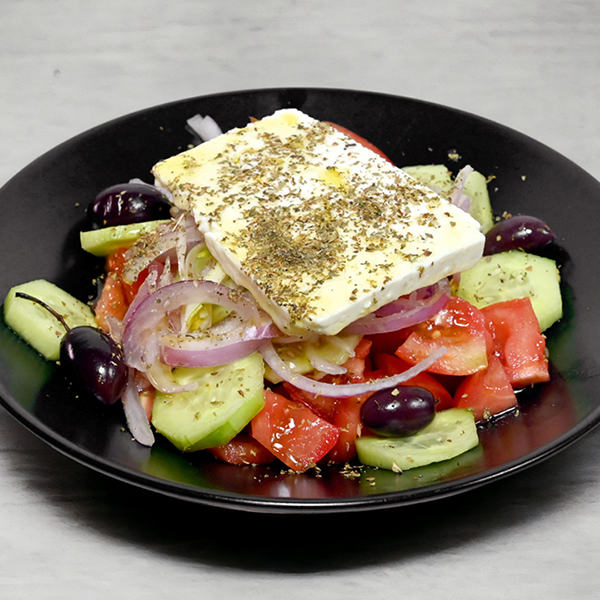
A classic Greek salad includes ripe tomatoes, crunchy cucumbers, sliced red onions, green peppers, and a handful of Kalamata olives. On top sits a thick slab of feta cheese, seasoned with dried oregano and generously drizzled with extra virgin olive oil. In Greece, lettuce is never part of the traditional recipe, and the dressing is always light and natural.
The Role of Feta Cheese
Feta cheese is essential to Greek salad. Made from sheep’s milk or a blend of sheep’s and goat’s milk, authentic Greek feta has a creamy texture and tangy taste that complements the vegetables perfectly. It is traditionally served as a single piece rather than crumbled, allowing diners to break it apart as they eat.
Why Greek Salad Tastes Better in Greece
Many visitors notice that Greek salad tastes noticeably better in Greece. The secret lies in the quality of local ingredients. Tomatoes are sun-ripened, cucumbers are fresh and crisp, and olive oil is often produced locally. The dried oregano used in Greece is more aromatic than store-bought versions abroad, adding a distinctive flavour to the dish.
Greek Salad and the Mediterranean Diet
Greek salad is a prime example of the Mediterranean diet, which is recognised worldwide for its health benefits. Packed with fresh vegetables, healthy fats from olive oil, and protein from feta cheese, it is both nutritious and satisfying. It’s no surprise that Greeks enjoy this salad regularly, especially during the warm summer months.
How Greeks Enjoy Greek Salad
In Greece, Greek salad is usually served as a shared dish in the centre of the table. It is meant to be enjoyed slowly, alongside other dishes such as grilled fish, souvlaki, or moussaka. One of the most beloved traditions is using bread to soak up the olive oil and tomato juices left at the bottom of the plate—a practice known as papara. This simple habit is considered one of the greatest pleasures of Greek dining.
When to Order Greek Salad in Greece
Greek salad is most popular during spring and summer, when vegetables are at their peak. However, you will find it on menus year-round. It works perfectly as a starter, a side dish, or even a light main meal on a hot day.
Why Every Visitor Should Try Greek Salad
Greek salad is more than just a refreshing dish—it is a reflection of Greek culture and hospitality. It showcases respect for natural ingredients, seasonal eating, and the joy of sharing food. For visitors in Greece, ordering a traditional Greek salad is a simple yet meaningful way to experience local flavours and connect with everyday Greek life.