Crete’s Land of Mountains, Windmills & Coastal Beauty
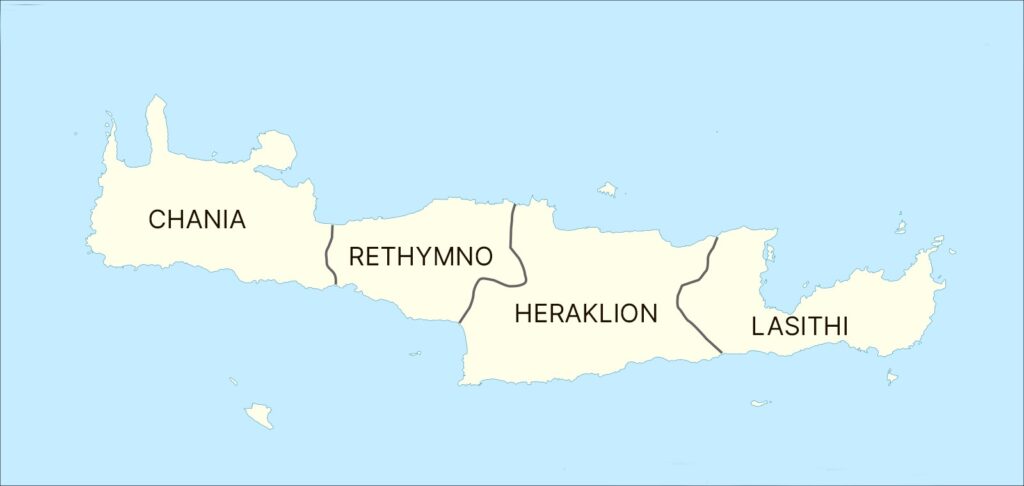
Lasithi, located at the eastern edge of Crete, is renowned for its striking contrasts, combining well-developed tourist destinations with untouched natural landscapes. The capital, Agios Nikolaos, is especially famous for its picturesque lake and scenic coastal road.
The region is a captivating blend of natural beauty, historical significance, and rich cultural traditions. It offers dramatic scenery, archaeological heritage, vibrant towns, and a strong connection to traditional Cretan life.
Natural Landscape & Environment
The eastern part of Crete is best known for its diverse and dramatic natural environment.
- The Lasithi Plateau, located near Mount Dikti, is famous for its traditional stone windmills and fertile landscape.
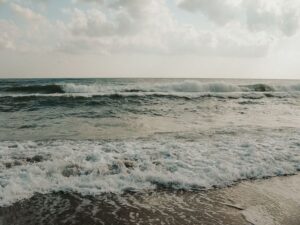
- The region stretches along approximately 300 km of coastline, featuring many beaches awarded Blue Flag status.
- It enjoys a sunny Mediterranean climate with nearly 3,000 hours of sunshine annually.
- The area includes important Natura 2000 protected sites that preserve rare flora and fauna.
- Notable gorges include Ha, Lapathos, and Sarakina, offering excellent hiking opportunities.
- Famous caves such as Dikteion, Peristeri, and Milatos are deeply connected to mythology and history.
- At the easternmost tip lies the Vai Palm Forest, home to Europe’s largest natural palm grove.
Historical & Archaeological Heritage
A very rich in remains from the Minoan and post-Minoan eras.
- Key archaeological sites include Zakros, Lato, and Ierapetra.
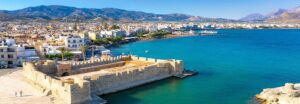
- The region features significant Venetian-era landmarks, including Spinalonga Fortress and Kazarma Fortress in Sitia.
- Spinalonga, once a Venetian and Ottoman stronghold and later a leper colony, is now a major cultural attraction.
Religious & Cultural Heritage
The region has a strong spiritual and cultural identity.
- Important monasteries include Toplou and Kapsa.
- Numerous Byzantine churches are scattered throughout the region, reflecting its long religious history.
Towns and Settlements
The Region includes several vibrant towns, each with its own identity:
- Agios Nikolaos: A lively coastal city known for its lake and elegant atmosphere.
- Ierapetra: The southernmost city in Europe, featuring charming alleys and the historic Kales Fortress.
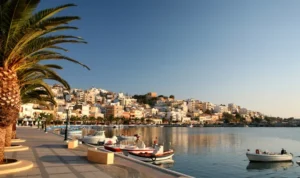
- Sitia: A picturesque town with an amphitheatrical layout and the Kazarma Fortress, part of the UNESCO-designated Sitia Geopark.
- Nearby Elounda is internationally known for its luxury tourism and proximity to Spinalonga.
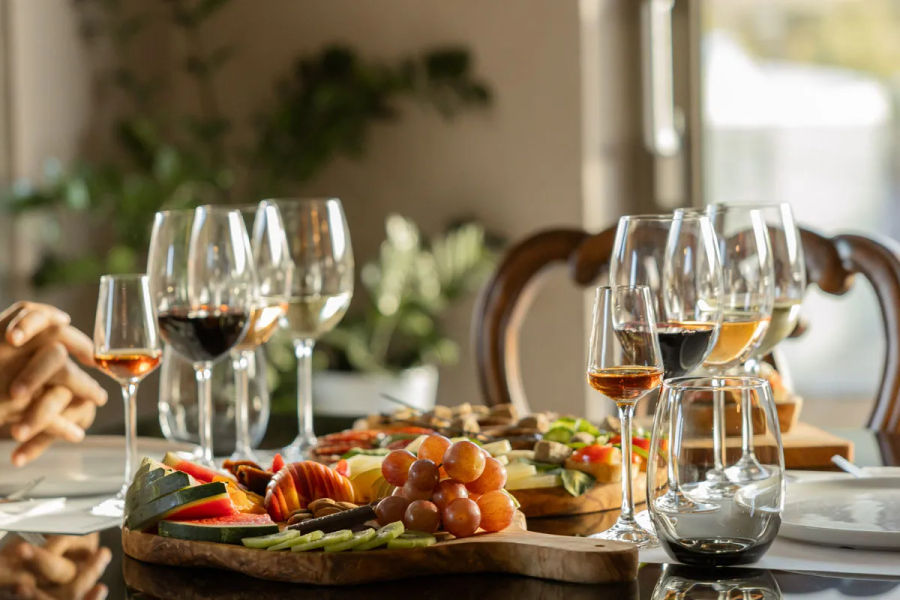
Gastronomy
Local cuisine reflects its natural diversity and traditional lifestyle.
- The region is known for high consumption of wild greens and mushrooms, especially in remote areas.
- Local agriculture produces abundant fresh vegetables, particularly on the plateau.
- Coastal areas from Agios Nikolaos to Sitia specialise in fresh seafood.
Traditional Dishes
- Sofegada: A vegetarian dish made with seasonal vegetables and herbs.
- Roast pork with local potatoes.
- Soups with wild rooster or chicken are often served during celebrations.
- Seafood specialities such as kakavia (fish soup) and scorpion fish soup are especially popular in Sitia.
Local Products & Specialities
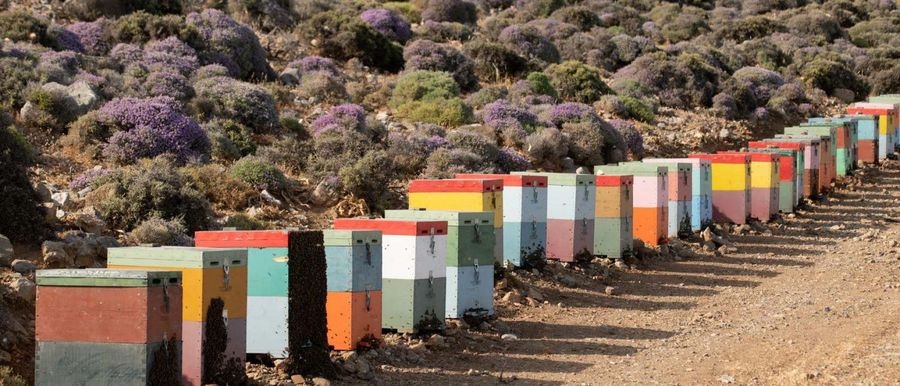
Regional high-quality agricultural and artisanal products: